



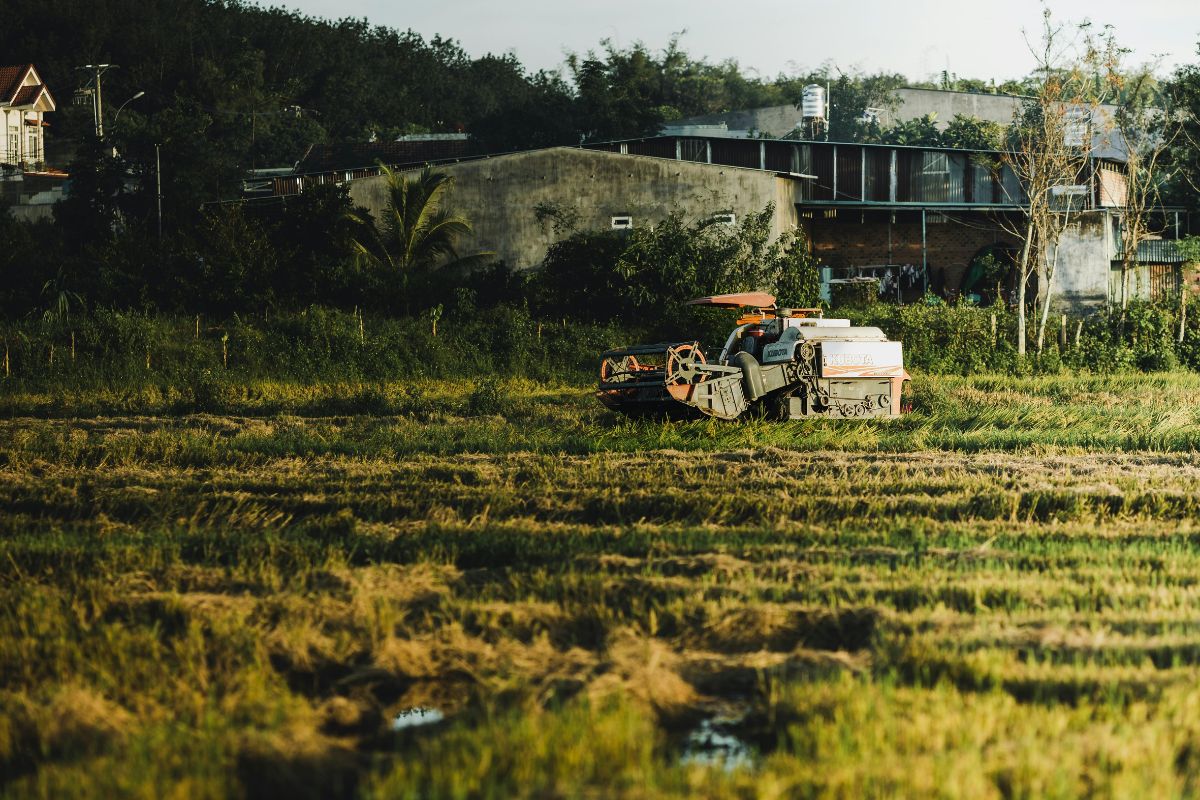
In the heart of Kerala, farmers cultivate rice in fields that lie below sea level.
To many visitors, the landscape of Kuttanad appears almost impossible. Vast paddy fields stretch across low-lying areas surrounded by lakes, canals, and backwaters. Water often sits higher than the fields themselves. Yet every year, thousands of farmers successfully grow rice in this challenging environment.
Known as the “Rice Bowl of Kerala,” Kuttanad is one of the few places in the world where large-scale farming is practised below sea level. The system represents centuries of engineering, community effort, and agricultural knowledge developed to manage one of India’s most difficult farming landscapes.
Today, Kuttanad is attracting attention not only for its agricultural significance but also for the lessons it offers about climate adaptation and water management.
Much of Kuttanad’s agricultural area did not exist naturally. Over generations, farmers reclaimed land from shallow sections of Vembanad Lake and surrounding wetlands. Communities constructed earthen bunds around low-lying areas and pumped water out to create cultivable fields.
These reclaimed areas, known locally as padasekharams, became the foundation of Kuttanad’s rice economy.
The work required extraordinary effort.
Building and maintaining protective embankments demanded cooperation among large groups of farmers. Without these structures, water would quickly flood agricultural land.
Even today, maintaining bunds remains one of the most important activities in the region.
Water Management Determines Success
In most agricultural regions, farmers focus on bringing water into fields. In Kuttanad, the challenge is often keeping water out. The entire farming system depends on a network of pumps, canals, sluice gates, and protective barriers that regulate water levels throughout the year. During the cultivation season, farmers carefully manage water to create suitable conditions for rice production. Excess water must be removed quickly during heavy rainfall events.
This constant balancing act requires coordination across entire farming communities. A failure in one section of the system can affect neighbouring fields as well.
The result is a highly organised form of agriculture where water management is as important as crop management.
Rice has been the backbone of Kuttanad’s agricultural economy for generations. The region produces some of Kerala’s most important paddy crops and supports thousands of farming families. Despite increasing urbanisation and changing economic conditions, rice cultivation continues to define the area’s identity.
Farmers often cultivate varieties suited to local conditions and adapted to periodic flooding risks.
Harvesting operations have also evolved over time. Mechanisation has become increasingly important because labour shortages have affected many parts of Kerala’s agricultural sector.
Modern harvesters now operate in fields that once depended entirely on manual labour.
Kuttanad’s unique geography makes it particularly sensitive to climate-related changes. Extreme rainfall events, floods, sea-level rise, and changing weather patterns have increased concerns among farmers and planners. The devastating floods that affected Kerala in recent years highlighted the vulnerability of low-lying agricultural areas.
Farmers report that rainfall patterns have become less predictable, making water management more difficult.
When heavy rainfall coincides with high water levels in surrounding lakes and rivers, pressure on protective infrastructure increases significantly.
Climate adaptation is therefore becoming a central issue for the future of farming in the region.
Farmers Depend on Collective Action
One of Kuttanad’s most remarkable features is the degree of cooperation required for agriculture to function.
Individual farmers cannot manage water systems alone.
Neighbouring landowners often work together to maintain bunds, operate pumps, and coordinate cultivation schedules. Farmer groups and local institutions play important roles in managing shared infrastructure.
This collective approach has allowed agriculture to survive in conditions where isolated farming operations would struggle.
Experts often point to Kuttanad as an example of how community-based resource management can support long-term agricultural sustainability.
Researchers and agricultural planners from around the world have studied Kuttanad because of its unusual characteristics.
The system demonstrates how communities adapted to difficult environmental conditions using local knowledge and practical engineering solutions.
As coastal regions globally face increasing climate pressures, interest in Kuttanad’s experience is growing.
The challenges may be different today, but the underlying lesson remains relevant: successful agriculture often depends on understanding local ecosystems rather than trying to completely reshape them.
Every harvest in Kuttanad represents more than agricultural production. It reflects generations of effort spent managing land, water, and community resources in one of India’s most complex farming environments. The fields remain vulnerable to floods, changing weather, and economic pressures.
Yet rice continues to grow below sea level.
For the farmers of Kuttanad, that achievement is not unusual.
It is simply how agriculture has worked here for centuries.
Also Read: Punarnava Jal – The world’s first organic fertilizer! Know how it is beneficial for farmers?
Contact us – If farmers want to share any valuable information or experiences related to farming, they can connect with us via phone or whatsapp at 9599273766 or you can write to us at “kisanofindia.mail@gmail.com”. Through Kisan of India, we will convey your message to the people, because we believe that if the farmers are advanced then the country is happy.
You can connect with Kisan of India on Facebook, Twitter, and Whatsapp and Subscribe to our YouTube channel.