



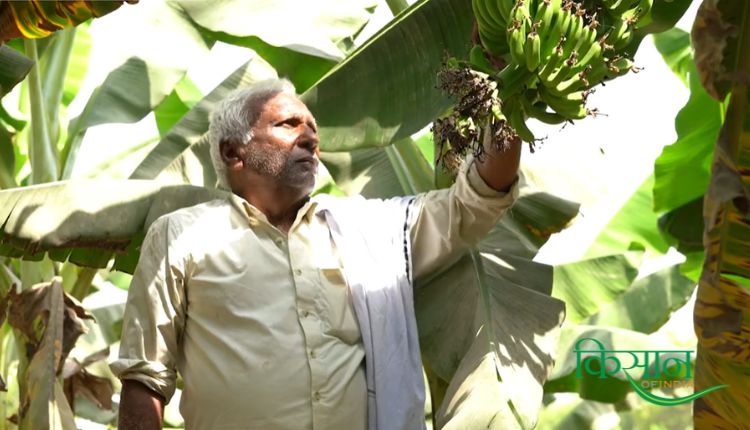
Banana is India’s number one fruit crop by production volume. India produces over 34 million tonnes of bananas every year, making it the largest banana-growing country in the world. Maharashtra, Tamil Nadu, Gujarat, Andhra Pradesh, and Karnataka lead the production table.
Unlike seasonal crops, banana gives farmers a harvest almost every month of the year, making it one of the most reliable sources of continuous income in Indian agriculture. Thousands of small and marginal farmers across the Deccan plateau and river delta regions depend entirely on banana for their livelihood and their children’s future.
Choosing the Right Variety for Your Region
Grand Naine (G9) is the most commercially successful banana variety in India today. It produces large, uniform bunches, travels well, and has excellent shelf life qualities that domestic retailers and exporters demand. Robusta is popular in Maharashtra, especially in Jalgaon district, which is known as the Banana City of India.
Red Banana, grown mainly in Tamil Nadu and Kerala, commands a premium price of Rs 60 to Rs 100 per kg in urban markets due to its nutritional value and distinct flavour. Farmers in flood-prone areas prefer Nendran and Poovan varieties, which show better resilience to waterlogging stress than most commercial hybrids.
“Grand Naine changed my life. Earlier I used to grow cotton and struggle every year. Now I grow banana and I earn every month. My children study in a private school because of banana.” Vijay Patil, banana farmer, Jalgaon, Maharashtra
Tissue Culture Plants: The Foundation of a Profitable Crop
Tissue culture banana plants have transformed the quality and consistency of banana farming in India. These plants are disease-free, genetically uniform, and produce bunches that are 20 to 30% heavier than those from suckers. Although the initial cost of tissue culture plants at Rs 15 to Rs 20 per plant is higher than suckers, the investment pays back within the first harvest cycle.
Farmers who buy plants from nurseries certified by the National Horticulture Board report fewer crop failures and more uniform maturity, which allows for better market planning, smoother logistics, and consistently higher prices from buyers.
Water and Nutrient Management
Banana is a water-hungry crop. It needs 1,800 to 2,000 mm of water over its 11 to 13 month growing period. Drip irrigation with inline drippers saves up to 40% water compared to flood irrigation while delivering nutrients directly to the root zone through fertigation.
A well-managed drip and fertigation programme uses urea, muriate of potash, and 19:19:19 water-soluble fertilisers in a stage-wise schedule across the vegetative phase, shooting phase, and bunch development phase. This approach maximises bunch weight and finger length — the two parameters that determine the price a farmer gets in the market.
“Before drip, I used to irrigate every three days and still my plants looked stressed. After drip, I irrigate daily with small amounts and my plants are always healthy. My bunch weight went from 18 kg to 28 kg.” Rekha Bai, banana farmer, Anand, Gujarat
Government View
The National Horticulture Mission (NHM) offers subsidies of up to 50% on tissue culture plants, drip irrigation systems, and post-harvest infrastructure including pre-cooling units and pack houses. The National Horticulture Board also runs a quality certification scheme for banana exporters that opens access to premium international markets.
APMC reforms in many states now allow farmers to sell directly to buyers without going through the mandi, which is a major opportunity for banana growers to capture a larger share of the final consumer price. Farmers can contact their district horticulture officer to apply for all available support.
Why Banana Is the Future of Smallholder Farming
For a small farmer with one to two acres of land, banana offers something very few other crops can, predictable, regular income every single month. A farmer who manages one acre of Grand Naine banana well can earn a net income of Rs 80,000 to Rs 1,20,000 per acre per year after all expenses.
Add government subsidies on drip irrigation and planting material, and the numbers improve further. Banana is not just a fruit — it is a financial lifeline for millions of Indian farming families, and for any small farmer willing to invest in the right practices, it is one of the most rewarding crops growing in Indian soil today.
Also Read: Punarnava Jal – The world’s first organic fertilizer! Know how it is beneficial for farmers?
Contact us – If farmers want to share any valuable information or experiences related to farming, they can connect with us via phone or whatsapp at 9599273766 or you can write to us at “kisanofindia.mail@gmail.com”. Through Kisan of India, we will convey your message to the people, because we believe that if the farmers are advanced then the country is happy.
You can connect with Kisan of India on Facebook, Twitter, and Whatsapp and Subscribe to our YouTube channel.