



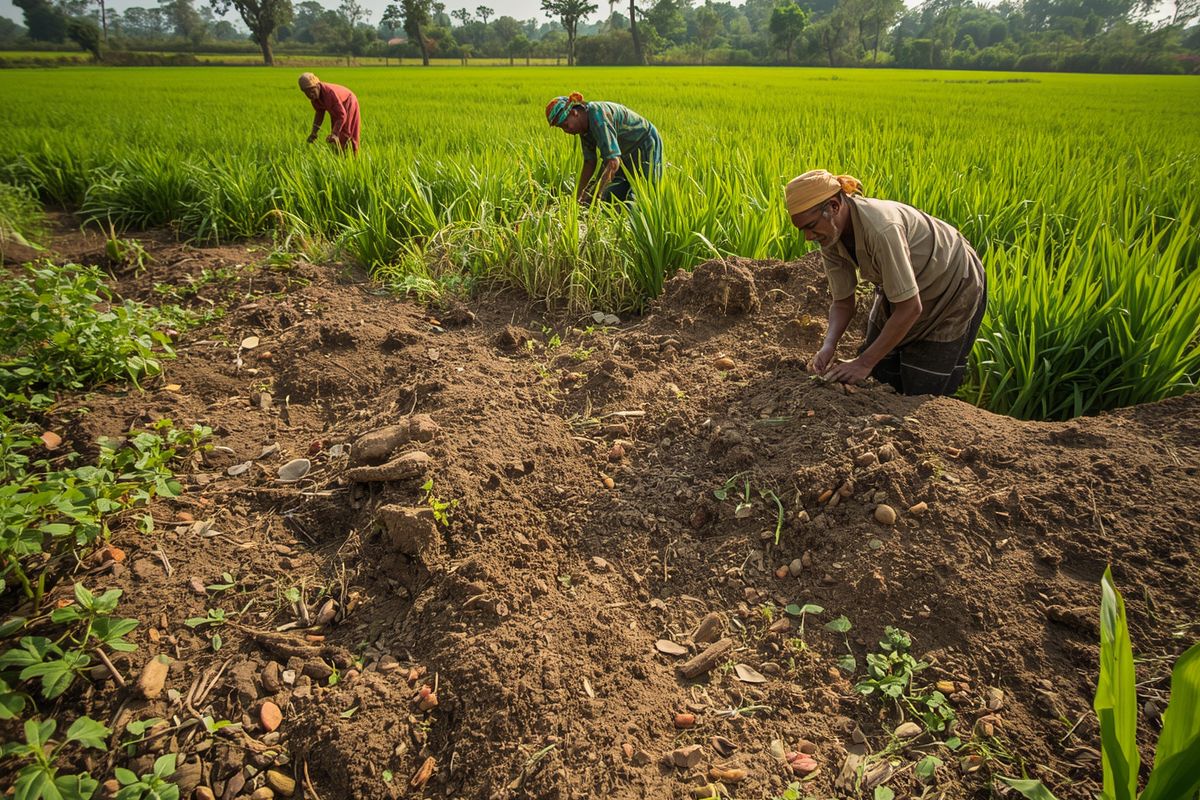
Across rural India, a quiet movement is taking shape that could influence the future of farming. Villages in states ranging from Odisha and Chhattisgarh to Karnataka and Uttarakhand are establishing community seed banks to preserve traditional crop varieties that have survived generations of environmental and market change.
The effort comes at a time when climate uncertainty, changing rainfall patterns, and increasing dependence on a narrow range of commercial crops are raising concerns among agricultural experts. Many traditional varieties that once dominated local farming systems have gradually disappeared as cultivation shifted toward high-yielding alternatives.
Community seed banks aim to reverse that trend.
By collecting, storing, and distributing indigenous seeds, these local institutions are helping farmers maintain crop diversity while improving access to planting material suited to local conditions. Policymakers, researchers, and farmer organisations increasingly view the initiative as an important component of climate-resilient agriculture.
The movement is gaining momentum across multiple states.
India possesses one of the world’s richest collections of agricultural biodiversity. Thousands of varieties of rice, millets, pulses, oilseeds, and vegetables were developed by farming communities over centuries.
Many of these varieties evolved under specific environmental conditions and became adapted to local soils, rainfall patterns, and cultivation practices.
Over time, however, agricultural modernisation reduced the number of varieties commonly grown in many regions. While improved seeds increased productivity, they also contributed to the decline of numerous traditional crops.
Researchers warn that losing these varieties means losing valuable genetic resources that may become important in the future.
The challenge is no longer simply preserving seeds.
It is preserving options for future agriculture.
Farmers Lead Conservation Efforts
Unlike large government storage facilities, community seed banks operate at the village level. Farmers contribute seeds from local varieties, maintain storage systems, and distribute planting material among members.
The approach ensures that seeds remain in active use rather than sitting permanently in collections.
Many banks maintain traditional rice varieties, drought-tolerant millets, indigenous pulses, and locally adapted vegetables. Farmers borrow seeds at the beginning of a season and return a larger quantity after harvest, ensuring that stocks continue growing over time.
The model combines conservation with practical farming needs.
Communities become custodians of their own agricultural heritage.
One reason seed banks are attracting attention is the growing need for climate adaptation. Farmers increasingly face irregular monsoons, heat stress, droughts, and extreme weather events that affect production.
Many traditional varieties possess characteristics that help crops survive under difficult conditions. Some tolerate drought better than commercial alternatives. Others perform well in flood-prone regions or poor soils.
Agricultural scientists believe these traits could become increasingly valuable as climatic conditions become less predictable.
Maintaining access to a wide range of seeds gives farmers greater flexibility when responding to environmental challenges.
Diversity itself becomes a form of resilience.
In many states, women-led self-help groups are managing seed bank operations. They oversee seed collection, storage, documentation, and distribution activities while preserving knowledge associated with traditional crops.
Their involvement strengthens both conservation efforts and rural livelihoods.
Women often possess detailed knowledge about local crop varieties, food preparation methods, and seed selection practices. Community seed banks provide a platform for maintaining and sharing this expertise across generations.
Several programmes have also linked seed conservation with income-generation activities such as seed production and local marketing.
The result is a model that combines biodiversity protection with economic opportunity.
Governments and Researchers Offer Support
Agricultural universities, state governments, and non-governmental organisations are increasingly supporting seed bank initiatives through training, storage technology, and documentation programmes.
Officials believe community-based conservation complements formal seed systems rather than competing with them. The goal is to ensure that traditional varieties remain available alongside commercial alternatives.
Research institutions are also documenting local crop characteristics before knowledge disappears. This information could prove valuable for future breeding programmes aimed at developing climate-resilient crops.
The collaboration is helping expand the reach of community seed conservation efforts.
Interest continues to grow each year.
The future of farming will depend on more than technology, irrigation, and markets. It will also depend on maintaining the genetic diversity that allows crops to adapt to changing conditions.
Community seed banks represent one way of protecting that diversity.
They preserve traditional varieties, strengthen local food systems, and give farmers greater control over planting material. At the same time, they help ensure that valuable agricultural knowledge remains alive within rural communities.
Across India, thousands of seeds stored in village collections may appear small and insignificant.
Yet each one carries generations of adaptation, experience, and resilience.
In an era of climate uncertainty, those qualities may prove more valuable than ever.
Also Read: Punarnava Jal – The world’s first organic fertilizer! Know how it is beneficial for farmers?
Contact us – If farmers want to share any valuable information or experiences related to farming, they can connect with us via phone or whatsapp at 9599273766 or you can write to us at “kisanofindia.mail@gmail.com”. Through Kisan of India, we will convey your message to the people, because we believe that if the farmers are advanced then the country is happy.
You can connect with Kisan of India on Facebook, Twitter, and Whatsapp and Subscribe to our YouTube channel.