


Seed Keepers Protect India’s Vanishing Crop Varieties
A farmer-useful guide to community seed banks, indigenous varieties, and climate resilience

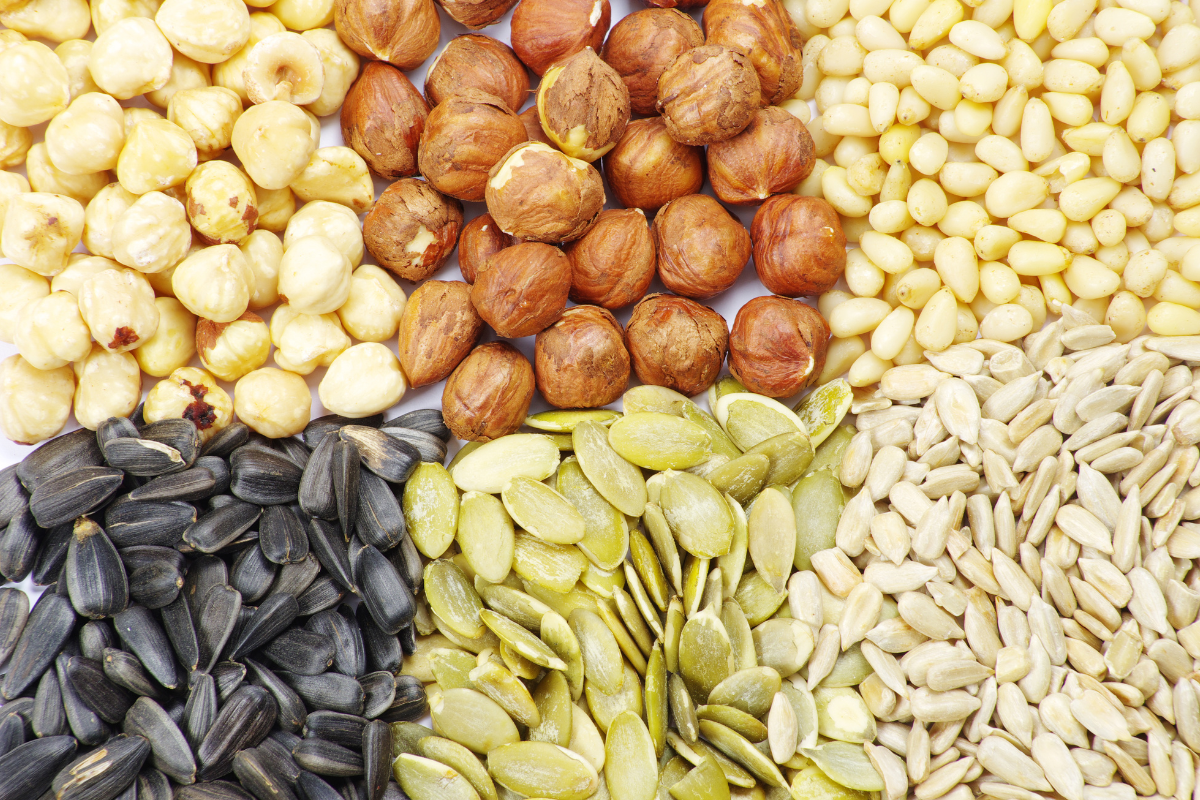
Every season is becoming more uncertain: late monsoon, sudden heat, unseasonal rain, new pests, and rising input costs. In this new reality, “one crop, one variety” is a risk. Crop diversity works like an insurance policy. When you grow or keep access to multiple local varieties, you reduce the chance that one weather shock wipes out everything.
Traditional (indigenous) varieties often carry traits that modern uniform seeds may not prioritise: drought tolerance, flood tolerance, salinity tolerance, pest resistance, and better performance in low-input conditions. That’s why community seed banks and seed-keeper networks are being seen as practical climate tools, not just heritage projects. FAO’s work on community seed banks highlights their role in helping farmers access locally adapted seed for the next season and in emergencies after crop loss due to floods or other shocks.
Seed diversity also protects your independence. If your entire farming system depends on buying seed every year, your cost and risk both rise. Community seed banks are usually built around two simple ideas:
- Seed belongs in the village
- Seed should circulate, not disappear
This is not anti-science. It is applied science at ground level: conserve genetic diversity locally, keep it evolving under local conditions, and reduce dependence on a narrow set of varieties.
India also has a strong national backbone for genetic resources. ICAR–NBPGR’s mandate includes collection, conservation and distribution of germplasm. This matters because community systems and national gene banks complement each other: one keeps diversity alive in fields, the other keeps it safeguarded and documented.
Who are “seed keepers” and what do they actually do ?
Seed keepers are farmers (often women, often marginal farmers) who treat seed as living wealth. Their work is not only “saving seed in a bottle.” It is a full cycle of on-farm selection, cleaning, storage, documentation, exchange, and re-growing.
Typical seed-keeper practices include:
Selecting the healthiest plants at harvest for seed
Saving seed from plants that performed best under local stress (drought, flood, pests)
Maintaining purity by keeping distance between varieties and careful labeling
Storing seed with traditional and improved methods so germination remains high
Sharing seed through village-level exchange rules so seed doesn’t get locked up
This is genetic memory in action. When you save seed from a crop that survived a tough year, you are effectively “training” the next generation of that crop for your local climate. That’s why many community seed banks operate as farmer-led institutions rather than top-down distribution points. FAO notes that community seed banks are typically maintained and promoted by farmers and conserve landraces while sometimes including improved varieties too.
Networks like Navdanya describe their work as a seed-keeper network and report building many decentralised community seed banks. Whether you agree with every ideology or not, the operational lesson for farmers is clear: decentralised seed storage and exchange builds resilience when markets fail or weather shocks hit.
Community seed banks: what they are and how they help you ?
A community seed bank is a village or cluster-level system that collects, stores, regenerates, and shares seeds, especially local varieties. Think of it as a “seed library” plus a “seed school.”
How farmers benefit in real terms:
Reduced seed cost next season
Emergency seed after flood or crop failure
Access to locally adapted varieties that perform with less water or fewer inputs
A trusted system to test varieties in your own soil before adopting at scale
Community knowledge: who grows what, what works where, and why
NBPGR’s public information on community seed banks emphasises that such systems conserve landraces and are promoted by farmers and farmer groups.
FAO’s community seed bank guidance also highlights a key point: global seed vaults alone cannot ensure local diversity; local systems are needed to keep varieties available and adapted in the community context.
Farmer practicality: a seed bank is not only for rare seeds. It can also reduce your risk when a popular commercial variety suddenly fails due to a new pest or a rainfall shift. The seed bank gives you options quickly, without waiting for the market.
The legal side: what Indian farmers are allowed to do with seed
Many farmers hesitate: “Is seed saving legal if a variety is protected?” India’s law explicitly recognises farmers’ rights in this area.
Under the Protection of Plant Varieties and Farmers’ Rights (PPV&FR) Act, farmers are entitled to save, use, sow, re-sow, exchange, share, or sell farm produce including seed, in the same manner as before the Act—while a key restriction is that farmers cannot sell “branded” seed of a protected variety. This is repeatedly stated in official and public summaries of the Act, including government communication.
What this means practically:
You can save and exchange seed in the community
You can sell your produce (including seed) in the usual way
But if a protected variety is involved, don’t package and market it as branded seed
Also important: the PPV&FR system recognises that farmers can register varieties too (including farmers’ varieties), which matters for recognition and benefit-sharing in some cases. (If your portal wants, I can write a separate farmer-friendly explainer on how “farmers’ varieties” registration works, costs, documents, and what it does and doesn’t protect.)
For seed banks, the farmer-safe approach is simple: keep clear records, avoid “branding” protected varieties, and focus on farmer-to-farmer exchange and community resilience.
Biodiversity = resilience: which traits matter on the ground
Farmers don’t need biodiversity for slogans. They need traits that show up in yield stability.
Local varieties often carry:
Drought escape (short duration)
Drought tolerance (stays productive with less water)
Flood tolerance (survives submergence or waterlogging)
Salinity tolerance (coastal or canal-affected areas)
Heat tolerance (grain filling in high temperature)
Pest and disease tolerance (often polygenic, more durable)
Community seed banks strengthen resilience because they keep multiple varieties available. When climate hits unpredictably, different varieties respond differently, giving you a higher chance of at least one good outcome. Research literature on community seed banks also argues they can enhance resilience for farmers most affected by climate change.
Farmer tip: If your village seed system keeps 10 rice varieties (or 10 bajra lines), you’re not just preserving culture. You are keeping a portfolio of traits that may be crucial in a bad year.
Taste and nutrition: why indigenous varieties often “feel better”
Farmers know this from kitchens, not laboratories: some grains taste better, stay fresh longer, or keep you full for longer. That can be linked to grain texture, micronutrients, fibre, and the way the crop matures.
Local landraces may have:
Stronger aroma and taste profiles
Better cooking qualities (stickiness, softness, firmness, fermentation behavior)
Higher straw value (fodder quality and quantity)
Better suitability for traditional foods (idli/dosa batter, rotis, porridge, local snacks)
This is why seed conservation is not only an “environment story.” It is a food-quality story and a market story. In many regions, consumers are returning to traditional rice varieties, millets, and pulses for taste and health reasons, creating small premium markets.
Practical angle: if a community seed bank helps revive a local variety with strong taste identity, it can support direct marketing, local branding (not the legal “branded protected seed” issue, but food branding), and value addition.
How to start a village seed bank: a farmer-first blueprint ?
If you want a seed bank that actually works (not a cupboard of dead seed), focus on operations.
Core steps (field-tested logic, aligned with CSB guidance):
1. Start small: 10–20 trusted varieties, 5–10 committed farmers
2. Fix rules: borrowing, return quantity, and quality standards
3. Storage: cool, dry, pest-safe; airtight containers where possible
4. Quality checks: germination test before distribution
5. Regeneration plan: re-grow each variety periodically to keep seed alive
6. Record book: variety name, source, year, traits, quantity, borrower, return
7. Seed health: clean, dry properly, avoid mixing lots
A practical reference point is that community seed bank guidelines emphasise simple methods of seed cleaning, grading, storage, purity maintenance, and germination testing.
Farmer tip: treat seed like milk, not like grain. Grain you can store for eating; seed must remain alive.
Linking with official systems: NBPGR and beyond
Community systems become stronger when they connect with formal institutions for training, evaluation, and backup conservation.
NBPGR’s national role includes conservation in a multi-crop genebank and providing germplasm for research and use.
This matters because:
If a village has a rare landrace, documenting it and connecting to formal conservation improves long-term security
In disasters, having a “duplicate” conservation route helps prevent permanent loss
Training and protocols improve seed quality and viability
For farmers, the best approach is collaboration: community seed banks keep seeds alive and adaptive; national institutions preserve and document at scale.
Seed sovereignty without myths: what seed banks can and cannot do
Community seed banks are powerful, but they are not magic.
They can:
- Reduce seed cost and dependency
- Improve local adaptation and resilience
- Protect varieties from disappearing
- Support local food quality and niche markets
They cannot:
- Guarantee high yield in every year
- Replace all improved varieties (sometimes improved varieties are needed for certain targets)
- Fix irrigation problems or soil fertility alone
- Function without discipline (labeling, drying, and regeneration are non-negotiable)
The best model is hybrid: keep indigenous diversity alive while also evaluating improved varieties where they make sense—under farmer control.
A farmer checklist: if you want to become a seed keeper
If you want to start tomorrow, use this checklist:
1. Seed selection
Choose seed from healthy, true-to-type plants
Avoid seed from disease-affected patches
2. Drying
Dry in shade with airflow
Store only when moisture is low enough (seed should “bite hard,” not bend)
3. Storage
Use airtight containers when possible
Add locally used safe protectants as per local practice (and avoid harmful chemicals)
Label every container with variety, date, location
4. Testing
Do a simple germination test before sowing or sharing
Keep a small sample aside for retesting
5. Exchange
Share within a trusted group
Collect feedback: which variety did best and under what conditions
6. Rights awareness
Know your PPV&FR rights to save, use, exchange and share seed, and avoid selling “branded” seed of protected varieties.
Why this matters now ?
Seed keepers are not preserving “old seeds.” They are preserving options for the future. In a climate-uncertain India, the farmer who controls diverse seed controls resilience. Also Read: Fish farming : Jayanti Rohu and Amur carp are improved species of fish helping Indrasakhi Devi earn a profit of Rs 5 lakh
Contact us: If farmers want to share information or experiences related to farming with us, then they can do this by calling us on the phone number 9599273766 or by writing an email to kisanofindia.mail@gmail.com or by sending your recording. Through Kisan of India, we will convey your message to the people, because we believe that if the farmers are advanced then the country is happy.
