


She-Tech in the Field: How Rural Women Are Adopting Drones and Data

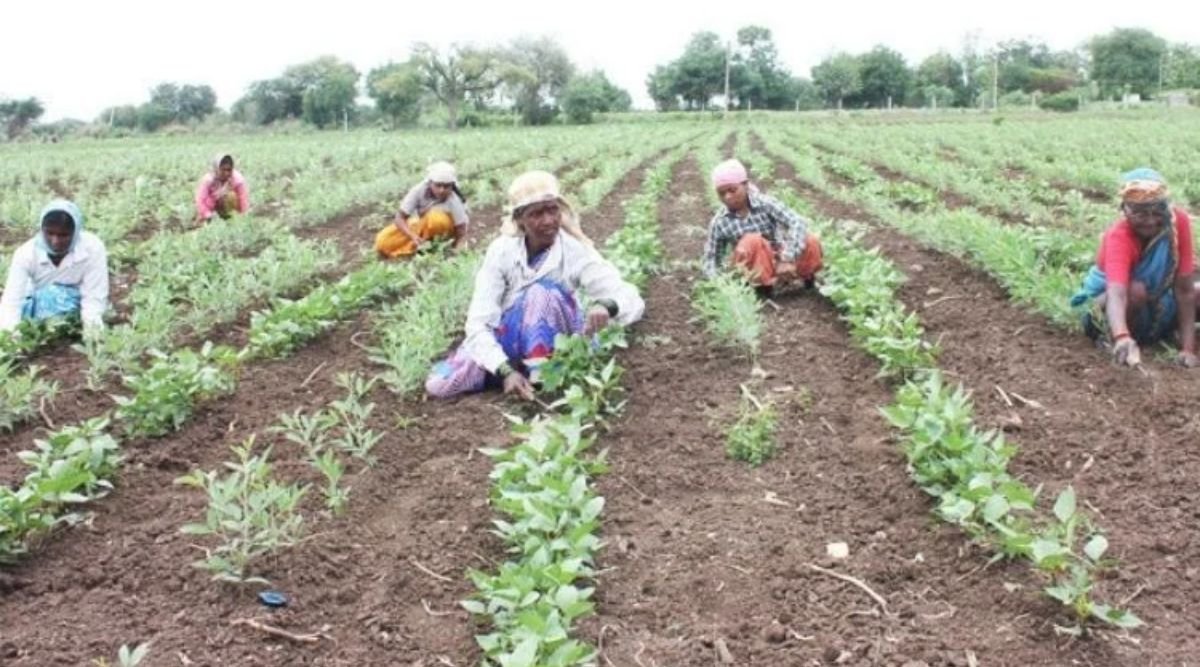
Across rural India, a quiet transformation is underway. Women who were once seen only as farm labourers or helpers are now operating drones, reading crop data on mobile phones, and making technology-based decisions in the field. This shift is not driven by slogans, but by necessity. Rising input costs, labour shortages, climate uncertainty, and the need for timely information have pushed women farmers and agri-collectives to adopt digital tools that were earlier considered out of reach.
Recent government programmes, especially under the Ministry of Agriculture and Farmers Welfare’s Digital Agriculture Mission, along with NABARD-supported FPO initiatives, show that rural women are no longer just beneficiaries of technology. They are becoming its users, managers, and in some cases, service providers.
Why Women Are Turning to Technology
In many farming households, men migrate seasonally for work, leaving women to manage crops, livestock, and finances. Technology helps bridge gaps created by labour shortages and limited access to extension services. Mobile-based agri-apps provide weather alerts, pest warnings, and market prices in local languages. For women who juggle farm work with household responsibilities, timely information saves both time and cost.
NABARD FPO case studies indicate that women-led groups are quicker to adopt shared technologies because risks and costs are distributed. When a drone or sensor is owned collectively, women feel more confident experimenting with it.
Drones: From Curiosity to Livelihood Tool
One of the most visible changes is the entry of women into agricultural drone operations. Under government-supported training programmes and subsidies, rural women are being trained as “drone pilots” for spraying fertilisers, micronutrients, and bio-inputs.
In states like Maharashtra, Haryana, and Andhra Pradesh, women associated with FPOs now operate drones as paid service providers. A single trained woman can cover 25–30 acres a day, compared to manual spraying which is slower and physically taxing. For women, drones reduce health risks from chemical exposure and open up a new source of income.
These drone services are not limited to large farmers. Small and marginal farmers benefit because they can hire spraying services at a fixed per-acre rate, without buying expensive equipment themselves.
Agri-Apps and Mobile Advisory Systems
Mobile phones have become the most accessible technology for rural women. Agri-apps linked to the Digital Agriculture Mission provide crop calendars, pest alerts, fertiliser advice, and mandi prices. Women farmers use these apps to decide sowing dates, input timing, and harvest planning.
Importantly, women are using messaging platforms and voice-based advisory services more than text-heavy apps. This has encouraged developers and extension agencies to design tools that suit low-literacy users. NABARD reports show that women who regularly use agri-apps report better decision-making confidence and reduced dependency on middlemen.
Sensors, Data, and Small Decisions
While advanced sensors are still limited to pilot projects, simple tools like soil moisture sensors, digital weighing scales, and GPS-enabled devices are steadily entering women-managed farms and collectives. These tools help women track irrigation needs, input use, and yields more accurately, reducing guesswork that often leads to overwatering or excess fertiliser use. Even a basic moisture reading can guide the timing of irrigation, saving water, electricity, and labour.
Data does not always mean complex dashboards or technical charts. For many rural women, keeping digital records of expenses, crop inputs, and sales on a mobile phone itself is a major change. Writing down how much seed was bought, how many days of labour were used, or what price was received at the mandi helps convert experience into evidence. Over time, these small records reveal patterns — which crop costs more, which plot gives better returns, and where losses occur.
These digital records quietly strengthen women’s position within households and FPOs. When decisions are backed by numbers, women are taken more seriously during discussions on crop planning, borrowing, or investment. Banks and government schemes increasingly ask for basic records, and women who can show even simple digital data find it easier to apply for loans, subsidies, and insurance. In this way, small data leads to stronger voices and better decisions on the farm.
Digital Literacy: The Biggest Challenge
Despite progress, challenges remain. Digital literacy gaps are real, especially among older women. Limited smartphone ownership, patchy internet connectivity, and fear of technology slow adoption. Training programmes that are too technical or conducted only once often fail to build confidence.
Successful initiatives share common features: repeated hands-on training, peer learning, local language instruction, and continuous support. Women learn best when technology is linked directly to income or workload reduction, not abstract concepts.
Beyond skills and screens, technology touches something deeper for many rural women — self-belief. For women who were told for years that machines were “men’s work” and decisions were “not their domain,” holding a drone controller or reading crop data on a phone becomes an emotional turning point. Many women trained under FPO and NABARD programmes describe their first drone flight or app-based decision not in technical terms, but in personal ones — the moment they felt seen, capable, and trusted. Fear of pressing the wrong button slowly gives way to pride, especially when neighbours begin to ask for advice or services. This confidence often travels beyond the field, changing how women speak in meetings, negotiate at markets, and guide their children’s education. In that sense, digital tools are not just instruments of efficiency; they become quiet instruments of dignity.
Empowerment Beyond Income
Technology adoption is changing social dynamics. Women who operate drones or manage digital records gain recognition within families and communities. They participate more actively in FPO meetings and decision-making. In some cases, they negotiate directly with buyers and input suppliers using digital price information.
FAO and NABARD studies highlight that digital tools amplify women’s voices when combined with collective platforms like SHGs and FPOs. Technology alone does not empower, but when placed in women’s hands with institutional support, it becomes a strong enabler.
The Road Ahead
India’s push toward digital agriculture will succeed only if women are at its centre. This means designing tools for low-literacy users, expanding women-only training programmes, ensuring access to devices, and strengthening women-led collectives.
She-Tech in the field is not about replacing traditional knowledge. It is about adding precision, safety, and confidence to the work women already do. As more rural women adopt drones, data, and digital tools, Indian agriculture moves toward a future that is not only smarter, but also more inclusive and resilient.
Contact us: If farmers want to share information or experiences related to farming with us, then they can do this by calling us on the phone number 9599273766 or by writing an email to kisanofindia.mail@gmail.com or by sending your recording. Through Kisan of India, we will convey your message to the people, because we believe that if the farmers are advanced then the country is happy.
You can connect with Kisan of India on Facebook, Twitter, and Whatsapp and Subscribe to our YouTube channel.
