
Solar Pumps to Smart Grids: India’s Energy Revolution in the Fields

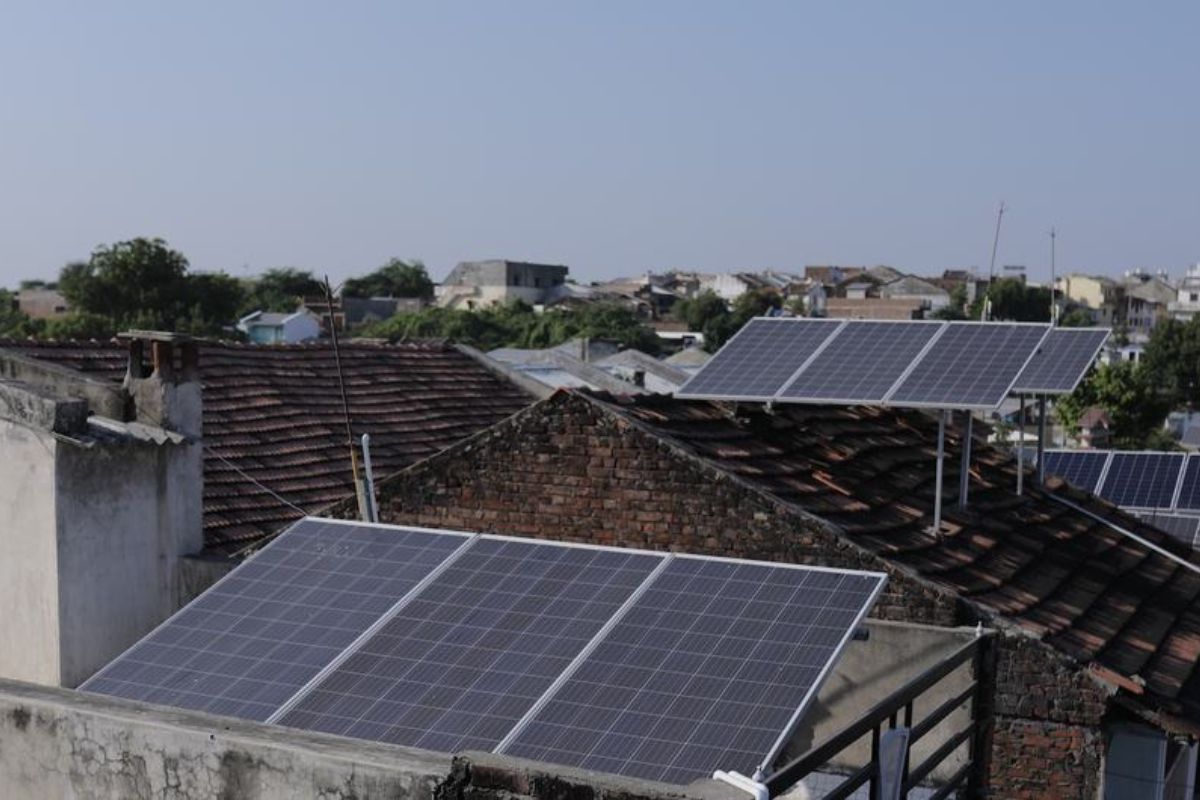
Solar Pumps: For decades, energy has been one of the weakest links in Indian agriculture. Farmers have depended on erratic grid supply, expensive diesel pumps, or unreliable power schedules to irrigate their fields. This dependence has shaped cropping choices, raised costs, and increased uncertainty, especially for small and marginal farmers. Today, that equation is beginning to change. Solar energy, once seen as distant or urban, is steadily entering India’s farms, reshaping how water, power, and income flow through rural landscapes.
At the centre of this shift is India’s push toward decentralised renewable energy, driven by programmes such as PM-KUSUM and supported by policy frameworks from Ministry of New and Renewable Energy, NITI Aayog, and global institutions like the World Bank. Together, these efforts signal a quiet but powerful energy revolution in Indian fields.
Why Energy Matters So Much in Farming
Irrigation is the backbone of Indian agriculture, but it is also one of its biggest cost centres. Diesel pumps expose farmers to fuel price shocks, while grid-powered pumps often suffer from low voltage, night-time supply, or frequent outages. These constraints affect not just yields, but also decisions about which crops to grow and when to irrigate.
Energy insecurity has also had environmental costs. Over-extraction of groundwater, driven by subsidised electricity, has lowered water tables in many states. Diesel pumps contribute to air pollution and add to farming costs. The need for a cleaner, more reliable energy source has therefore been both economic and ecological.
PM-KUSUM: Changing the Energy–Water Equation
The Pradhan Mantri Kisan Urja Suraksha evam Utthaan Mahabhiyan, better known as PM-KUSUM, was designed to address these exact challenges. The scheme promotes solarisation of agriculture through three key components: standalone solar pumps, solarisation of existing grid-connected pumps, and decentralised solar power plants on barren or fallow land.
Under PM-KUSUM, farmers receive substantial capital subsidies to install solar pumps, reducing upfront costs. MNRE data shows that these pumps provide reliable daytime power, allowing farmers to irrigate when crops actually need water, rather than when electricity happens to be available.
For farmers, the immediate benefit is predictable irrigation and lower operating costs. Once installed, solar pumps run without fuel expenses and minimal maintenance. Over time, this stabilises farm economics, especially for water-intensive but high-value crops.
Who Benefits Most from Solar Pumps
Solar pumps do not benefit all farmers in the same way. Understanding where they fit best helps avoid wrong investments. Farmers in regions with high diesel dependence, unreliable grid supply, and good sunlight benefit the most. These include parts of Rajasthan, Gujarat, Maharashtra, Karnataka, Telangana, Madhya Pradesh, and Bundelkhand in Uttar Pradesh.
Small and marginal farmers with shallow to medium-depth borewells see faster gains because pump sizes remain modest and installation costs are lower. Farmers growing vegetables, pulses, oilseeds, and horticulture crops benefit more than those growing only water-intensive crops. For rainfed farmers, solar pumps work best as protective irrigation tools rather than continuous irrigation systems.
Women farmers and FPOs managing shared wells or community irrigation systems often find solar pumps more affordable and manageable than individual diesel pumps.
From Solar Pumps to Smart Grids
The next phase of India’s energy transition goes beyond standalone solar pumps. Grid-connected solar pumps allow farmers not only to use solar power for irrigation, but also to feed surplus electricity back into the grid. This creates a powerful incentive to save water.
When farmers earn by selling unused solar power, pumping less water becomes profitable. NITI Aayog and World Bank studies highlight this as a behavioural shift with long-term benefits. Instead of free or flat-rate electricity encouraging overuse of groundwater, solar-linked grids reward conservation.
In states experimenting with feeder-level solarisation, entire rural feeders are powered by solar plants. This improves power quality for both farms and households, while reducing losses for distribution companies. Agriculture moves from being a burden on the grid to becoming a contributor.
Solar Pumps and Crop Planning
One of the less discussed benefits of solar irrigation is how it changes crop planning. When irrigation becomes predictable, farmers can shift from emergency watering to planned watering. This improves root development, reduces crop stress, and increases fertiliser efficiency.
Farmers using solar pumps often move toward:
• drip and sprinkler systems
• vegetables and short-duration crops
• intercropping instead of monocropping
• better timing of fertiliser application
MNRE field observations show that farmers using solar pumps with micro-irrigation report water savings of 30–50 percent. This directly lowers electricity use, groundwater extraction, and input costs.
Impact on Farm Economics
Solar energy changes farm economics in several ways. First, it reduces recurring costs. Diesel expenses disappear, and electricity bills fall sharply. Second, it reduces risk. Irrigation is no longer tied to fuel availability or grid schedules.
Third, solar pumps enable diversification. Farmers can shift toward crops that require timely but controlled irrigation, such as vegetables, pulses, and horticulture crops. Reliable energy also supports allied activities like dairy, cold storage at small scale, and on-farm processing.
World Bank assessments of solar water pumping in India show that payback periods shorten significantly when subsidies and power buyback mechanisms are combined. For many farmers, solar energy becomes not just a cost-saving tool, but a source of supplementary income.
Groundwater: Risk and Responsibility
Solar pumps are powerful tools, but they can become risky if groundwater is ignored. Unlike grid electricity, solar power does not “switch off,” which can encourage excessive pumping. In water-stressed areas, this can worsen groundwater depletion.
That is why experts from MNRE and NITI Aayog emphasise linking solar pumps with:
• water budgeting at village level
• crop selection based on local water availability
• fixed irrigation hours
• incentives for selling surplus power instead of pumping water
Farmers who treat solar energy as a resource to manage, not exploit, gain long-term security.
Collective Models: FPOs and Solar Irrigation
Solar irrigation works best when farmers come together. NABARD-supported FPOs and cooperatives are increasingly managing shared solar pump systems. This reduces individual investment, improves utilisation, and ensures maintenance.
In collective models:
• pumps run more efficiently
• water use is planned jointly
• power buyback becomes viable
• repair and servicing costs reduce
For small farmers, joining a solar-based FPO is often safer than owning an individual system.
Maintenance and Long-Term Care
Solar pumps require less maintenance than diesel engines, but they are not “fit and forget” systems. Farmers must regularly clean panels, check wiring, and protect systems from theft and damage.
Training on basic maintenance is crucial. Many state agencies now include maintenance support and service contracts under PM-KUSUM. Farmers should always check:
• warranty on panels and motors
• availability of local service centres
• insurance options
A well-maintained solar pump can run efficiently for 15–20 years.
Beyond Irrigation: Other Farm Uses of Solar Power
Once solar infrastructure is in place, farmers can expand its use beyond irrigation. Solar energy can support:
• lighting for sheds and homes
• milk chilling units
• grain drying
• small cold storage
• fencing and security systems
This diversification improves farm resilience and creates new income opportunities.
What Farmers Should Ask Before Adopting Solar Pumps
Before applying under PM-KUSUM or other schemes, farmers should ask:
• How deep is my water source?
• What size pump do I actually need?
• Can I combine solar with drip irrigation?
• Is grid connection or power buyback possible?
• Should I apply individually or through an FPO?
Asking these questions helps avoid over-sizing and long-term problems.
Energy as a New Farm Asset
Solar energy turns electricity from a problem into an asset. Instead of waiting for power or paying for fuel, farmers gain control. In grid-connected models, power itself becomes a crop, one that does not need water, fertiliser, or labour.
This shift changes how farming is valued in the economy. Agriculture moves from being an energy consumer to an energy contributor.
Challenges Farmers Still Face
Despite progress, solar adoption is not without challenges. Upfront costs, even after subsidies, can be high for small farmers. Awareness about application processes, maintenance needs, and grid integration remains uneven.
There are also concerns about groundwater misuse if solar pumps are installed without proper regulation. Experts from MNRE and NITI Aayog stress that solar irrigation must be paired with water management practices such as micro-irrigation, crop planning, and local groundwater monitoring.
The Road Toward Smart, Sustainable Agriculture
India’s shift from diesel and unreliable grids to solar-powered and smart energy systems represents more than a technology change. It is a restructuring of how power, water, and agriculture interact. Clean energy reduces costs, improves resilience, and aligns farming with climate goals.
The future lies in integrated systems, solar pumps linked to smart grids, combined with drip irrigation, digital monitoring, and farmer collectives managing shared infrastructure. When energy becomes clean, predictable, and farmer-controlled, agriculture becomes more sustainable and profitable.
From solar pumps humming quietly in fields to smart grids balancing power and water use, India’s farms are entering a new energy era. If managed wisely, this transition can turn energy from a constraint into a cornerstone of rural prosperity.
Also Read: Punarnava Jal – The world’s first organic fertilizer! Know how it is beneficial for farmers?
Contact us – If farmers want to share any valuable information or experiences related to farming, they can connect with us via phone or whatsapp at 9599273766 or you can write to us at “kisanofindia.mail@gmail.com”. Through Kisan of India, we will convey your message to the people, because we believe that if the farmers are advanced then the country is happy.
You can connect with Kisan of India on Facebook, Twitter, and Whatsapp and Subscribe to our YouTube channel.
