


What Happens Between Germination and Establishment : Why the First 10 Days Decide the Fate of the Crop

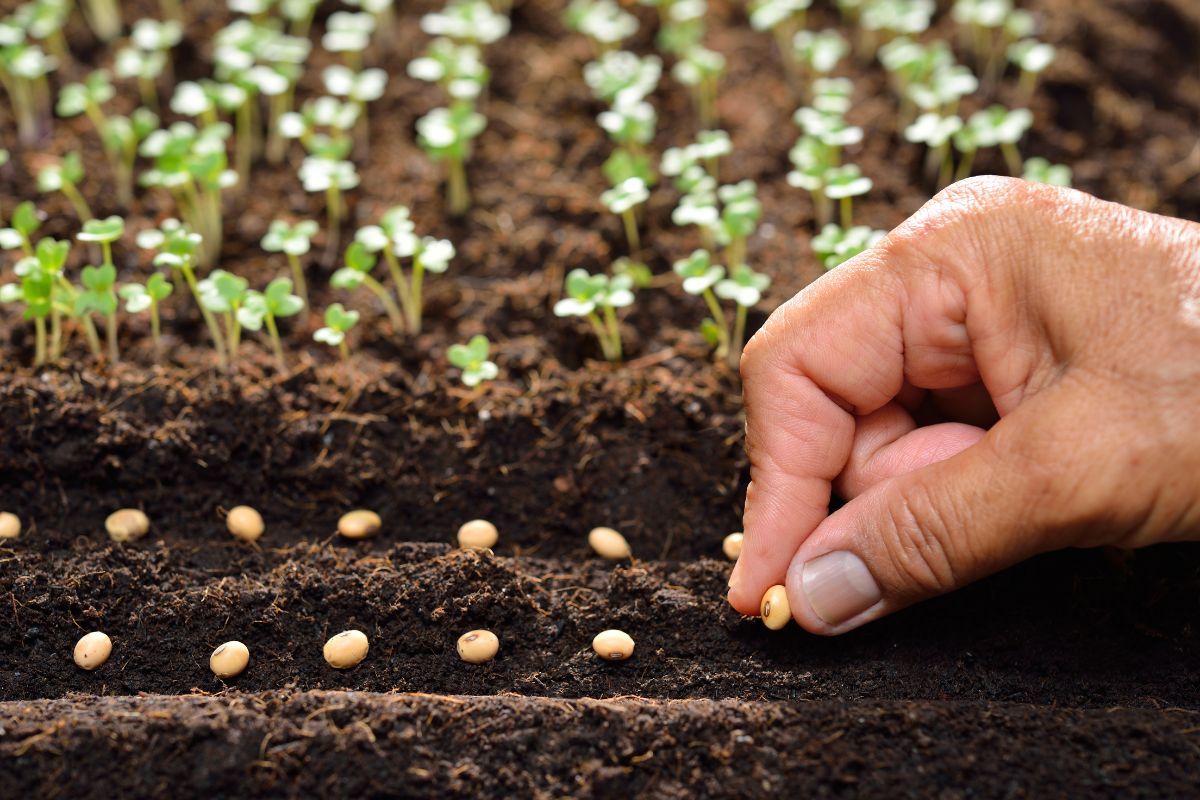
For most farmers, the moment a seed emerges from the soil brings relief. The field turns green, lines appear, and the fear of “बीज नहीं उगा” disappears. But science tells us something that farming experience often learns the hard way: germination is not success. It is only the beginning.
The most vulnerable, decisive, and misunderstood phase of a crop’s life lies between germination and establishment, roughly the first 7–10 days after emergence. This short window quietly decides whether a crop will become deep-rooted or shallow, resilient or weak, responsive to inputs or permanently limited in yield.
Many yield losses, poor plant stands, uneven growth, and later crop failures are not caused by problems during flowering or grain filling. They are silently decided in these first few days, when the crop looks small, harmless, and “not yet important.”
Understanding what happens during this phase helps farmers answer one of the most common questions in Indian agriculture:
“शुरुआत में सब ठीक था, फिर नुकसान क्यों हुआ?”
Germination Is Only Permission to Begin
Germination starts when a seed absorbs water and metabolic activity restarts. Enzymes activate, stored starch converts to sugars, and the radicle, the first root, emerges. This stage depends almost entirely on seed reserves, not soil nutrition.
At this point, the seedling:
• does not photosynthesise
• does not depend on fertiliser
• survives on stored food inside the seed
This is why even poor soils can show good initial germination if moisture is available.
But germination only gives the plant permission to try. The real test begins immediately after.
The First Major Shift: From Seed Support to Soil Support
Between day 3 and day 5 after emergence, the plant enters its most dangerous transition.
The stored food inside the seed begins to run out. Now the young seedling must:
• absorb water from soil
• absorb oxygen from soil pores
• start photosynthesis
• develop functional roots
This shift from seed-supported life to soil-dependent life decides survival.
Many seedlings fail here, not because they lacked nutrients, but because the soil could not support this transition.
This explains why farmers often see:
• plants emerging and then drying
• patchy crop stands
• “बीज उगा, फिर पौधा बैठ गया”
The failure happens underground, before the eye can catch it.
Why Roots Matter More Than Shoots in the First 10 Days
During the first ten days, crop success depends more on root health than leaf growth.
Young roots must:
• grow quickly downward
• branch effectively
• breathe continuously
• anchor the plant
If root growth slows or stops, the plant survives briefly but remains weak for life.
Later fertiliser, irrigation, or spraying cannot rebuild lost root architecture.
This is why crops that “recover” visually after early stress still give low yields. The damage is permanent, though invisible.
Oxygen: The Most Ignored Requirement in Early Crop Life
Farmers naturally focus on water and fertiliser. Oxygen is rarely discussed. Yet for young roots, oxygen is more important than nutrients.
Roots respire just like animals. Oxygen is required to break down sugars and release energy. This energy drives:
• root elongation
• water uptake
• nutrient absorption
If soil pores fill with water due to:
• over-irrigation
• heavy rain
• poor drainage
• compaction
oxygen supply collapses.
The result is root suffocation.
In such conditions:
• roots stop growing
• fine root hairs die
• nutrient uptake fails
• seedlings collapse
Applying fertiliser at this stage often worsens the problem by increasing salt stress around damaged roots.
Why “Good Irrigation” Sometimes Damages Crops
Many early crop failures happen after irrigation, not before.
When water is applied heavily to young crops:
• soil pores fill completely
• air is pushed out
• roots cannot breathe
Farmers then see wilting in wet soil and assume lack of water. They irrigate again, making suffocation worse.
This creates a vicious cycle.
Scientifically, oxygen stress is more damaging than short-term water stress at this stage.
Soil Surface Crusting: A Common but Underestimated Problem
After light rain or irrigation, soil surface often dries and forms a crust, especially in:
• clay soils
• silt-rich soils
• poorly structured fields
This crust:
• blocks oxygen movement
• restricts seedling emergence
• forces roots to grow sideways
• increases seedling mortality
Farmers often blame seed quality, but the real issue is physical soil behaviour in the first few days.
Temperature Stress in the First 10 Days
Young seedlings are extremely sensitive to soil temperature.
Cold soil:
• slows enzyme activity
• delays root growth
• increases disease risk
Hot soil:
• increases respiration
• dries surface moisture quickly
• burns stored energy
This is why early sowing or delayed sowing fails even when seeds are good and irrigation is available.
The first ten days require moderate soil temperature, not extremes.
Why Early Stress Creates Permanent Weakness
Plant science shows that early stress creates developmental programming.
When a seedling experiences stress early:
• it reduces growth ambition
• limits root depth
• lowers tiller or branch potential
• shifts to survival mode
This programming cannot be fully reversed later.
That is why farmers often say:
“फसल बाद में ठीक दिखी, पर ताकत नहीं आई”
Crop-Wise Sensitivity Farmers Recognise
Different crops show early stress effects differently.
Wheat:
• early stress reduces tillers permanently
Rice:
• weak seedlings never compensate fully
Cotton:
• shallow roots increase pest and drought risk
Pulses:
• early stress reduces nodulation
Vegetables:
• uneven growth, early drop, size variation
The pattern is universal, though symptoms vary.
Why Re-Sown Crops Sometimes Perform Better ?
Farmers often observe that re-sown fields outperform original sowing.
Science explains why.
The second sowing often gets:
• better moisture timing
• broken crust
• improved soil temperature
• less compaction
It is not the seed.
It is the first ten days that improved.
Common Farmer Mistakes During This Phase
Well-intentioned actions often cause damage:
• heavy irrigation “to be safe”
• early fertiliser application
• tractor movement soon after sowing
• ignoring drainage in low patches
These actions harm roots when they are most fragile.
What Farmers Should Prioritise in the First 10 Days ?
This phase should be treated like crop ICU.
Key priorities:
• continuous but light moisture
• good drainage
• minimal soil disturbance
• delayed fertiliser until roots establish
• protection from crusting
• patience over panic
Small adjustments here save large losses later.
Why This Phase Is Often Misdiagnosed ?
Because symptoms appear later, farmers blame:
• fertiliser quality
• seed companies
• pests
• weather
The real cause lies days earlier, underground.
Understanding this prevents wasted expenses and frustration.
The Core Scientific Message
Germination is not establishment.
Emergence is not success.
The real decision happens between day 1 and day 10.
If roots breathe, grow, and anchor in this window:
• fertiliser works better later
• irrigation efficiency improves
• crops tolerate stress
• yield potential is protected
Most crop losses are decided silently before farmers realise anything is wrong.
A New Way to Look at Early Crop Growth
Instead of asking:
“कितना खाद डाला?”
“कितना पानी दिया?”
Farmers should ask:
“पहले दस दिन जड़ें कैसी रहीं?”
Because strong crops begin underground, long before they are visible above it.
Final Thought for Farmers
The first ten days may look small on the calendar, but they carry the weight of the entire season.
Understanding this phase transforms farming from reaction to prevention, from confusion to clarity.
Most importantly, it helps farmers trust their experience again—now backed by science.
Because in farming, what happens quietly early decides everything loudly later.
Contact us: If farmers want to share information or experiences related to farming with us, then they can do this by calling us on the phone number 9599273766 or by writing an email to kisanofindia.mail@gmail.com or by sending your recording. Through Kisan of India, we will convey your message to the people, because we believe that if the farmers are advanced then the country is happy.
You can connect with Kisan of India on Facebook, Twitter, and Whatsapp and Subscribe to our YouTube channel.
