


Why Fertiliser Didn’t Work This Time ?
Salt Buildup, Wrong Timing, and the Hidden Science of Nutrient Lock-Up

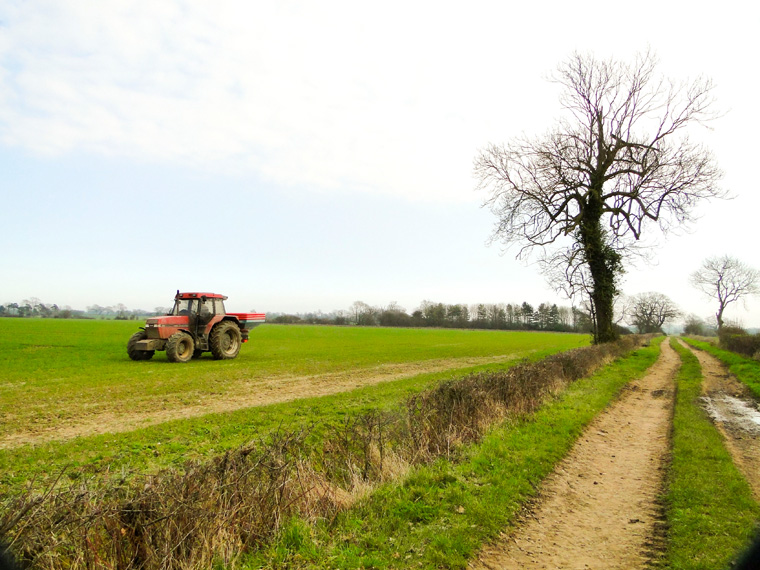
For many Indian farmers, fertiliser is one of the biggest investments of the season. It is bought with hope, applied with care, and often followed by expectation. So when crops do not respond despite correct dose and good quality fertiliser, frustration sets in.
The leaves remain pale. Growth is slow. Tillers or branches are fewer. Yield falls short. And the question echoes across fields and villages:
“खाद डाली थी, असर क्यों नहीं हुआ?”
This question is not about ignorance or negligence. It is about a gap between how fertilisers are expected to work and how they actually behave inside soil and plants. Modern plant and soil science shows that fertiliser failure is rarely about absence of nutrients. More often, it is about timing, chemistry, soil conditions, and root health.
Understanding why fertiliser fails is more important than adding more fertiliser. Because once nutrients are locked, lost, or misused, extra application only increases cost and damage.
Fertiliser Is Not Food. It Is a Signal
One common misunderstanding is that fertiliser directly “feeds” the plant. In reality, fertiliser provides nutrient ions that plants absorb only under specific conditions.
Plants do not eat fertiliser. They absorb nutrients through living roots, using:
• water flow
• energy from respiration
• chemical gradients
If roots are stressed, suffocated, damaged, or inactive, fertiliser may remain in the soil without entering the plant.
That is why fertiliser response depends more on root environment than on fertiliser quantity.
Salt Buildup: When Fertiliser Becomes a Barrier
Most chemical fertilisers are salts. Urea, DAP, MOP, SSP—all dissolve into salts when mixed with soil moisture. In correct amounts and proper timing, these salts help plants. But when salts accumulate near roots, they create stress.
Salt buildup happens when:
• fertiliser is applied repeatedly without adequate flushing
• irrigation is insufficient or uneven
• soil drainage is poor
• fertiliser is placed too close to roots
• high doses are applied at once
Excess salts increase the osmotic pressure around roots. This makes it harder for roots to absorb water, even when soil appears moist.
From the plant’s perspective, salty soil feels like drought.
Why Crops Wilt After Fertiliser Application
Farmers often observe wilting or yellowing shortly after fertiliser application and assume the crop “didn’t like” the fertiliser. Scientifically, what happens is salt shock.
When salt concentration rises suddenly:
• water moves out of root cells
• root tips get damaged
• fine root hairs die
This reduces nutrient uptake instead of increasing it.
Applying more fertiliser after this only worsens the situation.
Wrong Timing: Nutrients Miss the Plant’s Demand Window
Plants do not need nutrients equally throughout their life. Each crop has nutrient demand peaks tied to growth stages.
Common timing mismatches include:
• nitrogen applied too early, before active tillering
• phosphorus applied when roots are inactive
• potassium applied after flowering, when stress tolerance was already decided
If nutrients are applied outside the plant’s demand window, they may:
• leach away
• get fixed in soil
• convert into unavailable forms
Later, when the plant actually needs them, they are no longer accessible.
Nitrogen: The Most Misused Nutrient
Nitrogen failure is the most common fertiliser complaint.
Nitrogen can fail because:
• roots were oxygen-stressed
• soil was too dry or too wet
• temperature was too low or too high
• nitrogen converted to gas or leached
In waterlogged soil, nitrogen turns into gases and escapes.
In dry soil, nitrogen remains unused.
In warm, moist soil, nitrogen may burn quickly through microbial activity before roots absorb it.
Thus, nitrogen can disappear without showing visible response.
Phosphorus Lock-Up: Present but Unavailable
Many Indian soils contain sufficient phosphorus, yet crops show deficiency.
This happens because phosphorus easily reacts with:
• iron and aluminium in acidic soils
• calcium in alkaline soils
Once fixed, phosphorus becomes insoluble.
Adding more DAP does not solve this. It only increases locked phosphorus.
Phosphorus uptake also depends heavily on:
• root length
• root hairs
• mycorrhizal fungi
If early root growth was weak, phosphorus cannot be absorbed, no matter how much is applied.
Potassium Failure: When Stress Comes Unnoticed
Potassium is responsible for:
• water regulation
• stress tolerance
• disease resistance
Its deficiency often does not show clear visual symptoms until yield loss occurs.
Potassium failure happens when:
• soil moisture fluctuates sharply
• roots are shallow
• high nitrogen dilutes potassium uptake
Farmers often apply nitrogen repeatedly but ignore potassium, assuming soil has enough. Under stress, this imbalance reduces fertiliser efficiency across the board.
Nutrient Lock-Up: The Chemistry Farmers Never See
Nutrient lock-up means nutrients are present but chemically unavailable.
Causes include:
• wrong soil pH
• excess calcium or magnesium
• heavy metal interactions
• poor microbial activity
For example:
• zinc locks up in high-phosphorus soils
• iron locks up in alkaline soils
• sulphur becomes unavailable in compacted soils
This leads to “hidden hunger,” where crops look green but perform poorly.
Root Health: The Forgotten Link
No fertiliser works without healthy roots.
Roots fail when:
• soil lacks oxygen
• compaction restricts growth
• early water stress damaged root tips
• pests or diseases attacked roots
Once root surface area is reduced, fertiliser uptake capacity collapses.
That is why foliar sprays sometimes show quick greening—because roots are not functioning well.
Water–Fertiliser Interaction: The Silent Controller
Fertiliser effectiveness depends on water movement.
Too little water:
• fertiliser does not dissolve
• nutrients do not move to roots
Too much water:
• nutrients leach
• oxygen is lost
• roots suffocate
Uneven irrigation creates patchy fertiliser response, even with uniform application.
Temperature: The Invisible Factor
Soil temperature controls:
• microbial activity
• nutrient conversion
• root metabolism
Cold soils slow nutrient uptake.
Hot soils increase losses.
This is why the same fertiliser works in one season and fails in another.
Why Adding More Fertiliser Makes Things Worse
When fertiliser fails, the instinct is to add more.
Scientifically, this leads to:
• salt injury
• nutrient imbalance
• microbial disruption
• root damage
Excess fertiliser often reduces efficiency instead of improving it.
Why Crops Look Green but Yield Is Low
Green colour reflects nitrogen in leaves, not grain filling.
Yield depends on:
• balanced nutrition
• proper timing
• carbohydrate transport
Late or imbalanced fertiliser may green leaves but fail to fill grains.
This creates false confidence during the season and disappointment at harvest.
Common Farmer Observations Explained by Science
“खेत हरा था, फिर भी पैदावार कम”
→ nutrient timing mismatch
“खाद डाली, पर पत्ते नहीं सुधरे”
→ root or oxygen stress
“खाद बढ़ाई, फिर भी फायदा नहीं”
→ salt buildup or lock-up
These are physiological responses, not farmer mistakes.
How Farmers Can Diagnose Fertiliser Failure
Instead of asking “कितनी खाद,” ask:
• किस समय डाली
• मिट्टी की नमी कैसी थी
• जड़ें कैसी थीं
• पिछली सिंचाई कब हुई
• मिट्टी सख्त थी या भुरभुरी
These questions reveal more than dosage.
Building Fertiliser Efficiency, Not Quantity
Scientific farming focuses on:
• correct timing
• split application
• soil structure improvement
• root health protection
• balanced nutrients
Small improvements here increase response without extra cost.
The Core Scientific Truth
Fertiliser works only when:
• roots are alive and breathing
• soil chemistry allows availability
• timing matches crop demand
• water supports nutrient movement
Otherwise, fertiliser remains an expense, not an investment.
Final Message for Farmers
If fertiliser didn’t work this time, it does not mean farming failed. It means the system around the fertiliser did not support it.
Understanding this shifts farming from blind input use to intelligent management.
The real question is not:
“कितनी खाद डाली?”
It is:
“क्या खाद को काम करने का मौका मिला?”
When farmers start asking this, fertiliser stops being a gamble and becomes a tool again.
Because in farming, results are decided not by what you add, but by what the plant can actually use.
Contact us: If farmers want to share information or experiences related to farming with us, then they can do this by calling us on the phone number 9599273766 or by writing an email to kisanofindia.mail@gmail.com or by sending your recording. Through Kisan of India, we will convey your message to the people, because we believe that if the farmers are advanced then the country is happy.
You can connect with Kisan of India on Facebook, Twitter, and Whatsapp and Subscribe to our YouTube channel.
