



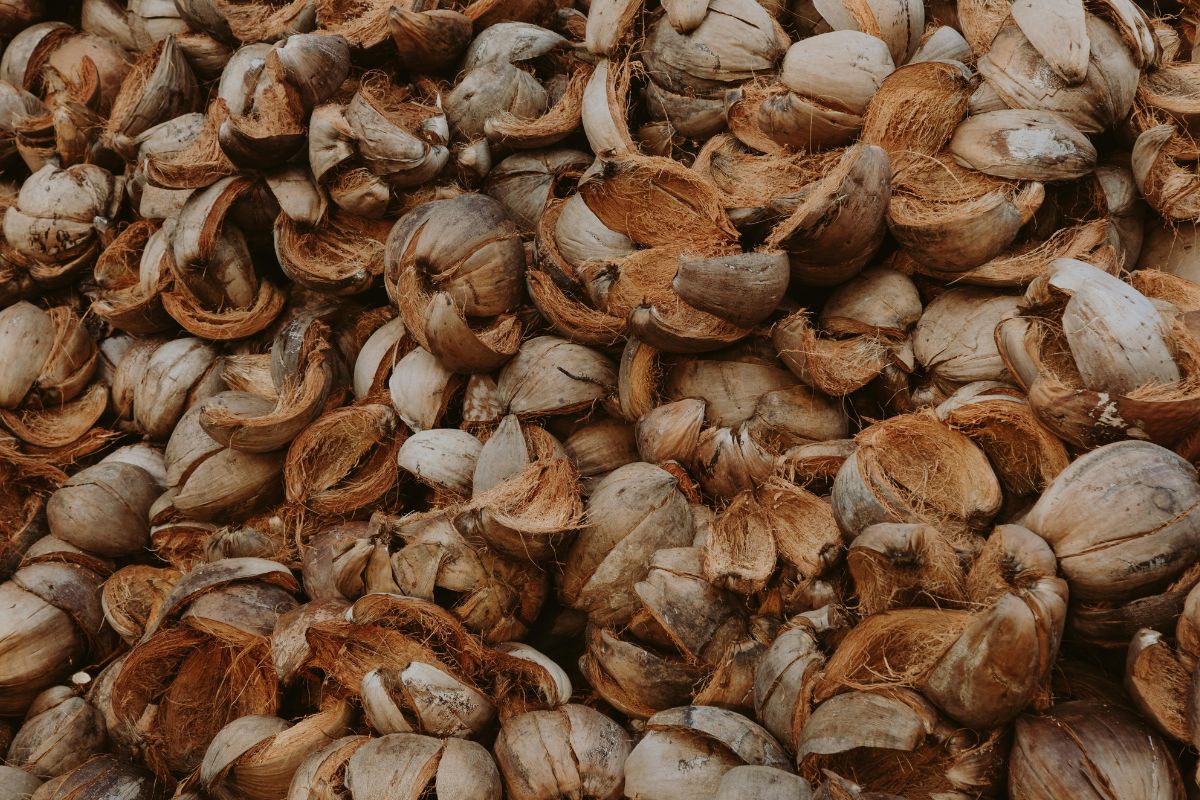
Across India’s coastal regions, coconut farming generates large quantities of shells every year. For decades, many of these shells were burned, discarded, or used as low-value fuel.
Today, farmers and rural entrepreneurs are discovering a more productive use.
Coconut shells are increasingly being converted into biochar, a carbon-rich material produced through controlled heating in low-oxygen conditions. When added to soil, biochar can improve fertility, enhance water retention, and support long-term soil health.
The practice is attracting attention among organic farmers looking for locally available alternatives to expensive external inputs.
What was once considered agricultural waste is becoming a valuable farm resource.
Healthy soil is the foundation of productive agriculture. Yet many coastal farming areas face challenges such as nutrient depletion, declining organic matter, and poor moisture retention. These problems often reduce crop performance and increase dependence on external inputs.
Farmers are therefore exploring methods that improve soil quality naturally.
Biochar is gaining popularity because it remains stable in soil for long periods and supports better physical and biological conditions.
Researchers continue studying its long-term benefits.
Interest is growing steadily.
Coconut Shells Create a Valuable Resource
India is one of the world’s largest coconut producers. Every harvest season generates large volumes of shells that often have limited economic value. Converting them into biochar creates an additional income opportunity while reducing waste.
The process transforms a by-product into a useful agricultural input.
Rural enterprises involved in coconut processing are beginning to explore biochar production as part of broader value-addition strategies.
Resource utilisation improves significantly. Nothing goes to waste unnecessarily.
One reason farmers are interested in biochar is its ability to hold moisture. Soils amended with biochar often retain water more effectively, helping crops withstand short dry spells. This benefit is particularly important in areas experiencing irregular rainfall patterns.
Agricultural experts note that improved moisture retention can support crop growth while reducing irrigation requirements.
As water management becomes increasingly important, practices that conserve moisture attract greater attention.
Biochar contributes directly to this objective. The benefits extend beyond fertility alone.
Organic farming systems frequently depend on locally available materials to maintain soil health. Biochar fits naturally within this approach because it can be produced from agricultural residues and integrated with compost or other organic amendments.
Several organic farmers report positive experiences when using biochar alongside existing soil management practices.
The material complements rather than replaces other organic inputs.
This flexibility supports wider adoption. Farmers appreciate practical solutions. Biochar offers one such option.
Carbon Storage Adds Environmental Benefits
Researchers are also interested in biochar because of its role in carbon management.
The carbon contained within biochar remains stable in soil for extended periods, reducing the amount released into the atmosphere. This characteristic has attracted attention from climate and sustainability experts.
While farmers focus primarily on productivity and soil health, the environmental benefits provide additional value.
The practice contributes to broader sustainability goals.
Its importance extends beyond individual farms.
The environmental impact is significant.
The growing interest in coconut shell biochar highlights an important trend in modern agriculture. Farmers are increasingly looking for ways to convert local resources into productive inputs rather than relying entirely on external supplies. Agricultural residues that once had limited value are becoming part of new farming systems.
For coastal farmers, biochar offers a practical method of improving soil quality while making better use of coconut by-products.
The approach combines waste reduction, soil improvement, and environmental sustainability.
As awareness grows, adoption is likely to expand further.
In India’s coconut-growing regions, yesterday’s waste is becoming tomorrow’s soil resource.
Also Read: Punarnava Jal – The world’s first organic fertilizer! Know how it is beneficial for farmers?
Contact us – If farmers want to share any valuable information or experiences related to farming, they can connect with us via phone or whatsapp at 9599273766 or you can write to us at “kisanofindia.mail@gmail.com”. Through Kisan of India, we will convey your message to the people, because we believe that if the farmers are advanced then the country is happy.
You can connect with Kisan of India on Facebook, Twitter, and Whatsapp and Subscribe to our YouTube channel.