


Fermented Plant Extracts Are Helping Farmers Reduce Chemical Inputs Naturally

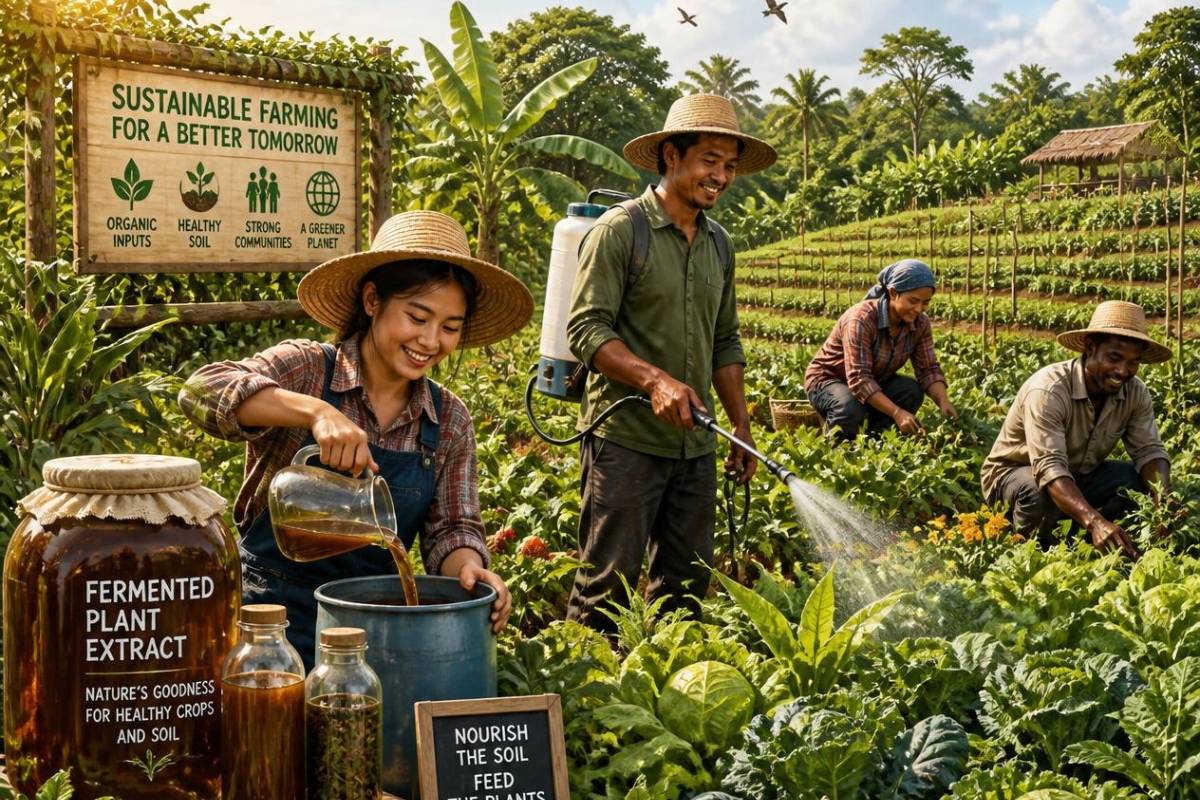
As input costs continue to rise, many farmers are looking for affordable alternatives to chemical fertilisers and crop protection products. One practice gaining attention in organic farming is the use of fermented plant extracts (FPEs). Prepared by fermenting nutrient-rich leaves with natural ingredients, these extracts are used as liquid bio-stimulants to improve crop growth and plant health.
Unlike synthetic chemicals, fermented plant extracts rely on naturally occurring microorganisms and plant compounds. Researchers say they supply small amounts of nutrients, beneficial microbes, enzymes, amino acids, and natural growth-promoting substances that help crops perform better under different growing conditions.
Organic farmers across several countries are increasingly adopting these preparations as part of integrated soil and crop management.
Fermented plant extracts are usually made using fast-growing plants such as moringa, neem, gliricidia, comfrey, nettle, or other nutrient-rich vegetation available locally.
The chopped plant material is mixed with natural sugars like jaggery or molasses and allowed to ferment for several days. During fermentation, beneficial microorganisms break down plant tissues and release nutrients into the liquid.
Agricultural scientists say the process converts plant biomass into an easily usable liquid input.
Supports Crop Growth Naturally
The fermented liquid is diluted with water before being applied as a foliar spray or soil drench.
Researchers have found that these extracts can stimulate root development, improve leaf growth, and enhance overall plant vigour. They also support beneficial microbial activity in the soil, which helps improve nutrient availability.
Scientists note that bio-stimulants work by improving plant performance rather than replacing fertilisers completely.
Healthy plants are generally better able to withstand periods of drought, heat, or temporary nutrient shortages.
Studies suggest that naturally fermented extracts contain compounds that improve plant metabolism and support recovery from environmental stress. Farmers often use them during critical growth stages when crops require additional support.
Researchers continue to study how different plant species influence the composition and effectiveness of these extracts.
One of the biggest advantages of fermented plant extracts is that they can be prepared using materials available on or near the farm.
This reduces dependence on purchased agricultural inputs while encouraging the recycling of local plant biomass. Small and marginal farmers can produce the extracts with minimal investment.
Development experts believe low-cost biological inputs can improve the sustainability of smallholder farming systems.
Part of Integrated Organic Farming
Organic farming relies on a combination of compost, crop rotation, biological pest management, and natural plant nutrition.
Fermented plant extracts fit into this approach by strengthening crop growth while reducing reliance on synthetic chemicals. They are increasingly being evaluated alongside other bio-inputs as part of regenerative farming practices.
Scientists emphasise that the best results are achieved when fermented extracts are combined with good soil management and balanced crop nutrition.
Fermented plant extracts demonstrate how locally available resources can be converted into valuable agricultural inputs.
For farmers, they offer a low-cost option to strengthen crop growth and improve soil biology. For researchers, they represent an important area of study in sustainable agriculture. For the environment, they encourage the use of renewable biological resources instead of excessive chemical inputs.
As interest in organic and regenerative farming grows, fermented plant extracts are emerging as a practical tool that combines traditional knowledge with modern scientific understanding.
Also Read: Punarnava Jal – The world’s first organic fertilizer! Know how it is beneficial for farmers?
Contact us – If farmers want to share any valuable information or experiences related to farming, they can connect with us via phone or whatsapp at 9599273766 or you can write to us at “kisanofindia.mail@gmail.com”. Through Kisan of India, we will convey your message to the people, because we believe that if the farmers are advanced then the country is happy.
You can connect with Kisan of India on Facebook, Twitter, and Whatsapp and Subscribe to our YouTube channel.