



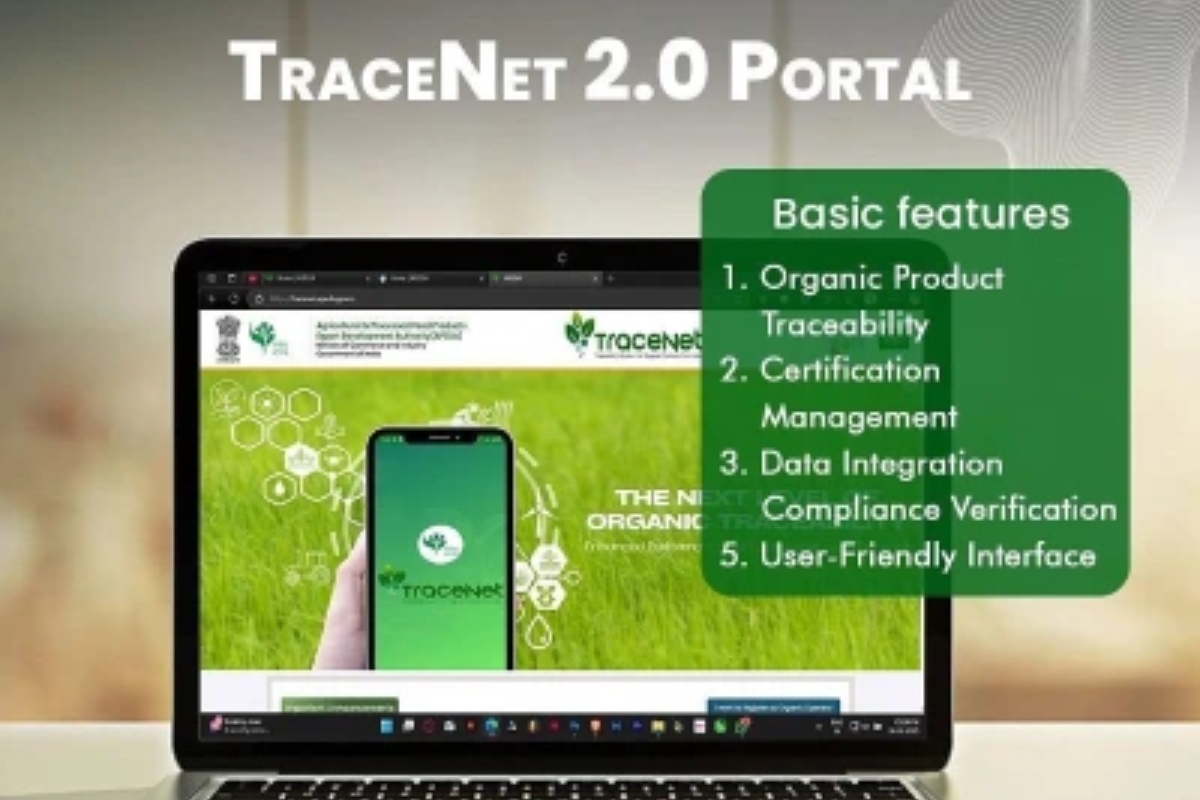
India is updating the digital system used to record and track certified organic production as the country’s organic sector expands. The Agricultural and Processed Food Products Export Development Authority, which implements the National Programme for Organic Production, has announced the launch of an updated TraceNet system. The system forms part of India’s organic certification framework and is used to maintain records linked to certified organic operators and products.
For farmers, the change matters because certification and traceability are important when organic produce moves from farms to processors, exporters and overseas buyers.
What TraceNet does
TraceNet is the digital platform connected with India’s National Programme for Organic Production. It helps maintain information related to organic operators and certified production.
Organic certification requires more than a farmer avoiding chemical fertilisers and pesticides. Farmers and other operators must follow prescribed production standards and maintain records that can be checked during certification.
The digital system helps connect these records within the certification chain.
APEDA’s NPOP platform currently provides access to TraceNet along with information on accredited certification agencies, organic certification data and procedures for certified organic products.
This gives certification bodies and other participants a common digital system for maintaining organic production information.
Why traceability matters to farmers
A buyer purchasing certified organic produce needs to know where the product came from and whether it followed the required standards.
This becomes even more important when produce is exported. Indian organic products are sold in markets including the US, European Union, Canada, Great Britain, Australia and Japan.
Traceability allows information to be linked through different stages of the supply chain. For farmers, this means that keeping proper farm records is part of organic production. Details about crops, inputs, field activities and other required information may need to be maintained and verified during certification.
A digital system can make it easier to manage these records across the certification chain.
India has a large organic farming base. APEDA says the country had about 7.3 million hectares under organic cultivation in FY2024, including 4.5 million hectares of farm area and 2.8 million hectares under wild collection.
India produced around 3.6 million tonnes of certified organic products during FY2024. The production includes oilseeds, fibre, sugarcane, cereals and millets, cotton, pulses, medicinal and aromatic plants, tea, coffee, fruits, spices, vegetables and processed foods.
Madhya Pradesh had the largest area under organic certification, followed by Maharashtra, Rajasthan, Gujarat and Odisha.
This scale makes reliable certification records important. A system designed for a small number of producers would not be enough as more farmers, processors and exporters enter the organic supply chain.
Certification is different from simply using natural inputs
Farmers sometimes use terms such as organic, natural and chemical-free interchangeably. Certification works differently.
Under NPOP, organic production follows defined standards and requires certification through accredited agencies. APEDA says the programme covers certification bodies, production standards and the promotion and marketing of organic products.
This distinction matters when farmers want to sell produce as certified organic, especially in export markets. Certification gives buyers a system through which they can verify that production has followed the required standards. The updated TraceNet system is meant to support this digital record-keeping and traceability process.
For farmers, the digital update does not mean that certification requirements disappear. They still need to follow the applicable NPOP standards and work with an accredited certification agency. Farm records also remain important. Farmers entering certified organic production need to understand what inputs are permitted, what records must be maintained and how inspections work.
FPOs and farmer groups can help small producers manage some of these requirements collectively.
This can be useful when individual farmers have limited access to certification support or find documentation difficult to manage on their own.
Digital records can strengthen organic markets
India’s organic food exports reached about 2.61 lakh tonnes worth $494.8 million in FY2023-24, according to APEDA’s available organic-sector data.
The sector therefore depends not only on production but also on buyers trusting the certification system.
Better digital traceability can help connect farmers, certification agencies, processors and exporters through a more organised record system.
For farmers, the benefit will come if the updated platform makes certification records easier to manage and improves confidence among buyers.
India’s organic sector is already large. The next challenge is making sure that the systems used to certify and trace this production can keep pace with the number of farmers and products entering the market.
Also Read: Punarnava Jal – The world’s first organic fertilizer! Know how it is beneficial for farmers?
Contact us – If farmers want to share any valuable information or experiences related to farming, they can connect with us via phone or whatsapp at 9599273766 or you can write to us at “kisanofindia.mail@gmail.com”. Through Kisan of India, we will convey your message to the people, because we believe that if the farmers are advanced then the country is happy.
You can connect with Kisan of India on Facebook, Twitter, and Whatsapp and Subscribe to our YouTube channel.