


Sikkim’s Traditional Large Cardamom Agroforestry System Is Becoming a Model for Sustainable Mountain Agriculture

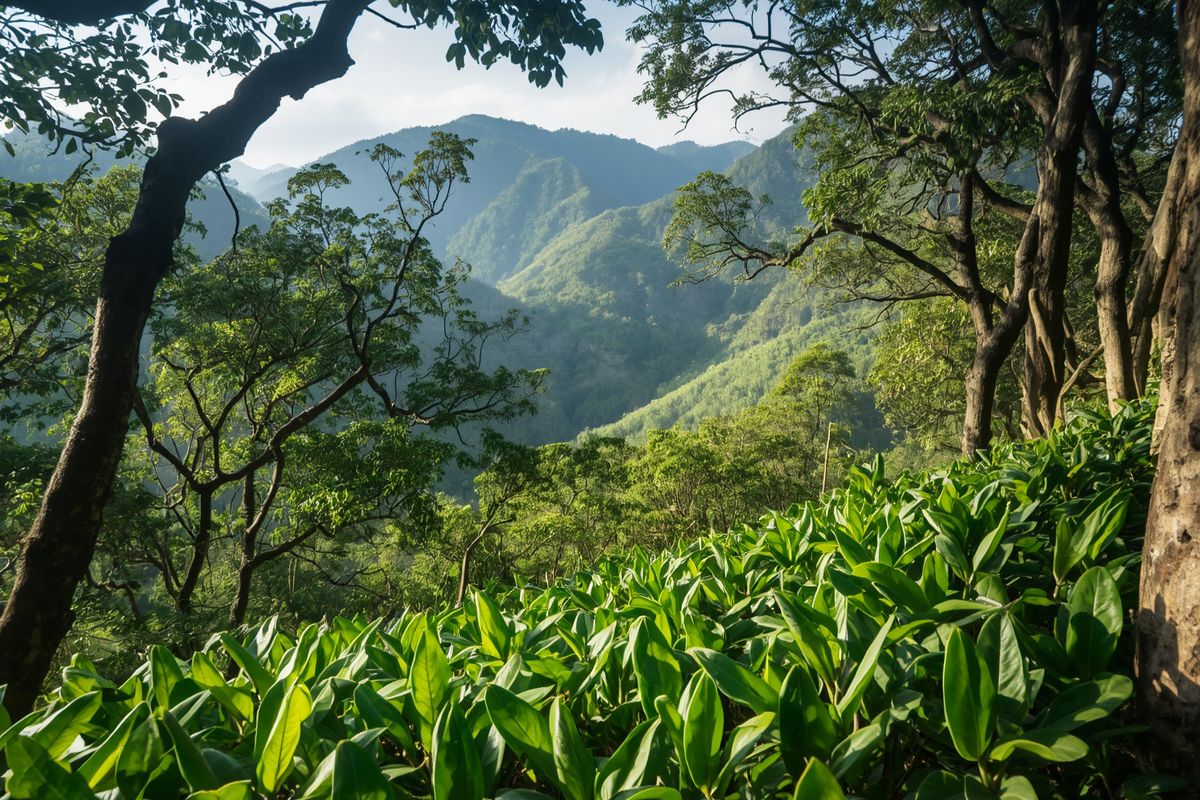
High above the Teesta Valley, cardamom plants grow under a canopy of native trees. Unlike many commercial farming systems where forests are cleared to make way for crops, farmers in Sikkim have long cultivated large cardamom within shaded landscapes that closely resemble natural forests.
The system has supported mountain communities for generations.
Today, agricultural researchers and environmental experts are paying increasing attention to this traditional practice because it demonstrates how farming and ecosystem conservation can work together. At a time when many agricultural regions face soil degradation, biodiversity loss, and climate-related stress, Sikkim’s cardamom growers offer a different model.
Their fields produce a valuable export crop while preserving many ecological functions often lost in conventional farming systems.
Large cardamom requires cool temperatures, moisture, and filtered sunlight. Farmers therefore cultivate the crop beneath a carefully managed canopy of trees rather than in open fields.
The trees help regulate temperature, reduce moisture loss, and protect the soil from erosion. Leaf litter gradually decomposes and enriches the ground with organic matter, improving soil fertility over time.
This arrangement creates a layered farming system where trees and crops support one another. Researchers often describe it as one of India’s most successful examples of agroforestry in mountain regions because agricultural production occurs without extensive clearing of natural vegetation.
A Major Source of Rural Income
Large cardamom remains one of the most important cash crops in Sikkim and neighbouring Himalayan states. Thousands of farming families depend on the spice for a significant share of their annual income. Because the crop is harvested once a year but sold into national and international markets, it provides earnings that often exceed those from many traditional field crops grown on similar land areas.
The spice is used widely in food products, beverages, confectionery, and export markets. Demand from domestic consumers and international buyers has helped sustain cultivation despite periodic production challenges.
For many mountain farmers, cardamom remains one of the few high-value crops suited to steep terrain.
Sikkim’s status as a fully organic state has further increased interest in cardamom cultivation.
Most growers rely heavily on organic practices, including compost, farmyard manure, and biological approaches to soil management. This aligns well with the state’s broader agricultural strategy and helps position cardamom within premium markets.
Consumers increasingly seek products linked to sustainable production systems. As a result, organic cardamom often attracts greater attention from specialty buyers, exporters, and food companies looking for traceable agricultural products.
The combination of organic farming and agroforestry has become an important selling point.
Climate Change Is Creating New Challenges
Despite its strengths, the sector faces growing pressures. Farmers report changes in rainfall patterns, rising temperatures, and increased disease incidence in some production areas. Cardamom is particularly sensitive to climatic conditions, making it vulnerable to environmental shifts.
Researchers studying Himalayan agriculture have warned that climate change could alter suitable cultivation zones over time. Some growers are already adapting by improving shade management, strengthening soil conservation measures, and diversifying income sources. The experience highlights a broader reality facing mountain agriculture across India. Even relatively sustainable systems are not immune to changing climatic conditions.
One reason researchers value the cardamom system is its contribution to biodiversity conservation. The presence of trees creates habitat for birds, insects, and other wildlife. Compared with open-field agriculture, agroforestry systems often support greater ecological diversity and healthier ecosystem functions.
Water conservation is another benefit.
Tree cover improves water infiltration, reduces runoff, and helps stabilise fragile mountain slopes. These functions become increasingly important in regions experiencing intense rainfall events and erosion risks. The result is a farming landscape that produces both agricultural and environmental benefits.
A Lesson for Sustainable Agriculture
Across the world, policymakers are searching for farming systems that can remain productive while protecting natural resources. The large cardamom landscapes of Sikkim offer one possible answer.
They demonstrate that profitable agriculture does not always require clearing forests, increasing chemical inputs, or simplifying ecosystems. In some cases, working with natural processes can create long-term advantages for both farmers and the environment.
For generations, Sikkim’s cardamom growers followed this approach because it suited their landscape.
Today, their experience is attracting attention far beyond the Himalayan hills where the system first developed.
Also Read: Punarnava Jal – The world’s first organic fertilizer! Know how it is beneficial for farmers?
Contact us – If farmers want to share any valuable information or experiences related to farming, they can connect with us via phone or whatsapp at 9599273766 or you can write to us at “kisanofindia.mail@gmail.com”. Through Kisan of India, we will convey your message to the people, because we believe that if the farmers are advanced then the country is happy.
You can connect with Kisan of India on Facebook, Twitter, and Whatsapp and Subscribe to our YouTube channel.