


Traditional Alder-Based Farming in Nagaland Is Reviving Interest in Agroforestry

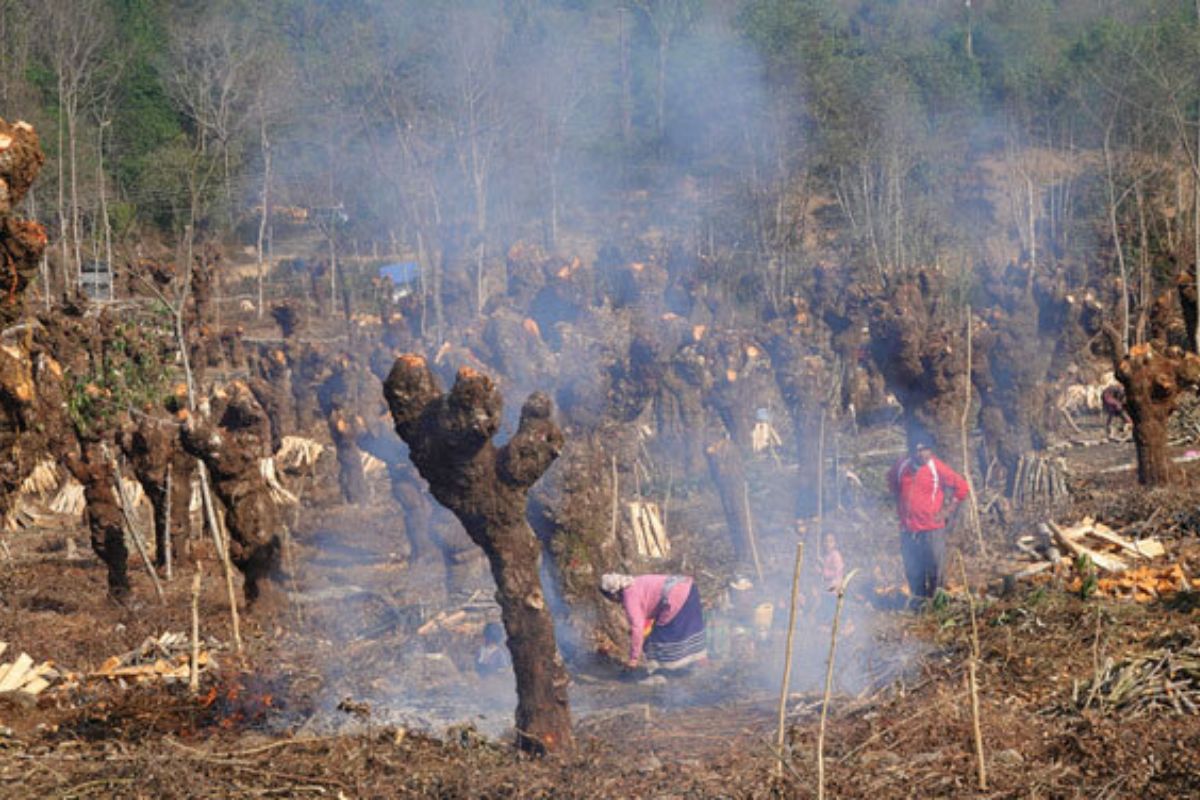
On the steep hills of Nagaland, farmers have practised a form of agroforestry for generations that modern agricultural scientists are now studying with growing interest.
Unlike conventional farming systems where trees are often removed to make space for crops, farmers in several parts of Nagaland deliberately keep alder trees standing in their fields. The trees grow alongside crops, forming a farming system that improves soil fertility, reduces erosion, and provides farmers with additional resources throughout the year.
Known as the Alder-Based Farming System, the practice has become one of the most successful examples of indigenous agroforestry in India.
At a time when soil degradation and climate change are creating new challenges for agriculture, the system is attracting attention far beyond the Northeast.
The success of the system revolves around a single species. Alnus nepalensis, commonly called the Himalayan alder, possesses a rare ability to fix atmospheric nitrogen through a symbiotic relationship with soil microorganisms.
In simple terms, the tree helps enrich the soil naturally. Farmers periodically prune branches while allowing the main trunk to survive. The leaves and branches decompose and return nutrients to the land. Unlike many tree species that compete heavily with crops, alder often improves growing conditions.
This natural fertility reduces dependence on external inputs and helps maintain productivity even on steep slopes.
For generations, farmers understood these benefits through experience long before scientists explained the biological processes involved.
Jhum Cultivation Evolved Into a More Sustainable Model
Shifting cultivation, locally known as jhum, has long been practised across parts of Northeast India. Traditionally, fields were cultivated for a few years before being left fallow to recover. As population increased and fallow periods became shorter, maintaining soil fertility became more difficult.
Communities in Nagaland responded by integrating alder trees into cultivation systems. The trees remained in the fields while crops continued to grow around them. This reduced pressure on soil and allowed land to remain productive for longer periods. Agricultural researchers often cite the system as an example of how traditional communities adapted farming practices to changing environmental conditions.
The benefits extend beyond agriculture. Alder trees provide fuelwood, small timber, fencing material, and organic matter used within farming systems. This means farmers receive value from both crops and trees growing on the same land.
The diversification helps improve resilience. If crop yields decline during a difficult season, trees continue providing resources that support rural households. Many agroforestry experts describe this multi-layered production system as one of its greatest strengths. The land performs multiple functions simultaneously.
Across India, policymakers are promoting agroforestry as a strategy for climate adaptation and environmental restoration. Trees improve soil health, store carbon, reduce erosion, and help regulate water cycles. The alder system demonstrates these benefits in practice.
Steep hill slopes are particularly vulnerable to soil loss during heavy rainfall. Tree roots help stabilise the land while improving water infiltration. As rainfall patterns become more unpredictable, these characteristics are becoming increasingly valuable. Researchers studying climate-resilient agriculture frequently point to tree-based farming systems as part of the solution.
Scientific Recognition Has Grown
What local communities practised for generations is now receiving formal recognition.
Agricultural universities, forestry researchers, and international organisations have studied the alder system as a model of sustainable land management.
Experts often highlight how the practice combines ecological conservation with agricultural production.
Rather than separating forests and farms completely, the system creates a productive landscape where both functions coexist.
This balance has become a key area of interest as countries search for farming methods that can remain productive without degrading natural resources.
Like many traditional farming systems, the alder model faced challenges as modern agricultural practices spread. Some farmers shifted toward more intensive cultivation methods that relied on external inputs. Recently, however, interest has returned.
Young farmers, researchers, and development organisations are revisiting indigenous practices to understand what lessons they offer for modern agriculture. The alder system is increasingly viewed not as an outdated tradition but as a practical example of sustainable farming. Its survival demonstrates the value of local knowledge accumulated over generations.
A Forest and a Farm at the Same Time
The fields of Nagaland do not fit neatly into conventional agricultural categories. They are neither pure forest nor conventional farmland. They are something in between. A place where trees improve crops, crops support livelihoods, and the landscape remains productive year after year.
As India searches for farming systems that can withstand climate pressures while protecting natural resources, the alder-based farms of Nagaland offer an important lesson. Sometimes the future of agriculture grows from practices that farmers have quietly maintained for centuries.
Also Read: Punarnava Jal – The world’s first organic fertilizer! Know how it is beneficial for farmers?
Contact us – If farmers want to share any valuable information or experiences related to farming, they can connect with us via phone or whatsapp at 9599273766 or you can write to us at “kisanofindia.mail@gmail.com”. Through Kisan of India, we will convey your message to the people, because we believe that if the farmers are advanced then the country is happy.
You can connect with Kisan of India on Facebook, Twitter, and Whatsapp and Subscribe to our YouTube channel.