



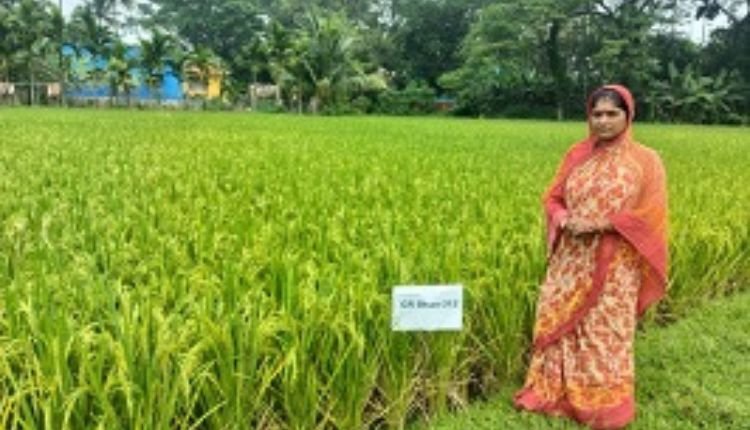
A women-led farmer group has preserved more than 200 indigenous crop varieties, showing how local seed conservation can also create opportunities for rural farm enterprises. ICAR recently highlighted the group’s work as an example of farmers protecting crop biodiversity while keeping traditional seeds in active cultivation. The initiative is important at a time when many farmers depend on a smaller number of commercially available varieties.
Traditional crop varieties can disappear when farmers stop growing them. Once a variety leaves farmers’ fields, recovering its seed can become difficult. This is particularly important for varieties adapted to local rainfall, soils, food habits and farming systems.
The women-led group has maintained more than 200 indigenous varieties, according to ICAR’s recent media update. The work involves keeping seeds in cultivation and preserving them for future use. Seed conservation does not only mean storing seeds in a collection. Farmers also need to grow and regenerate seeds so that they remain viable.
Indigenous varieties can support local food systems
Many traditional crop varieties have strong links with local diets. Some are used for specific foods. Others may suit particular climatic or soil conditions. Farmers who preserve these varieties can maintain access to crops that may not be easily available through commercial seed markets.
The value of indigenous crops also extends beyond production.
Traditional grains, pulses and vegetables can become part of local food businesses if farmers find buyers interested in regional products. This creates a possible link between biodiversity conservation and rural enterprise.
Women play a major role in seed selection
Women have traditionally played an important role in selecting, storing and exchanging seeds in many farming communities.
Seed selection requires farmers to identify healthy plants and maintain the characteristics they want in the next crop.
Over time, this knowledge can help preserve local varieties.
The recent ICAR coverage brings attention to this often overlooked part of agriculture. Women farmers are not only involved in cultivation. They can also play a central role in protecting agricultural biodiversity and maintaining local seed systems.
Seed diversity can reduce farm risk
Growing only one or two crop varieties can increase risk when weather conditions change.
Different varieties may respond differently to rainfall, temperature, pests and diseases.
Maintaining a wider range of crops and varieties can give farmers more options.
This does not mean every traditional variety will produce higher yields than modern varieties.
The value of seed diversity lies in giving farmers choices suited to different conditions and needs.
A farmer may prefer one variety for household consumption and another for sale.
Local varieties can also be useful in breeding and research programmes.
Conservation can become a farm business
Seed conservation does not have to remain limited to community activities.
Farmer groups can explore seed production, local processing and value-added products where regulations and market demand allow.
Traditional millets, pulses and other crops have gained greater consumer interest in recent years.
A farmer group that maintains seed diversity may also develop products around these crops.
The challenge is to build reliable markets.
Farmers need to maintain quality, ensure regular supply and understand applicable seed and food regulations before expanding into commercial activities.
Collective work makes conservation easier
Maintaining more than 200 varieties would be difficult for one farmer alone.
Farmer groups can divide responsibility for growing and maintaining different crops.
They can also exchange seeds and knowledge.
Collective seed systems can help protect varieties even when individual farmers stop growing a particular crop for one season.
This model can also support younger farmers who may not have inherited the same knowledge about traditional varieties.
Documentation becomes important as well.
Farmer groups can record local names, growing conditions, crop duration, uses and other characteristics of each variety.
Indigenous seeds need active support
India’s agricultural research system continues to develop improved varieties for higher yields and resistance to pests and climate stress.
Traditional varieties can exist alongside these improved seeds.
The goal should not always be to choose one over the other.
Farmers need access to different options based on their land, markets and production conditions.
The women-led group highlighted by ICAR shows what can happen when farmers treat local seeds as resources worth maintaining rather than replacing.
For agriculture, this work has a wider value.
Seeds carry crop diversity, local knowledge and future options.
For the women maintaining these varieties, protecting seeds can also become a way to build collective enterprises around local crops and food products.
The next article can move to Tools and Machines or Government Schemes, while keeping today’s coverage separate.