


Andhra Pradesh’s Community-Managed Natural Farming Model Is Drawing Attention From Other States

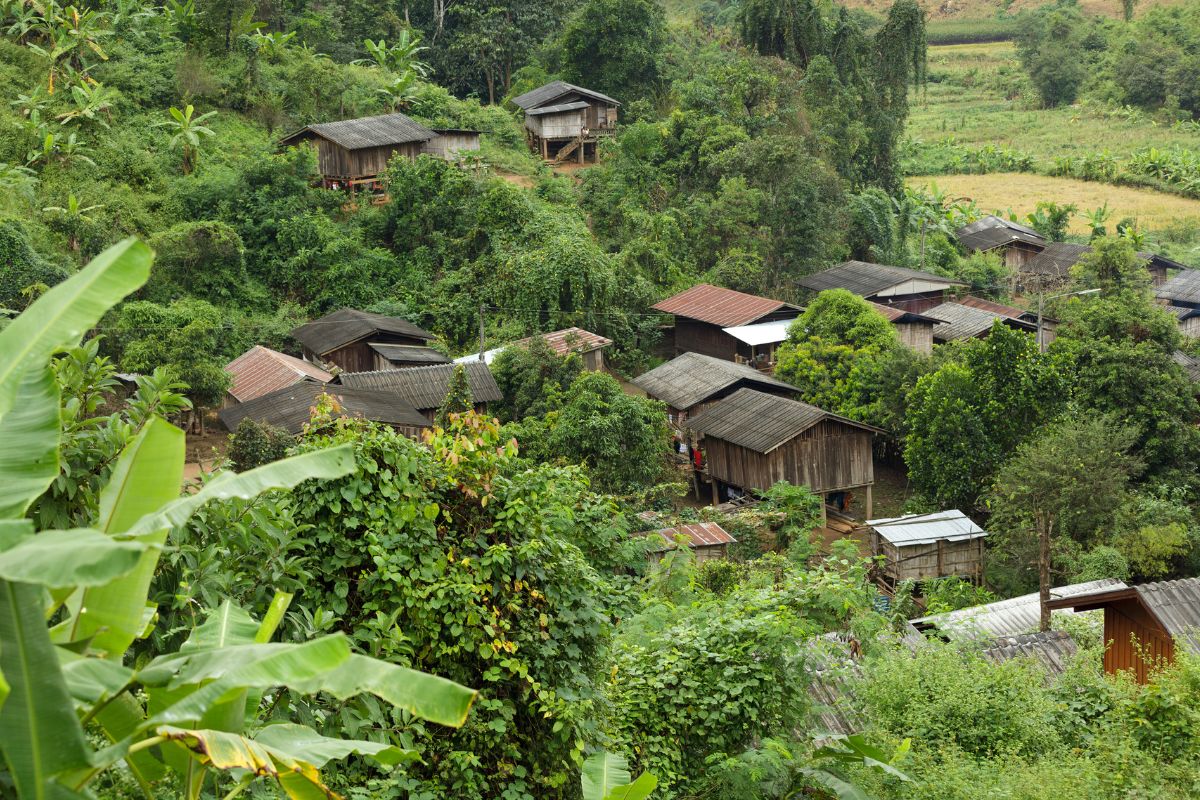
In the villages of Andhra Pradesh, a quiet agricultural experiment that began on a small scale more than a decade ago has grown into one of India’s most closely watched farming initiatives.
Known as Community-Managed Natural Farming (CMNF), the programme encourages farmers to reduce dependence on synthetic fertilizers and pesticides while using locally available biological inputs. What started with a limited number of farmers has expanded across thousands of villages, attracting attention from policymakers, researchers, and agricultural departments from other states.
Supporters view the initiative as an effort to lower cultivation costs and improve soil health. Critics continue to debate questions around productivity and scalability. Yet there is little disagreement on one point: Andhra Pradesh has become a major testing ground for large-scale natural farming.
For many farmers, the move toward natural farming was driven by economics rather than ideology.
Over the years, cultivation costs increased steadily due to rising prices of fertilizers, pesticides, and other agricultural inputs. Small and marginal farmers often found themselves borrowing money each season to finance crop production.
The natural farming programme sought to address this challenge by encouraging the use of farm-based inputs prepared from cow dung, cow urine, jaggery, pulse flour, and other locally available materials.
The idea was simple.
If farmers could reduce dependence on purchased inputs, they could lower production costs and improve financial stability.
Many early adopters were attracted by the possibility of spending less rather than producing more.
Farmer Networks Became the Backbone
One reason the programme expanded rapidly was its emphasis on community participation.
Instead of relying entirely on agricultural officers, experienced farmers trained other farmers. Demonstration plots were established in villages, allowing neighbours to observe results directly.
Women’s self-help groups also played a major role.
Across many districts, community organisations helped organise training sessions, field visits, and knowledge-sharing activities. The model relied heavily on peer learning rather than top-down extension services.
Officials involved in the programme argue that this approach increased trust and accelerated adoption.
Farmers were often more willing to experiment when they saw results on neighbouring farms.
Natural farming under the Andhra Pradesh model emphasises improving biological activity within the soil. Farmers are encouraged to prepare microbial formulations using locally available ingredients and apply them to fields. Mulching, crop diversity, and moisture conservation also form important parts of the system.
Supporters say these practices help improve soil structure and reduce input dependence over time.
Many participating farmers report lower expenditure on pesticides and fertilizers after shifting to natural farming methods.
The transition, however, often requires patience.
Farmers may need several seasons to adapt cultivation practices and understand how the system performs under local conditions.
Diverse Crops Are Part of the Programme
The initiative is not limited to one crop. Farmers practising natural farming cultivate paddy, millets, pulses, groundnut, cotton, vegetables, horticultural crops, and spices.
This diversity has allowed the programme to expand across different agro-climatic regions of Andhra Pradesh. In drought-prone districts, natural farming is often promoted alongside moisture conservation practices.
In irrigated areas, the focus may be on reducing chemical inputs and improving soil health.
The flexibility of the approach has contributed to its wider adoption.
The scale of Andhra Pradesh’s programme has attracted interest from across India. Delegations from several states have visited farming clusters to study implementation methods, farmer training systems, and community mobilisation strategies.
The interest reflects a growing national debate about how agriculture can balance productivity, environmental sustainability, and farmer profitability.
Some states are exploring pilot projects inspired by elements of the Andhra Pradesh model.
Others are studying the programme to understand both its strengths and limitations before expanding similar initiatives.
Despite its growth, natural farming remains a subject of discussion among agricultural experts. Questions continue regarding yield performance across different crops and regions. Some researchers argue that long-term data collection remains important for evaluating outcomes comprehensively.
Farmers also face practical challenges during transition periods when learning new techniques.
Market access is another issue.
Many growers hope to receive premium prices for produce cultivated without synthetic chemicals, but those markets are not always available.
The success of natural farming often depends on both production practices and marketing opportunities.
A Farming Experiment on a National Scale
Regardless of differing opinions, Andhra Pradesh’s natural farming programme has become one of the largest agricultural transitions attempted in India.
It has encouraged thousands of farmers to reconsider how crops are produced and how input costs can be managed.
For some farmers, the biggest benefit has been reduced expenditure.
For others, it has been greater confidence in managing crops with locally available resources.
As Indian agriculture searches for pathways that combine profitability and sustainability, the experience of Andhra Pradesh will continue to attract attention.
The programme’s long-term impact remains a work in progress, but it has already succeeded in placing natural farming at the centre of national agricultural discussions.
Also Read: Punarnava Jal – The world’s first organic fertilizer! Know how it is beneficial for farmers?
Contact us – If farmers want to share any valuable information or experiences related to farming, they can connect with us via phone or whatsapp at 9599273766 or you can write to us at “kisanofindia.mail@gmail.com”. Through Kisan of India, we will convey your message to the people, because we believe that if the farmers are advanced then the country is happy.
You can connect with Kisan of India on Facebook, Twitter, and Whatsapp and Subscribe to our YouTube channel.