



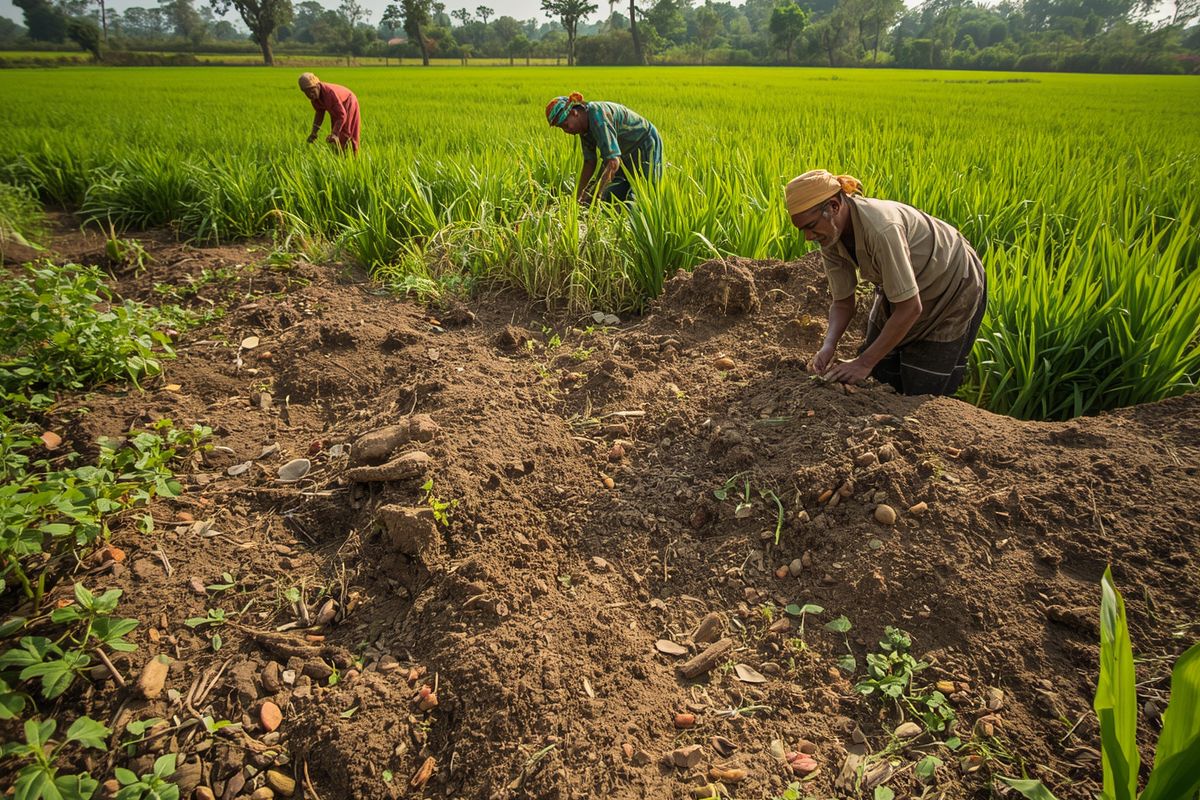
Across rural Odisha, farmers have preserved traditional crop varieties for generations. Many of these seeds were developed over decades of local adaptation, allowing crops to withstand drought, erratic rainfall, poor soils, and other environmental challenges.
Yet the spread of commercial seed systems has gradually reduced the cultivation of many indigenous varieties.
As older seeds disappear from fields, valuable genetic resources can be lost forever. Recognising this risk, Odisha has expanded community seed bank programmes designed to conserve local crop diversity while improving seed access for farmers.
The initiative is gaining attention because it addresses two major challenges at once: protecting agricultural biodiversity and strengthening climate resilience.
For many villages, seed conservation is becoming an important part of rural development.
Indigenous crop varieties evolved under local farming conditions.
Unlike many commercial varieties developed for specific production systems, traditional seeds often possess characteristics that help them survive environmental stress. Some tolerate drought better, while others perform well in waterlogged soils or require fewer external inputs.
Researchers increasingly recognise the importance of these traits.
As climate change creates new agricultural challenges, genetic diversity becomes a valuable resource. Preserving traditional seeds ensures that future farmers continue to have access to these adaptations.
The value extends far beyond heritage alone.
These seeds may help shape future farming systems.
Seed availability remains a major concern in many rural areas. Farmers sometimes struggle to access suitable planting material after floods, droughts, or crop failures. Community seed banks provide a local solution by storing seeds that can be distributed when needed. The system operates at the village level.
Farmers contribute seeds, maintain collections, and participate in management activities. When planting season arrives, members can access seeds and later return equivalent quantities after harvest.
This cycle strengthens local seed security.
Communities become less dependent on external supplies.
Climate Resilience Is a Major Goal
Extreme weather events are becoming more common across many agricultural regions. Floods, droughts, and unpredictable rainfall patterns can affect seed availability as well as crop production. Community seed banks help reduce vulnerability by ensuring that planting material remains available even after difficult seasons.
Officials view the programme as part of a broader climate adaptation strategy.
Farmers gain access to varieties already proven under local environmental conditions. This increases the likelihood of successful cultivation despite changing weather patterns.
Adaptation begins with the seed itself.
The programme reflects this understanding.
Many community seed banks are managed with strong participation from women’s groups. Women often possess detailed knowledge about local crop varieties, seed selection, and storage practices. Their involvement helps preserve agricultural knowledge while strengthening community institutions.
Several villages have established women-led seed conservation initiatives that manage collections and organise seed exchanges. These activities contribute to both biodiversity conservation and rural livelihoods.
The social benefits are significant. Knowledge remains within the community.
Agricultural scientists frequently warn about the risks of excessive dependence on a narrow range of crop varieties. When diversity declines, farming systems become more vulnerable to diseases, pests, and environmental change. Conserving traditional seeds helps maintain a broader genetic base.
Community seed banks play an important role in this effort. Rather than storing seeds in distant facilities alone, the programme keeps varieties actively connected to farmers and cultivation practices.
Conservation happens within living farming systems.
That distinction is important.
Protecting Seeds, Protecting the Future
The expansion of community seed banks reflects a growing recognition that agriculture depends on more than current harvests.
Future food security also depends on preserving the resources that make cultivation possible. Seeds represent one of the most important of those resources.
For farmers in Odisha, community seed banks provide access to planting material, strengthen resilience, and protect valuable crop diversity. The programme combines traditional knowledge with modern conservation goals.
As climate pressures continue to grow, preserving agricultural diversity may become increasingly important.
In villages across Odisha, that work is already taking place one seed at a time.
Also Read: Punarnava Jal – The world’s first organic fertilizer! Know how it is beneficial for farmers?
Contact us – If farmers want to share any valuable information or experiences related to farming, they can connect with us via phone or whatsapp at 9599273766 or you can write to us at “kisanofindia.mail@gmail.com”. Through Kisan of India, we will convey your message to the people, because we believe that if the farmers are advanced then the country is happy.
You can connect with Kisan of India on Facebook, Twitter, and Whatsapp and Subscribe to our YouTube channel.