



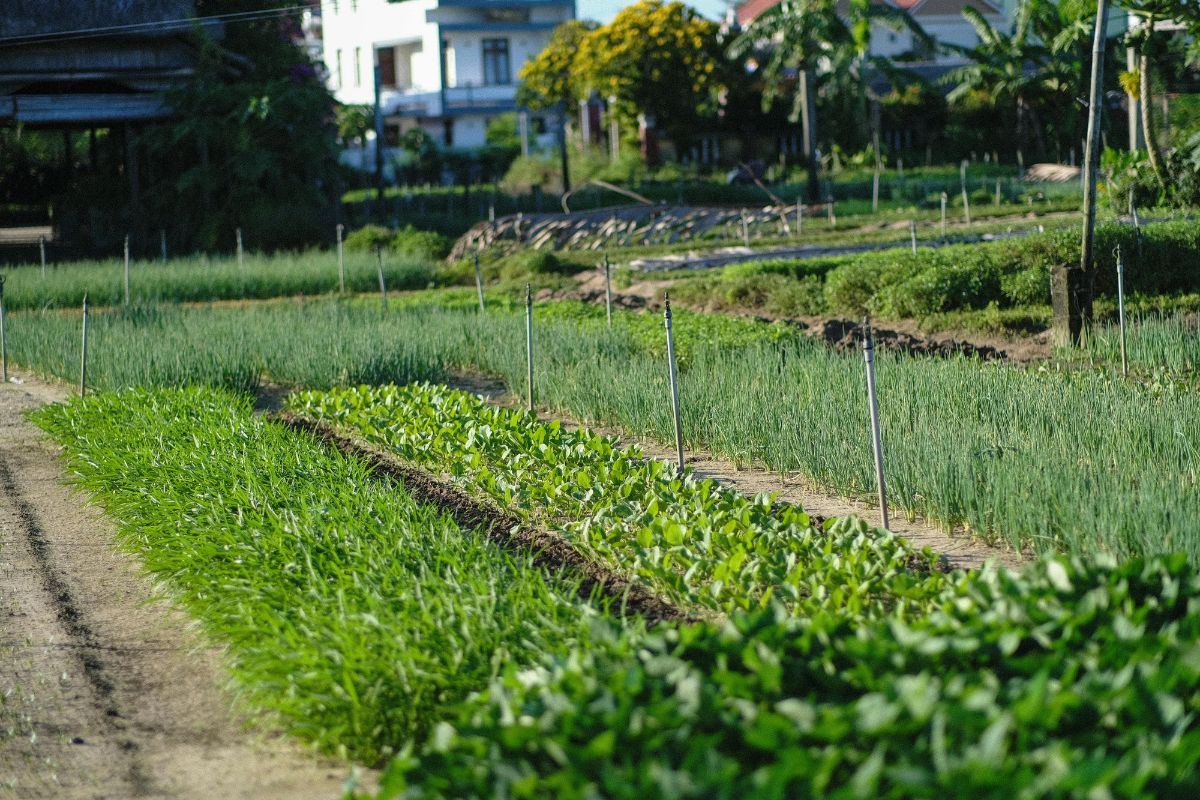
Long before natural farming and chemical-free agriculture became national talking points, Sikkim had already transformed its entire farming system.
The Himalayan state officially became India’s first fully organic state in 2016 after phasing out chemical fertilizers and pesticides across agriculture. At the time, many agriculture experts viewed the move as risky because Indian farming remained deeply dependent on chemical inputs after decades of Green Revolution policies.
Now, nearly a decade later, Sikkim’s farming model is receiving renewed attention.
Climate shocks, declining soil health, groundwater stress, and rising fertilizer costs are forcing policymakers and researchers to revisit farming systems that depend less heavily on synthetic chemicals.
Agriculture experts say Sikkim may offer important lessons for smaller mountain states and ecologically fragile regions facing climate pressure.
Sikkim’s organic transition did not happen suddenly.
The state government gradually reduced chemical fertilizer use while training farmers in composting, organic pest management, and soil restoration systems. Officials promoted bio-inputs, vermicomposting, crop rotation, and traditional farming methods adapted to mountain ecosystems.
Agriculture experts say the transition succeeded partly because Sikkim already had relatively low chemical usage compared to heavily industrial agricultural states.
Researchers studying the model say policy continuity played a major role. Multiple governments continued supporting the organic transition over long periods instead of treating it as a short-term programme.
Tourism and Farming Became Connected
One major impact of Sikkim’s organic branding appeared in tourism.
The state increasingly marketed itself as an eco-friendly destination linked with clean farming, mountain biodiversity, and sustainable living. Organic farms, local food systems, and eco-tourism projects became part of the tourism economy.
Agriculture experts say this created additional economic value beyond crop production itself. Farmers growing organic vegetables, spices, ginger, turmeric, and fruits gained stronger visibility in niche tourism and urban retail markets.
Some villages also developed agro-tourism experiences connected with organic farming and local cuisine.
Sikkim’s farming systems now face growing climate stress despite the organic transition.
Researchers studying Himalayan agriculture say changing rainfall patterns, landslides, glacier retreat, and temperature shifts are affecting farming across mountain states. In recent years, extreme rainfall events and floods caused major damage in Sikkim’s fragile ecological zones.
Agriculture experts say mountain farming systems require stronger soil conservation and water retention because climate instability increases erosion risks rapidly.
Some researchers argue that organic farming may improve long-term soil resilience in fragile ecosystems where excessive chemical use can damage already vulnerable mountain landscapes.
Despite global attention, Sikkim’s farmers continue facing serious economic challenges.
Organic cultivation often produces lower yields during transition periods, especially where farmers lack strong market access. Transport costs also remain high in Himalayan regions, making logistics difficult for perishable crops.
Agriculture experts say premium organic branding alone does not guarantee farmer income unless:
- Supply chains improve
- Processing systems expand
- Storage infrastructure grows
- Urban market access strengthens
Some farmers also report difficulty competing with fake organic products entering retail markets without proper certification.
Other States Are Studying the Model
Several Indian states are now studying parts of Sikkim’s organic transition while designing natural farming and low-input agriculture programmes.
States such as Himachal Pradesh, Uttarakhand, and parts of the Northeast increasingly promote chemical-free farming in ecologically sensitive regions. Agriculture experts say mountain ecosystems often respond differently to intensive chemical agriculture compared to plains farming systems.
Researchers believe smaller Himalayan states may become testing grounds for future climate-resilient agriculture models focused on:
- Biodiversity
- Soil conservation
- Mixed farming
- Low-input systems
- Eco-tourism-linked agriculture
Sikkim’s transition also attracted international attention from environmental researchers and sustainability organizations studying low-chemical agricultural systems.
Agriculture experts say the state became important globally because very few governments attempted complete organic conversion at state scale.
Researchers continue debating long-term questions around productivity, profitability, and scalability. Still, many agree the experiment changed global discussions about what government-led agricultural transitions can look like.
India’s mainstream agriculture still depends heavily on fertilizers, pesticides, and large-scale cereal production.
Sikkim represents a different direction.
Its farming model focuses more on ecological balance, mountain sustainability, local food systems, and environmental protection rather than maximum output alone.
Agriculture experts say the future may not belong entirely to either chemical-heavy farming or fully organic systems.
But as climate pressure grows, smaller states like Sikkim are becoming increasingly important because they show how alternative agricultural pathways can exist inside modern India.
Also Read: Punarnava Jal – The world’s first organic fertilizer! Know how it is beneficial for farmers?
Contact us – If farmers want to share any valuable information or experiences related to farming, they can connect with us via phone or whatsapp at 9599273766 or you can write to us at “kisanofindia.mail@gmail.com”. Through Kisan of India, we will convey your message to the people, because we believe that if the farmers are advanced then the country is happy.
You can connect with Kisan of India on Facebook, Twitter, and Whatsapp and Subscribe to our YouTube channel.