



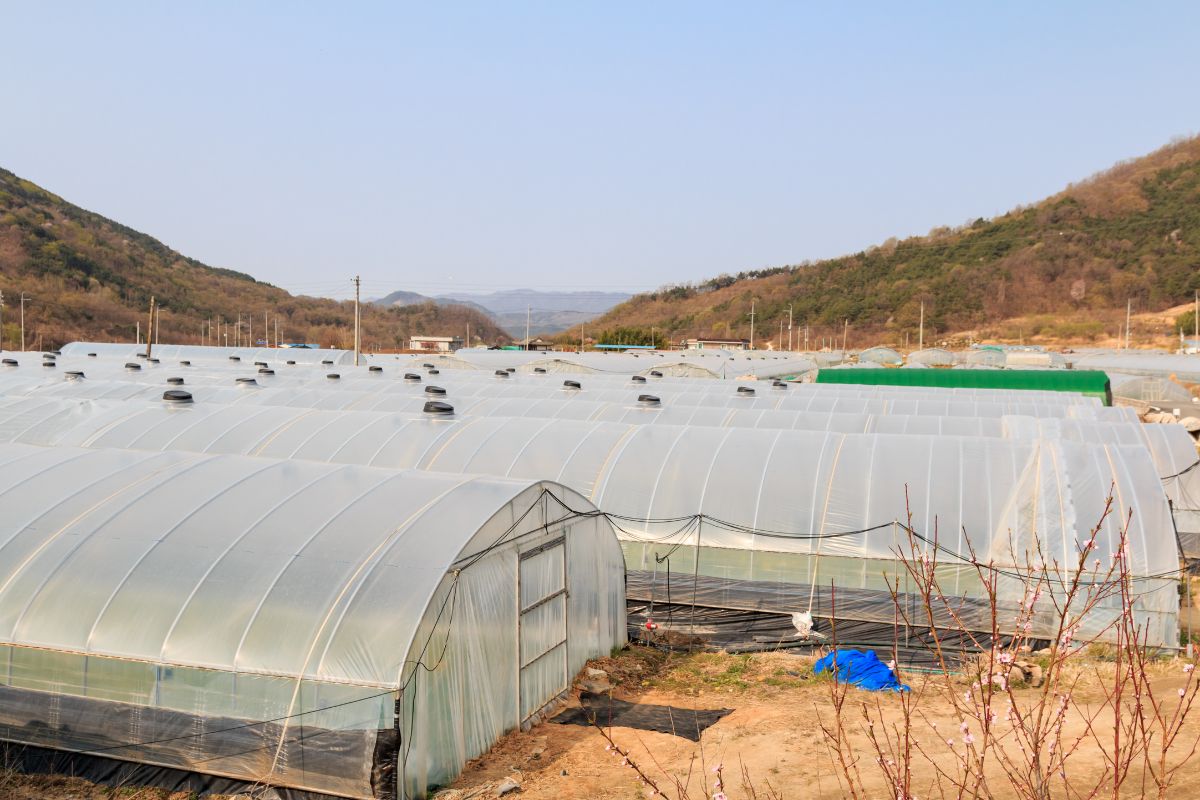
In rural parts of South Korea, farming is increasingly moving inside climate-controlled greenhouse clusters connected with artificial intelligence, automation systems, and digital monitoring networks.
Instead of depending fully on unpredictable weather, farmers grow vegetables, strawberries, tomatoes, paprika, and leafy greens inside enclosed structures where temperature, humidity, irrigation, lighting, and nutrients are controlled through sensors and software.
Researchers studying future agriculture say South Korea’s smart greenhouse villages are becoming one of the world’s most advanced examples of technology-driven farming.
As climate instability increases globally, agriculture experts believe systems like these may influence how densely populated countries approach food production in coming decades.
One major advantage of greenhouse farming is protection from weather extremes.
Heatwaves, floods, cold spells, pests, and irregular rainfall affect open-field agriculture heavily. Smart greenhouse systems reduce that dependence by creating controlled growing environments where crops remain protected from outside climatic shocks.
Sensors continuously monitor:
- Temperature
- Soil moisture
- Humidity
- CO₂ levels
- Plant nutrition
- Water flow
AI systems later adjust irrigation, cooling, ventilation, and nutrient delivery automatically.
Agriculture experts say precision control improves productivity while reducing water and fertilizer waste.
Young Farmers Returned Because of Technology
South Korea faced severe ageing problems in rural agriculture as younger generations moved toward cities during previous decades.
The government responded partly by promoting smart farming systems designed to attract educated youth back into agriculture. Technology-focused greenhouse farming appealed to younger entrepreneurs more familiar with software systems, automation, and digital management.
Some smart farming centres now train rural youth in:
- AI agriculture
- Hydroponics
- Data-driven farming
- Robotics
- Climate control systems
Researchers say future agriculture may increasingly depend on technology-skilled farmers rather than only traditional manual labour systems.
South Korea’s greenhouse systems focus heavily on water efficiency.
Many farms use hydroponic or semi-closed irrigation systems where water recirculates instead of being lost through open-field evaporation. Agriculture experts say this becomes important because climate change is increasing water stress globally.
Researchers studying climate-smart agriculture believe controlled-environment farming may expand rapidly in regions facing:
- Water shortages
- Heatwaves
- Urban land pressure
- Extreme weather
Some greenhouse systems also use solar panels and renewable energy integration to reduce operational costs.
Like many countries, South Korea faces agricultural labour shortages due to ageing rural populations.
Smart greenhouses reduce manual labour through:
- Automated irrigation
- Climate sensors
- AI crop monitoring
- Robotic transport systems
- Automated nutrient management
Agriculture experts say labour-saving systems may become essential in countries where farming populations continue ageing rapidly.
Some advanced facilities even use computer vision systems to monitor crop growth and detect disease symptoms automatically.
The Government Built Smart Farming Zones
South Korea’s government actively supported the transition by developing smart farming clusters and agricultural technology zones linked with research centres and universities.
Researchers say public investment played a major role because greenhouse infrastructure and automation systems remain expensive for individual farmers.
Agriculture experts increasingly discuss whether countries like India could adapt smaller versions of similar systems for:
- Peri-urban farming
- High-value vegetables
- Nursery production
- Seed farming
- Climate-sensitive horticulture
Despite its success, smart greenhouse farming also faces criticism.
The systems require:
- High capital investment
- Reliable electricity
- Technical training
- Internet connectivity
- Constant maintenance
Researchers warn that highly automated agriculture may widen inequality if only wealthy farmers or corporations can afford advanced systems.
Agriculture experts also note that greenhouse farming works best for high-value crops rather than staple cereals such as wheat or rice.
South Korea’s greenhouse villages represent a larger global trend.
As climate instability grows, agriculture is slowly shifting toward more controlled and protected farming environments. Countries increasingly explore indoor farming, vertical agriculture, hydroponics, and AI-driven greenhouse systems to stabilize food production.
Researchers believe future agriculture may divide into two parallel systems:
- Large open-field farming for staples
- Controlled-environment farming for high-value crops
Inside South Korea’s greenhouse villages, that future is already visible.
Farming there depends as much on software and sensors as on soil and weather.
Also Read: Punarnava Jal – The world’s first organic fertilizer! Know how it is beneficial for farmers?
Contact us – If farmers want to share any valuable information or experiences related to farming, they can connect with us via phone or whatsapp at 9599273766 or you can write to us at “kisanofindia.mail@gmail.com”. Through Kisan of India, we will convey your message to the people, because we believe that if the farmers are advanced then the country is happy.
You can connect with Kisan of India on Facebook, Twitter, and Whatsapp and Subscribe to our YouTube channel.