



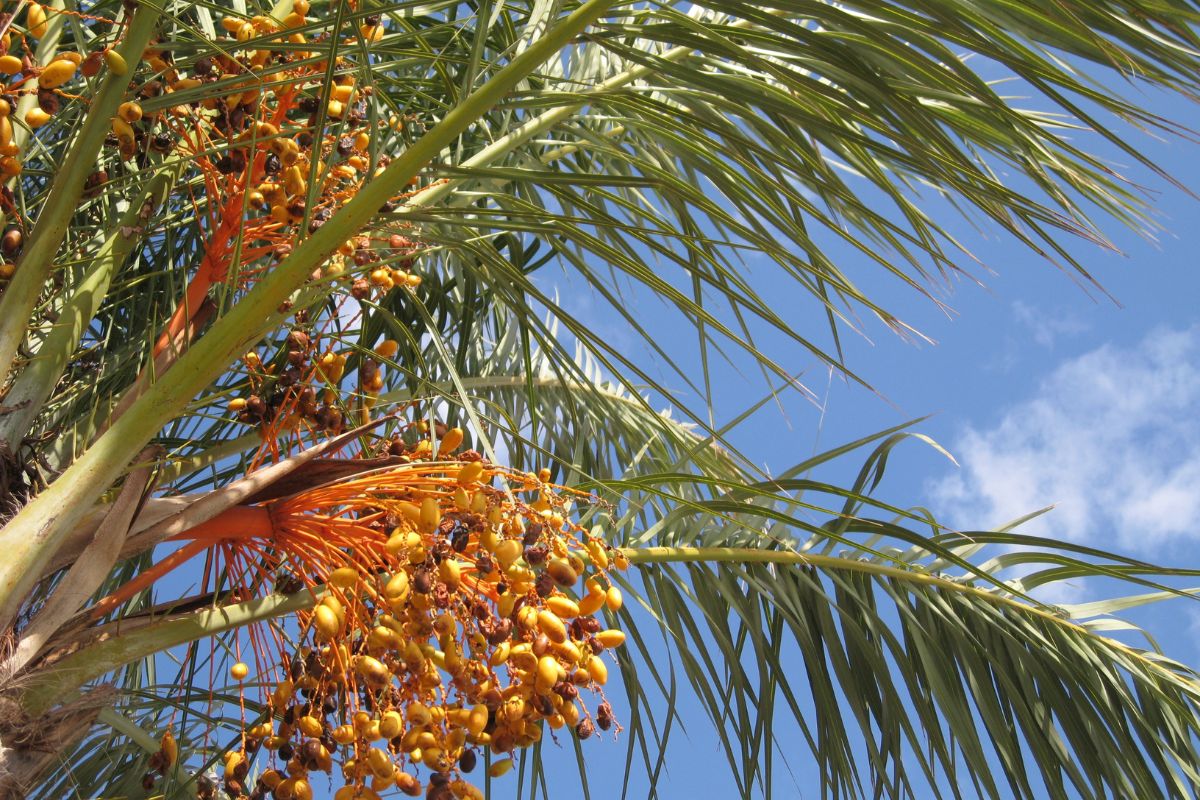
India imports a large share of its edible oil requirement every year, making the country vulnerable to global price fluctuations and supply disruptions. To reduce this dependence, several states are promoting oil palm cultivation under government-supported programmes. Telangana has emerged as one of the leading states in this effort and is expanding its oil palm promotion programme across suitable agricultural districts.
The initiative forms part of the National Mission on Edible Oils–Oil Palm (NMEO-OP), which aims to increase domestic edible oil production while providing farmers with a long-term income source.
Officials believe the programme can help strengthen India’s edible oil security while creating new opportunities for farmers.
Focus on Reducing Import Dependence
India spends billions of rupees annually on edible oil imports. Policymakers view domestic production as a key strategy for improving food and economic security.
Oil palm is considered one of the highest-yielding oil-producing crops in the world. A relatively small area under cultivation can generate substantial quantities of edible oil compared with many traditional oilseed crops.
Agricultural economists say improving domestic production remains one of the most effective ways to reduce import dependence.
Under the programme, farmers receive assistance for planting material, field establishment, irrigation systems, and technical guidance.
Since oil palm is a long-duration crop, government support helps reduce the initial investment burden during the establishment phase. Extension agencies also provide advice on crop management and maintenance.
Researchers note that early support is often essential for encouraging adoption of perennial crops.
Assured Market Access Encourages Adoption
One of the factors attracting farmers is the availability of organised procurement systems. Oil palm growers generally have access to processing facilities that purchase fresh fruit bunches for oil extraction.
Market assurance reduces uncertainty and helps farmers plan long-term investments. Stable demand has played an important role in the expansion of oil palm cultivation in several regions.
Agricultural marketing experts emphasise that reliable procurement systems often determine the success of crop diversification programmes.
Oil palm requires adequate water for optimum productivity. The programme therefore promotes efficient irrigation systems, including drip irrigation, to improve water-use efficiency.
Researchers are studying ways to maximise production while reducing pressure on water resources. Efficient irrigation remains critical as climate variability and water scarcity affect agricultural planning.
Scientists believe resource-efficient management practices will determine the sustainability of future oil palm expansion.
Long-Term Income Potential
Unlike annual crops that require planting every season, oil palm remains productive for many years once established. Farmers can harvest fruit bunches regularly after the crop reaches maturity.
This creates a long-term source of income and reduces the need for repeated land preparation and planting expenses. Supporters of the programme argue that such stability can improve farm profitability.
Agricultural experts note that perennial crops often provide greater income predictability than seasonal cultivation.
The expansion of oil palm cultivation reflects India’s broader effort to strengthen domestic edible oil production. Government agencies, researchers, and state administrations are working together to increase productivity and improve supply chains.
For farmers, the programme offers opportunities to diversify production and access organised markets. For policymakers, it represents an important step toward reducing reliance on imported edible oils.
As demand for edible oil continues growing, initiatives that strengthen domestic production are likely to remain a major focus of agricultural policy.
Across Telangana, oil palm cultivation is becoming part of a larger strategy aimed at improving farmer incomes while strengthening India’s food and economic security.
Also Read: Punarnava Jal – The world’s first organic fertilizer! Know how it is beneficial for farmers?
Contact us – If farmers want to share any valuable information or experiences related to farming, they can connect with us via phone or whatsapp at 9599273766 or you can write to us at “kisanofindia.mail@gmail.com”. Through Kisan of India, we will convey your message to the people, because we believe that if the farmers are advanced then the country is happy.
You can connect with Kisan of India on Facebook, Twitter, and Whatsapp and Subscribe to our YouTube channel.