


How a Maharashtra Farmer Built a Better Income From Pomegranate Farming

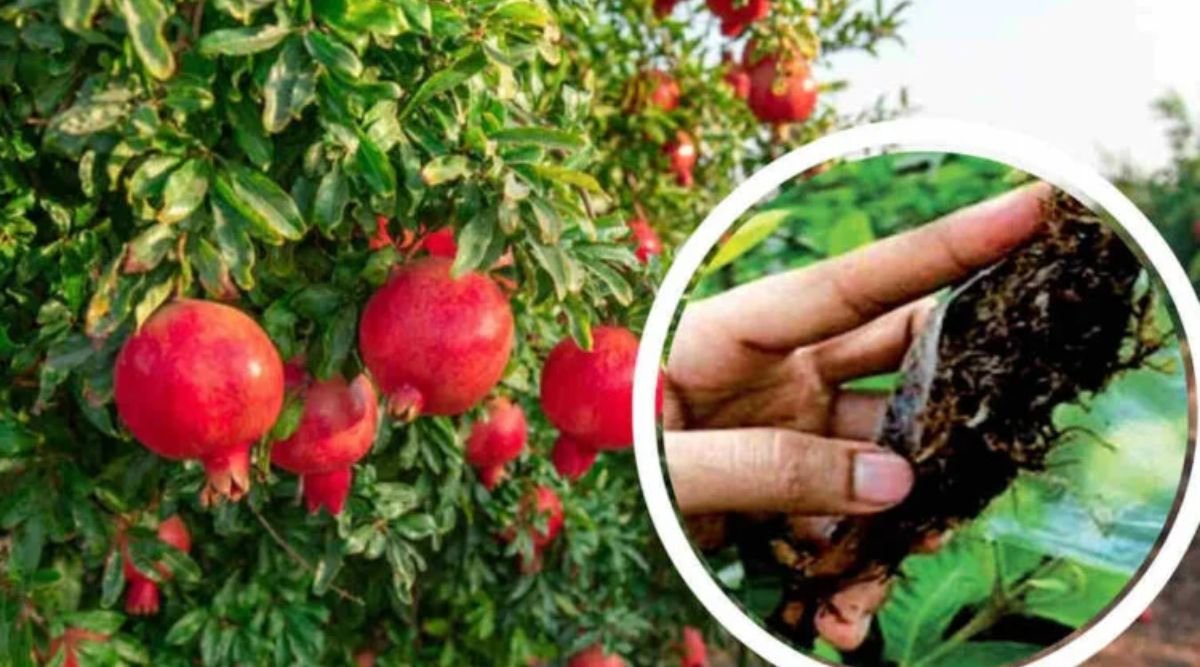
Pomegranate farming has become an important commercial horticulture activity in parts of Maharashtra, where farmers have developed production systems around varieties such as Bhagwa. The crop can provide good returns when growers manage irrigation, nutrition, pruning, pest control and harvesting carefully.
One documented example comes from Maharashtra’s pomegranate-growing belt, where farmers have adopted improved production practices with support from agricultural institutions and extension programmes. Their experience shows that higher returns depend not on one technique, but on consistent orchard management and access to suitable markets.
Pomegranate is sensitive to water management, and farmers need to control irrigation according to crop stage and local soil conditions. Drip irrigation can help deliver water close to the root zone while reducing unnecessary wetting between plants.
Farmers also need to maintain orchard sanitation. Diseased plant material should be removed from the field, while pruning can help maintain the structure of the tree and improve airflow. These steps can reduce conditions that favour some pests and diseases.
The Maharashtra experience also highlights the importance of monitoring orchards instead of waiting until damage becomes severe. Farmers can inspect leaves, shoots, flowers and fruits regularly and seek technical advice when symptoms appear.
Better Practices Can Reduce Losses
Pomegranate production can face problems from pests, diseases and fruit damage. Farmers who depend on routine pesticide spraying may increase costs without addressing the actual cause of a problem. Integrated crop management places greater emphasis on field monitoring and timely intervention.
The National Research Centre on Pomegranate, Solapur, has developed production technologies and advisories for pomegranate growers. Its work includes research on crop production, pest and disease management, post-harvest handling and quality improvement.
Farmers can use such research through KVKs and horticulture departments rather than relying entirely on advice from pesticide sellers. Correct diagnosis can help growers select appropriate control measures and avoid unnecessary applications.
Good orchard management does not end when the fruit develops. Harvest timing, grading, handling and packaging can influence the price received by farmers. Fruits intended for distant markets need careful handling to reduce bruising and quality deterioration.
Pomegranate growers also need to understand market specifications. Buyers may assess fruit size, colour, appearance and quality before purchasing. Maintaining uniform production and grading can help farmers negotiate with buyers and explore markets beyond local wholesale yards.
Collective marketing can provide another option. Farmer groups and FPOs can aggregate produce, standardise grading and negotiate with buyers. This can be useful when individual farmers produce quantities too small to supply larger markets regularly.
Lessons for Other Farmers
The experience of successful pomegranate growers offers a simple lesson: commercial horticulture requires year-round management. Farmers cannot depend only on a high-value variety to guarantee income. Irrigation, nutrition, pruning, pest monitoring, harvesting and marketing all influence the final return.
The National Horticulture Board and ICAR horticultural research institutes provide technical information on commercial fruit production. Farmers planning a new orchard should use locally suitable recommendations and calculate establishment costs before planting.
Farmers should also consider the time required for an orchard to become commercially productive. Initial investment can include planting material, irrigation infrastructure, labour, fencing, fertilisers and crop protection. A realistic financial plan is important before converting a large area to a perennial fruit crop.
A successful orchard is not simply one that produces fruit. It must produce fruit that buyers want and that farmers can grow at a manageable cost. Keeping records of irrigation, fertiliser, crop protection, labour, yield and sale price can help identify where money is being spent.
For farmers considering pomegranate cultivation, the Maharashtra experience shows the value of combining scientific recommendations with regular field observation. Local climate, soil, water availability and market access should be assessed before making a major investment.
Pomegranate farming can offer attractive returns, but the crop also carries production and market risks. Farmers can reduce some of those risks through suitable planting material, disciplined orchard management, early pest detection, careful harvesting and better market planning.
Also Read: Punarnava Jal – The world’s first organic fertilizer! Know how it is beneficial for farmers?
Contact us – If farmers want to share any valuable information or experiences related to farming, they can connect with us via phone or whatsapp at 9599273766 or you can write to us at “kisanofindia.mail@gmail.com”. Through Kisan of India, we will convey your message to the people, because we believe that if the farmers are advanced then the country is happy.
You can connect with Kisan of India on Facebook, Twitter, and Whatsapp and Subscribe to our YouTube channel.