



For years, the family cultivated wheat, onion, and soybean on their farmland in Maharashtra’s Nashik district. Like many farmers in the region, they faced unstable mandi prices, rising fertilizer costs, and repeated weather-related losses. Income remained uncertain, especially during seasons when onion prices collapsed sharply.
After completing college, 28-year-old farmer Rahul Patil decided to try something different. Instead of continuing only with traditional crops, he began studying high-value horticulture systems and protected farming methods. Agriculture videos on YouTube and social media exposed him to strawberry farming models from Mahabaleshwar and Himachal Pradesh. He realized that strawberries were no longer limited to hill stations alone.
Climate conditions in parts of Nashik were suitable for controlled strawberry cultivation if irrigation and temperature management were handled carefully.
Drip Irrigation Changed the Farm
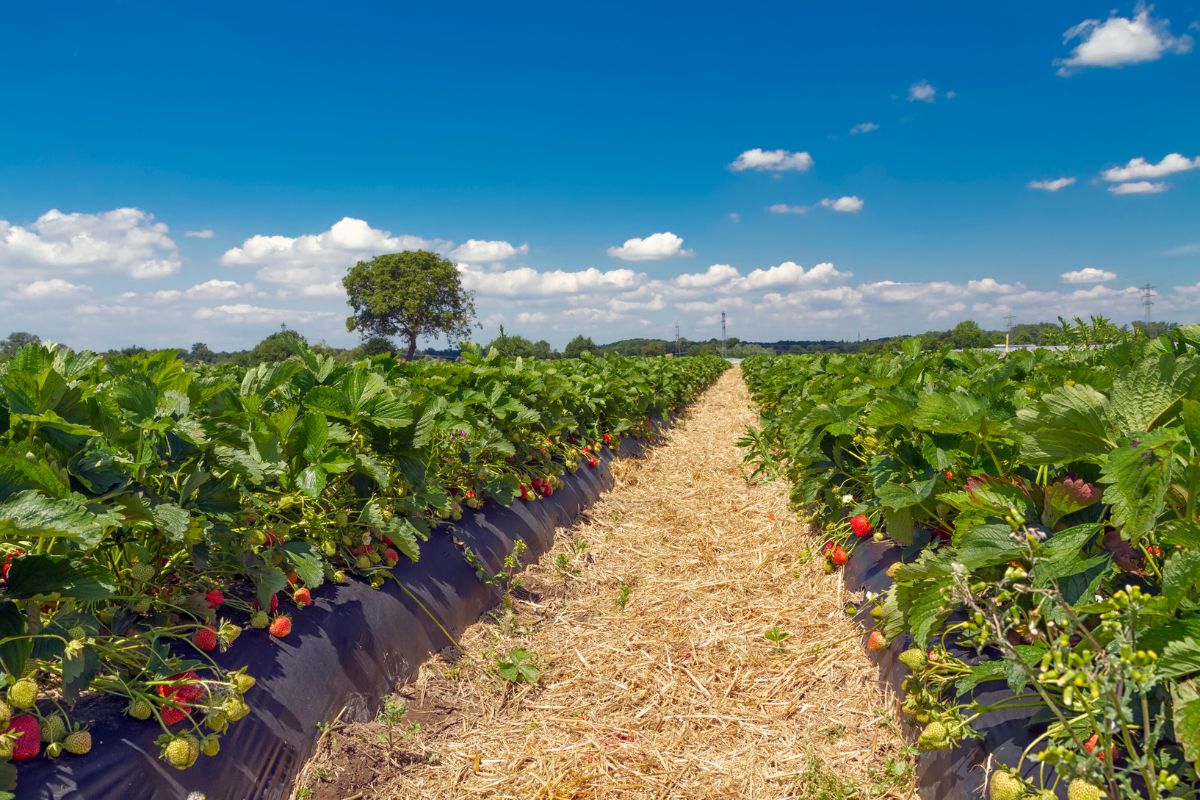
Rahul started with a small half-acre strawberry trial instead of risking the entire farm. He installed drip irrigation and plastic mulching systems to improve moisture control and reduce weed growth. Agriculture experts say strawberries require careful water management because excess moisture can damage fruit quality quickly.
The first season was difficult. Unexpected heat damaged part of the crop and labour costs increased during harvesting. But direct local sales helped recover most expenses. Customers in nearby towns preferred fresh strawberries because local produce reached markets faster than fruit transported from distant states.
Encouraged by the results, Rahul expanded cultivation during the next season.
One major turning point came when Rahul started promoting the farm on Instagram and WhatsApp. He posted videos showing harvesting, packaging, and fresh strawberry picking directly from the field. Urban families from Nashik and nearby cities began visiting the farm during weekends.
Soon the farm introduced direct strawberry boxes for local delivery. Instead of depending entirely on wholesale traders, Rahul started selling directly to consumers, cafes, bakeries, and juice shops. Agriculture experts say social media is increasingly helping small farmers build local customer networks without large marketing budgets.
The farm later added “pick-your-own fruit” visits where families could harvest strawberries themselves for an entry fee.
Climate Challenges Forced New Adjustments
Strawberry farming also brought climate-related challenges. Heatwaves arriving earlier during recent years created pressure on fruit quality and shelf life. Rahul installed shade nets in some sections and adjusted planting schedules to avoid extreme summer exposure.
Agriculture experts say climate change is forcing horticulture farmers to adapt continuously because fruits are highly sensitive to temperature changes. Controlled irrigation and microclimate management are becoming increasingly important for high-value crops.
The farm also began using organic mulching and compost to improve soil moisture retention during dry periods.
Within four years, strawberries became the farm’s main income source. Rahul says one major advantage of high-value horticulture is stronger returns from smaller land areas. Instead of depending only on bulk crop production, farmers can generate higher earnings through quality-focused cultivation and direct marketing systems.
Agriculture experts say many young farmers are now exploring similar models involving berries, vegetables, flowers, mushrooms, and greenhouse crops because shrinking landholdings make traditional farming less profitable in some regions.
Rahul later expanded into processed products such as strawberry jam, crush, and ice cream partnerships with local food businesses.
Young Farmers Are Thinking Differently
Agriculture researchers say younger farmers increasingly view farming as a business rather than only a traditional occupation. Many are using smartphones, digital payments, e-commerce platforms, and social media to improve sales and branding.
Some young growers now focus heavily on:
- Direct consumer sales
- Agri-tourism
- Value-added products
- Digital marketing
- Controlled-environment farming
Experts believe this shift is changing rural agriculture slowly because younger farmers are more willing to experiment with niche crops and modern market systems.
Land fragmentation is pushing many farmers toward intensive cultivation systems capable of generating stronger income from smaller plots. Agriculture experts say fruits, vegetables, flowers, and protected farming systems are becoming increasingly important because traditional grain cultivation alone often struggles to support small landholdings profitably.
High-value horticulture still carries risks. Weather fluctuations, disease outbreaks, and market oversupply can damage income quickly. But researchers say diversified farming and direct market access may help farmers reduce some of these risks over time.
Farming Is Changing Quietly
Rahul’s farm now attracts visitors from nearby districts who want to understand strawberry cultivation and direct marketing systems. What started as a small experiment became a full-time agricultural business built around irrigation technology, digital marketing, and changing consumer demand.
Agriculture experts say stories like this are becoming more common across rural India. Farmers are slowly moving beyond traditional mandi-focused systems and exploring agriculture linked with tourism, branding, online sales, and premium produce markets.
The future Indian farmer may still grow crops in the soil.
But increasingly, that farmer is also managing customers, digital platforms, and business models at the same time.
Also Read: Punarnava Jal – The world’s first organic fertilizer! Know how it is beneficial for farmers?
Contact us – If farmers want to share any valuable information or experiences related to farming, they can connect with us via phone or whatsapp at 9599273766 or you can write to us at “kisanofindia.mail@gmail.com”. Through Kisan of India, we will convey your message to the people, because we believe that if the farmers are advanced then the country is happy.
You can connect with Kisan of India on Facebook, Twitter, and Whatsapp and Subscribe to our YouTube channel.