



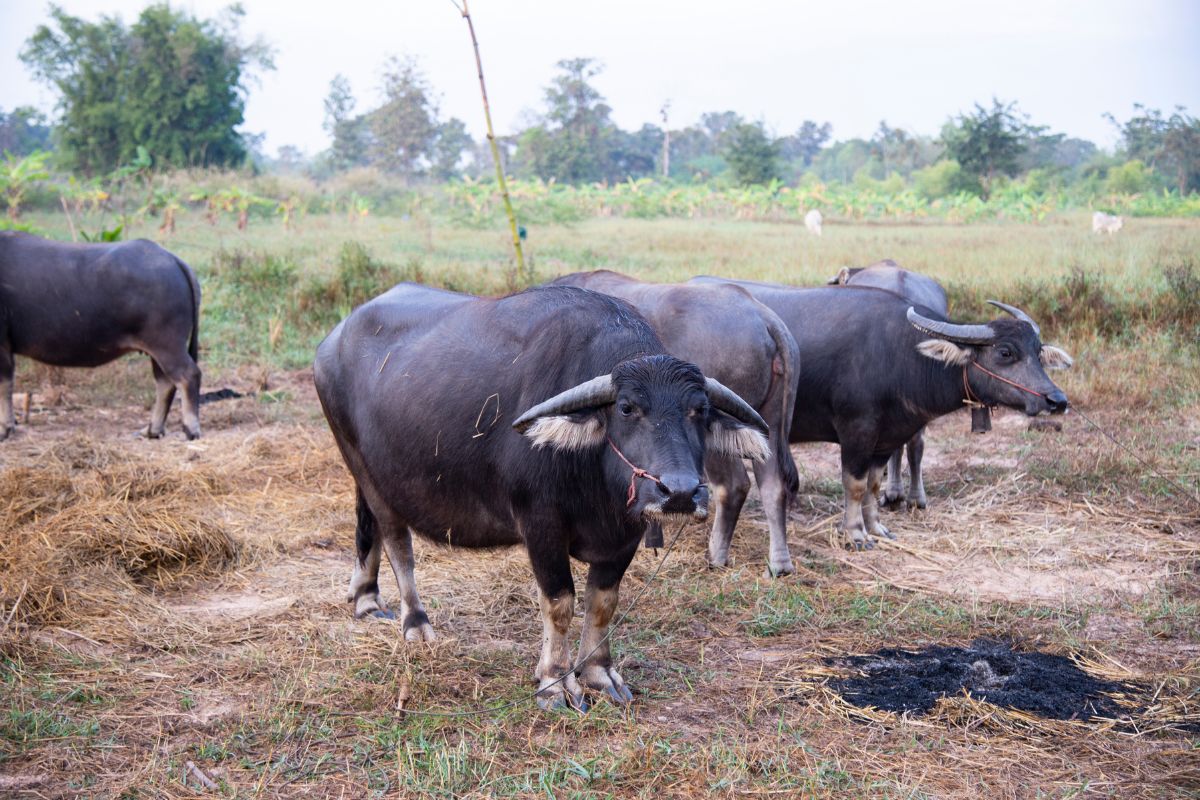
In Punjab’s dairy villages, buffalo farming has always depended heavily on observation and experience. Farmers judged animal health by appetite, movement, milk output, and behaviour inside sheds.
That system is now beginning to change.
Across parts of Punjab and Haryana, dairy farmers are experimenting with AI-enabled livestock monitoring systems where electronic ear tags collect real-time information about buffalo activity, body temperature, feeding patterns, and reproductive cycles.
Agriculture experts say dairy farming is entering a more technology-focused phase because labour shortages, disease outbreaks, and rising feed costs are increasing pressure on livestock farmers.
Researchers believe livestock management may become one of India’s fastest-growing agri-tech sectors during coming years.
The smart tags attached to buffalo ears contain sensors that monitor movement and biological activity continuously. Data from the devices moves into mobile applications where AI systems analyze patterns linked with health and productivity.
The system can help farmers detect:
- Illness symptoms
- Heat stress
- Reduced feeding activity
- Breeding cycles
- Changes in milk behaviour
before visible problems become serious.
Agriculture experts say early detection matters because delayed treatment often reduces milk production and increases veterinary costs sharply.
Some systems also send automatic alerts directly to farmers’ smartphones.
Punjab’s Dairy Sector Is Driving Adoption
Punjab remains one of India’s major dairy-producing regions with large buffalo populations and commercial milk systems. Rising operational costs are pushing farmers toward technology that improves efficiency and animal management.
Researchers say dairy farms with larger herd sizes increasingly depend on automated systems because manual monitoring becomes difficult as operations expand.
Some dairy cooperatives and startups now provide digital livestock management services through subscription models where farmers access AI health monitoring without investing in expensive infrastructure independently.
Climate change is becoming a major reason for digital livestock monitoring.
Buffaloes are highly sensitive to heat stress, especially during intense summer temperatures common across North India. Agriculture experts say rising temperatures reduce feed intake and milk production while increasing disease vulnerability.
AI systems help farmers monitor animal stress levels during heatwaves and adjust cooling systems, feeding schedules, or water management accordingly.
Researchers studying climate-linked livestock stress warn that dairy farming may face serious productivity challenges if temperatures continue rising across South Asia.
Recent outbreaks of lumpy skin disease and other livestock infections increased interest in animal monitoring technologies across India.
Agriculture experts say large dairy farms need faster disease detection systems because infections spread quickly among closely managed animals.
Some AI livestock platforms now combine:
- Health tracking
- Vaccination records
- Veterinary history
- Breeding data
- Milk production analytics
within one digital management system.
Researchers believe digital livestock databases may become increasingly important for future disease surveillance and rural veterinary planning.
Young Dairy Farmers Are Leading the Shift
Younger farmers are adopting livestock technology faster than older generations in many dairy regions.
Some rural entrepreneurs now manage dairy farms using:
- AI monitoring systems
- Automatic milking machines
- Digital feed management
- Sensor-based cooling systems
Agriculture experts say dairy farming is slowly shifting from labour-intensive management toward precision livestock systems driven by data analysis.
Several agri-tech startups are also targeting India’s buffalo sector specifically because buffalo milk remains central to the country’s dairy economy.
Despite growing interest, AI livestock systems remain expensive for many small dairy farmers.
Agriculture experts say affordability remains one of the biggest challenges because millions of livestock owners still operate small household-level dairy systems.
Internet access, smartphone literacy, and technical support also vary widely across villages.
Researchers believe shared digital dairy services and cooperative technology models may help expand access gradually.
India remains the world’s largest milk producer, but future dairy growth may depend heavily on animal health management, climate adaptation, and feed efficiency.
Agriculture experts say precision livestock farming will likely expand because dairy systems face pressure from:
- Heatwaves
- Disease outbreaks
- Rising fodder costs
- Labour shortages
The buffaloes standing quietly inside Punjab’s dairy sheds may still look unchanged from the outside. But increasingly, data is now following them everywhere they move
Also Read: Punarnava Jal – The world’s first organic fertilizer! Know how it is beneficial for farmers?
Contact us – If farmers want to share any valuable information or experiences related to farming, they can connect with us via phone or whatsapp at 9599273766 or you can write to us at “kisanofindia.mail@gmail.com”. Through Kisan of India, we will convey your message to the people, because we believe that if the farmers are advanced then the country is happy.
You can connect with Kisan of India on Facebook, Twitter, and Whatsapp and Subscribe to our YouTube channel.