



Feed remains the largest expense in livestock production. Whether farmers raise poultry, fish, pigs, or livestock, rising feed prices continue to affect profitability across the agricultural sector. Dependence on conventional ingredients such as soybean meal and fishmeal has encouraged researchers and entrepreneurs to search for alternative protein sources.
One solution is emerging from an unusual insect.
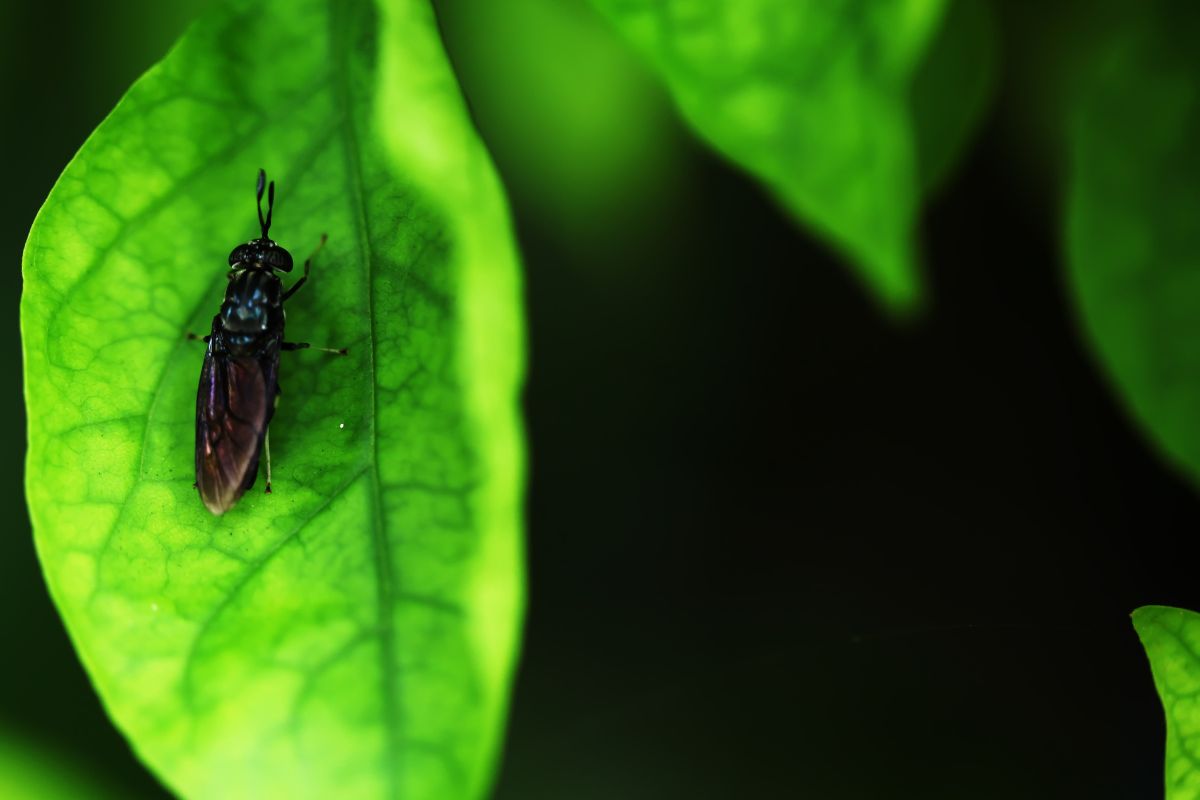
Black soldier fly farming is gaining attention in India as a sustainable method of producing protein-rich feed ingredients. The insect’s larvae can consume large quantities of organic waste and convert it into nutrient-dense biomass suitable for livestock feed production.
What was once viewed as a niche concept is gradually becoming a serious business opportunity.
The sector is attracting startups, researchers, and progressive farmers interested in reducing feed costs and improving sustainability.
The black soldier fly possesses a remarkable ability to convert organic material into valuable nutrients. Its larvae feed on fruit waste, vegetable scraps, food-processing residues, and other biodegradable materials. Within a short period, the larvae grow rapidly while accumulating protein and beneficial fats.
This process creates two useful products.
The larvae can be processed into livestock feed ingredients, while the remaining organic material can be used as soil amendments. The system therefore supports both livestock production and waste management.
Resource efficiency is one of its greatest strengths.
Very little material goes unused.
Poultry and Fish Farmers Show Interest
Livestock producers are closely monitoring developments in insect-based feeds. Protein is one of the most expensive components of feed formulations. Any alternative source capable of maintaining nutritional quality while reducing costs attracts significant attention.
Black soldier fly larvae contain substantial protein levels and are being evaluated for use in poultry, aquaculture, and other livestock systems.
Several trials have produced encouraging results. Researchers continue studying inclusion rates and economic viability under commercial conditions.
Interest is growing steadily.
The potential market is substantial. India’s emerging insect farming sector is driven largely by startups and agri-tech entrepreneurs. These businesses are developing production systems, feed products, and waste-conversion technologies designed for commercial applications. Investment in the sector has increased as awareness grows.
Entrepreneurs view insect farming as an opportunity that addresses multiple challenges simultaneously.
Waste reduction, feed security, and sustainable agriculture all intersect within the same business model. This combination is attracting attention from investors and policymakers.
The industry remains young.
Yet growth is accelerating.
Environmental concerns are playing an important role in the sector’s development. Conventional feed ingredients often require significant land, water, and other resources during production. Insect farming offers a more compact system capable of generating high-value protein using comparatively limited space. Researchers studying sustainable agriculture frequently highlight the importance of alternative protein sources.
Future livestock industries may depend on a wider range of feed ingredients than those used today. Black soldier fly farming is increasingly viewed as part of that future. The environmental advantages are significant.
Waste Management Creates Additional Benefits
Urbanisation and food processing activities generate large volumes of organic waste every day.
Managing this material remains a challenge in many regions. Black soldier fly systems offer one method of converting waste into productive resources rather than sending it to disposal sites.
The approach supports circular agriculture principles.
Materials that would otherwise become waste are transformed into livestock feed and soil amendments. Economic value is created while environmental pressures are reduced.
The model appeals to both farmers and policymakers.
Its benefits extend beyond agriculture.
Livestock production continues evolving as farmers respond to rising costs, changing markets, and environmental concerns. Alternative feed ingredients are becoming an increasingly important part of this transition. Black soldier fly farming represents one of the most promising developments within that movement.
The sector remains in its early stages, but momentum is building.
Researchers are expanding studies, entrepreneurs are increasing production, and livestock producers are paying close attention to results. Together, these developments are shaping a new area of animal husbandry.
For an industry constantly searching for affordable protein, one of the most important resources of the future may come from one of nature’s smallest creatures.
Also Read: Punarnava Jal – The world’s first organic fertilizer! Know how it is beneficial for farmers?
Contact us – If farmers want to share any valuable information or experiences related to farming, they can connect with us via phone or whatsapp at 9599273766 or you can write to us at “kisanofindia.mail@gmail.com”. Through Kisan of India, we will convey your message to the people, because we believe that if the farmers are advanced then the country is happy.
You can connect with Kisan of India on Facebook, Twitter, and Whatsapp and Subscribe to our YouTube channel.