



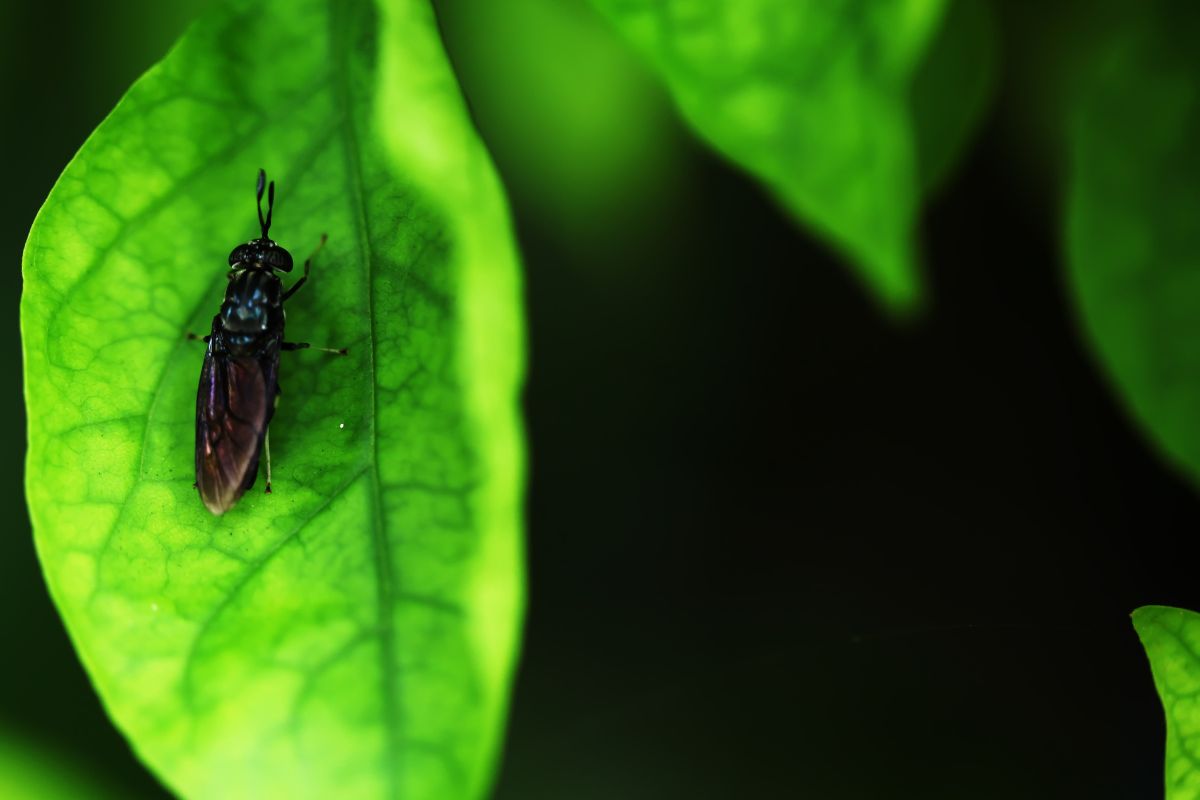
Feed remains the largest expense in most livestock and poultry operations. Whether farmers raise chickens, fish, pigs, or other animals, feed costs often account for a major share of production expenses. Rising prices of soybean meal, maize, and commercial feed ingredients have increased pressure on farmers, particularly smallholders operating with limited margins.
As a result, researchers and entrepreneurs are exploring alternative protein sources that can reduce costs without compromising animal nutrition. One option attracting significant attention is black soldier fly farming. The insect’s larvae contain high levels of protein and can be processed into feed ingredients suitable for poultry, fish, and livestock production.
What was once considered a niche activity is gradually developing into a commercial sector with growing relevance for modern animal husbandry.
Livestock profitability depends heavily on feed efficiency and feed affordability. Even small increases in feed prices can significantly affect farm income, especially for producers operating at scale. Many farmers are therefore searching for ways to reduce dependence on conventional feed ingredients that are subject to market volatility.
Black soldier fly larvae offer a potential solution because they can be produced using organic waste materials and agricultural by-products. This allows farmers and feed producers to generate valuable protein locally rather than relying entirely on imported or commercially manufactured ingredients.
Agricultural economists note that alternative feed sources could play an important role in improving long-term livestock profitability.
Larvae Provide High Protein Content
One reason black soldier fly farming is attracting attention is the nutritional value of the larvae. They contain substantial amounts of protein, fats, and essential nutrients required for animal growth and development. Researchers have conducted numerous feeding trials examining their use in poultry, aquaculture, and livestock systems.
Results from many studies indicate that insect-based protein can partially replace conventional feed ingredients without negatively affecting animal performance. This has encouraged feed manufacturers and agricultural startups to invest in commercial production systems.
The nutritional quality of the larvae remains one of the industry’s strongest advantages.
The insects are capable of consuming a wide range of organic materials, including food waste, fruit residues, vegetable scraps, and agricultural by-products. During the process, these materials are converted into protein-rich biomass that can be used in animal feed production.
This creates a circular production system in which waste becomes a valuable resource. Environmental researchers frequently highlight black soldier fly farming as an example of how agriculture can reduce waste while generating economic value.
The dual benefits of waste management and feed production make the sector attractive to both farmers and policymakers interested in sustainability.
Poultry and Fish Farmers Lead Adoption
Although insect-based feed is still developing in many countries, poultry and aquaculture producers are among the earliest adopters. These sectors require large quantities of protein-rich feed, making them particularly interested in alternatives that can improve cost efficiency.
Several startups and farmer groups have established commercial insect-rearing facilities to supply local feed markets. Interest continues to grow as awareness increases and production technologies become more accessible.
Researchers expect adoption to expand further as more feeding studies demonstrate the economic and nutritional value of insect-derived ingredients.
Another advantage of black soldier fly farming is that it can be practised on different scales. Large commercial facilities exist, but small farmers can also establish production units using relatively simple infrastructure and locally available organic materials.
This flexibility creates opportunities for rural entrepreneurs seeking new income sources. Some producers focus on supplying larvae to nearby poultry farmers, while others process them into dried feed ingredients for broader distribution.
The ability to start small and expand gradually makes the enterprise accessible to a wide range of producers.
A New Direction for Animal Feed
The livestock sector is under growing pressure to improve efficiency while reducing environmental impacts. Feed innovation is becoming a major area of interest because feed costs and feed sustainability influence the entire production system.
Black soldier fly farming represents one of the most promising developments in this field. By converting organic waste into valuable animal nutrition, the industry offers benefits for farmers, feed manufacturers, and environmental management efforts.
While insect-based feed is unlikely to replace conventional ingredients entirely, its role is expected to grow as production scales increase and markets mature.
Across the livestock sector, one small insect is helping address one of agriculture’s biggest challenges: producing affordable, sustainable feed for a growing world.
Also Read: Punarnava Jal – The world’s first organic fertilizer! Know how it is beneficial for farmers?
Contact us – If farmers want to share any valuable information or experiences related to farming, they can connect with us via phone or whatsapp at 9599273766 or you can write to us at “kisanofindia.mail@gmail.com”. Through Kisan of India, we will convey your message to the people, because we believe that if the farmers are advanced then the country is happy.
You can connect with Kisan of India on Facebook, Twitter, and Whatsapp and Subscribe to our YouTube channel.