


Poor-Quality Animal Feed Can Hurt Livestock, What Should Farmers Check Before Buying?

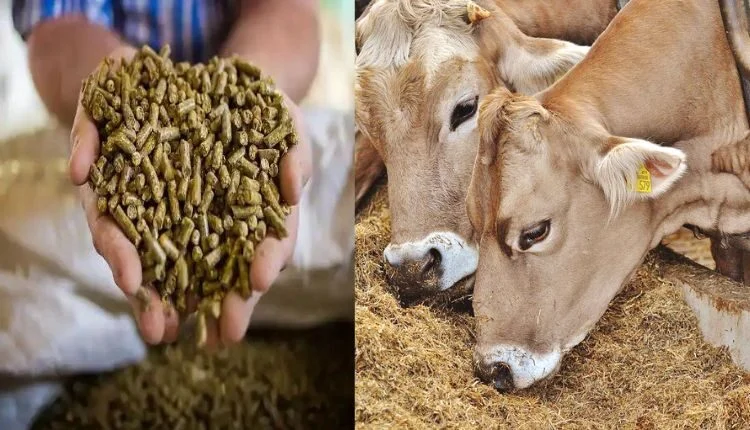
Feed is one of the biggest regular expenses for livestock farmers. Its quality also directly affects animal health, growth and production. A new Bill introduced in Gujarat aims to regulate the manufacture, storage, distribution and sale of livestock and poultry feed and mineral mixtures.
Cattle, buffaloes, goats, sheep and poultry need a balanced supply of energy, protein, minerals, vitamins and other nutrients. Poor-quality feed may not provide these nutrients in the required amounts. This can affect growth, milk production, reproduction and overall animal health.
Feed problems can also become expensive. A farmer may save money by buying cheaper feed but lose more through lower milk production, slower growth or health problems. The cheapest bag is therefore not always the lowest-cost option for the farm.
India’s livestock sector is becoming increasingly important to farm incomes. Government data shows milk production reached 247.87 million tonnes in 2024-25, while Kisan Credit Card coverage for animal husbandry farmers reached 50.42 lakh beneficiaries in 2025-26.
What Can Go Wrong With Bad Feed?
Animal feed can be affected by adulteration, contamination, incorrect nutrient levels or poor storage. Moisture can encourage mould growth, while badly stored feed may lose quality before reaching the animal.
Mislabelled products can create another problem. A farmer may buy feed expecting a certain protein or mineral content but receive a product that does not match the label. This can make it difficult to balance the animal’s overall diet.
Gujarat’s proposed legislation specifically targets adulteration and mislabelling. The Bill proposes penalties for manufacturers whose adulterated feed harms livestock or poultry, including much higher penalties when animal deaths occur.
Farmers should first check the feed label before buying. Look for the product name, manufacturer, batch number, manufacturing date, expiry date and recommended use. The label should also provide information about nutrients where applicable.
Do not buy bags that are torn, wet or visibly contaminated. Farmers should also avoid feed with an unusual smell, colour or appearance. These signs do not prove contamination by themselves, but they are reasons to reject a damaged product.
Storage after purchase is equally important. Feed should be kept in a dry, clean and well-ventilated place. Bags should not be placed directly on a damp floor. Keeping them on pallets or another raised surface can reduce contact with moisture.
Farmers Should Not Change Feed Suddenly
A sudden change in feed can cause digestive problems in some animals. When introducing a new feed, farmers should follow the recommended feeding procedure and gradually adjust the ration where appropriate.
Dairy farmers should also remember that concentrate feed is only one part of the diet. Animals need adequate roughage, clean drinking water and appropriate mineral supplementation. The exact ration depends on the animal’s species, age, body condition and production level.
Farmers with high-producing dairy animals should seek advice from a veterinarian or animal nutrition expert before making major changes. A ration that works for one animal may not be suitable for another.
Feed prices can change with the prices of maize, soybean meal, oilseed cakes and other ingredients. Recent reporting has highlighted the pressure that rising feed costs are putting on milk, egg and chicken production. Broiler feed can contain 55–65% maize, while soybean meal can account for another 25–30%.
Farmers can reduce some costs by using locally available feed resources where they are nutritionally suitable. Crop residues, fodder crops and locally available by-products can form part of livestock diets when properly processed and balanced.
But farmers should not replace commercial feed with an alternative simply because it is cheaper. The replacement must provide suitable nutrients and must be safe for the animal.
Keep Feed and Fodder Records
Farmers maintaining dairy or poultry units should record how much feed is being used and how much milk, eggs or body-weight gain is being produced. This makes it easier to identify whether a change in feed is actually helping.
If feed consumption rises while production falls, farmers should investigate. The cause could be poor feed quality, disease, heat stress, water shortage or another management problem.
For larger farms and FPO-run livestock enterprises, periodic feed testing can provide additional protection. Farmers can approach veterinary universities, animal husbandry departments or recognised laboratories where testing facilities are available.
The proposed Gujarat legislation shows that feed quality is becoming a bigger policy concern. For farmers, the basic lesson is simple: animal feed should be treated as an important farm input, not just another purchase.
Before buying, check the label, packaging, date and storage condition. After buying, store feed correctly and monitor animal performance. If animals show sudden changes in appetite, milk production, growth or health, consult a veterinarian.
Good feed management can help farmers avoid preventable losses. It also supports the larger goal of keeping livestock healthy and productive while controlling one of the biggest recurring costs in animal farming.
Also Read: Punarnava Jal – The world’s first organic fertilizer! Know how it is beneficial for farmers?
Contact us – If farmers want to share any valuable information or experiences related to farming, they can connect with us via phone or whatsapp at 9599273766 or you can write to us at “kisanofindia.mail@gmail.com”. Through Kisan of India, we will convey your message to the people, because we believe that if the farmers are advanced then the country is happy.
You can connect with Kisan of India on Facebook, Twitter, and Whatsapp and Subscribe to our YouTube channel.