



Feed costs remain the single largest expense in poultry farming. Whether farmers raise broilers, layers, ducks, or native birds, feed often accounts for more than half of total production costs. Rising prices of soybean meal and maize have therefore become a major concern for livestock producers across India.
Researchers and entrepreneurs are increasingly searching for alternative protein sources that can reduce dependence on conventional feed ingredients.
One promising option is emerging from an unexpected sector.
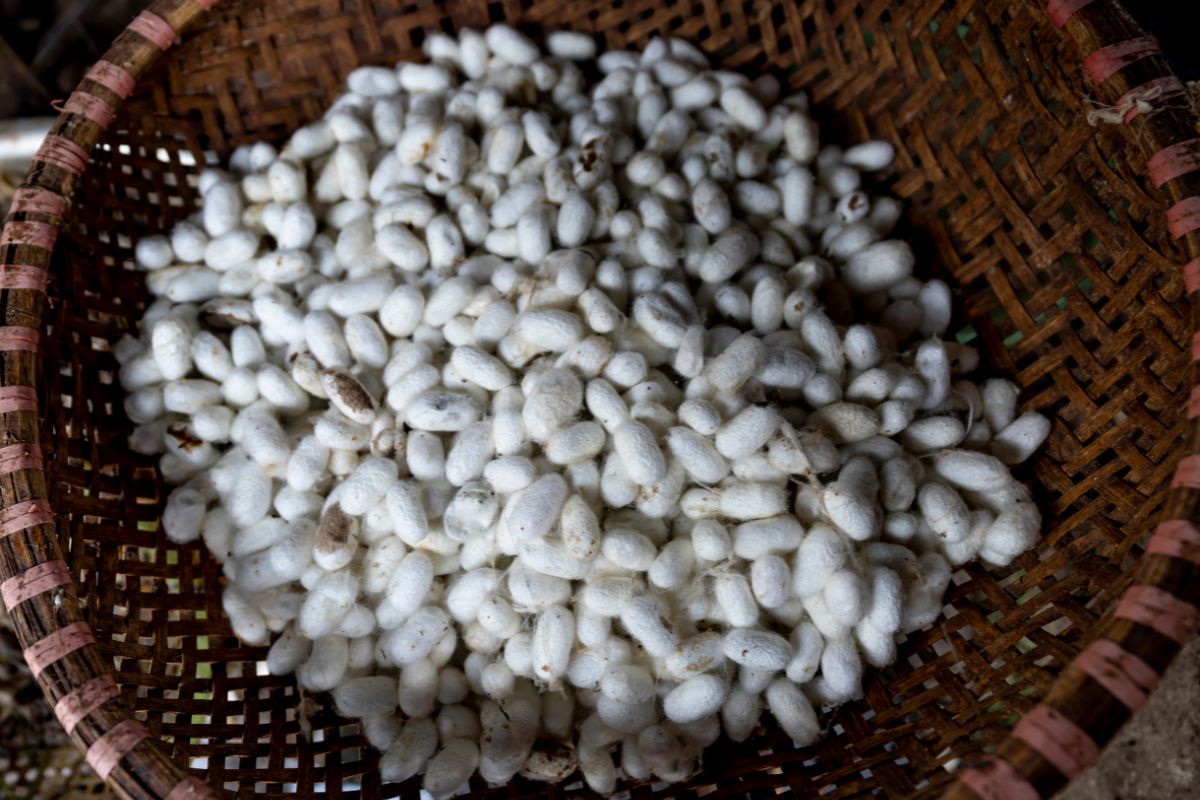
Silkworm pupae, a by-product of the silk industry, are attracting attention as a nutritious feed ingredient for poultry production. Long regarded as a secondary product after silk extraction, these pupae are now finding value in livestock nutrition.
The development is creating links between two agricultural sectors that rarely interacted in the past.
Silkworm pupae remain after silk threads are extracted from cocoons. For decades, much of this material had limited commercial use despite containing substantial amounts of protein, fat, and essential nutrients. Researchers studying livestock nutrition identified the resource as a potential feed ingredient capable of supplementing traditional protein sources.
Laboratory studies and field trials have produced encouraging results.
The nutritional composition makes pupae particularly suitable for poultry diets when processed correctly. Farmers and feed manufacturers are therefore exploring commercial opportunities.
What was once treated as waste is becoming a valuable resource.
The economics are changing rapidly.
Feed Costs Continue to Challenge Poultry Farmers
Poultry farming operates on narrow profit margins. Small increases in feed prices can significantly affect farm income, especially for small and medium producers. This reality has encouraged interest in alternative ingredients that maintain performance while reducing expenses.
Silkworm pupae offer one possible solution.
Because they originate from an existing agricultural industry, they provide an additional source of protein without requiring separate cultivation. Feed diversification is becoming increasingly important as global commodity markets experience fluctuations.
Farmers are seeking greater flexibility.
Alternative inputs help provide it.
Agricultural experts increasingly promote circular production systems where one industry’s by-products become another industry’s resources. Silkworm pupae fit perfectly within this model.
Instead of disposing of residual material after silk production, processors can supply livestock feed manufacturers. This improves resource efficiency while generating additional revenue streams within rural economies.
The concept appeals to both environmental and economic objectives. Reducing waste while creating value is becoming a key goal across many agricultural sectors. Circular systems often improve profitability. They also improve sustainability.
Early adopters include poultry farmers seeking ways to manage rising production costs. Feed manufacturers are evaluating different formulations that incorporate processed silkworm pupae alongside conventional ingredients. Results suggest the material can contribute valuable nutrients when included appropriately.
Interest is strongest in regions where sericulture already exists. States with significant silk production possess a natural supply advantage because raw materials are readily available. This creates opportunities for localised feed industries linked to existing agricultural activities. Regional value chains are beginning to develop. The potential extends beyond poultry alone.
Research Continues to Expand
Although commercial adoption remains at an early stage, research activity is increasing. Scientists are examining processing methods, nutritional performance, storage requirements, and economic viability. Their goal is to determine how silkworm pupae can be integrated effectively into modern feed systems.
Livestock nutrition researchers emphasise the importance of diversifying protein sources. Future feed systems may depend on a broader range of ingredients than those commonly used today. Silkworm pupae are among the options receiving serious attention. Evidence continues to accumulate.
The sector is evolving steadily.
For generations, the silk industry focused primarily on fibre production. Today, attention is expanding to include the economic potential of materials generated during processing. Silkworm pupae illustrate how agricultural by-products can become valuable resources when viewed differently.
The emerging feed industry offers benefits for both sericulture and livestock producers. Silk processors gain additional markets, while poultry farmers gain access to alternative protein sources. The relationship strengthens rural value chains and improves resource utilisation.
As feed costs remain a major challenge for animal husbandry, interest in such solutions is likely to grow.
Sometimes the future of livestock nutrition begins with a resource that was once overlooked.
Also Read: Punarnava Jal – The world’s first organic fertilizer! Know how it is beneficial for farmers?
Contact us – If farmers want to share any valuable information or experiences related to farming, they can connect with us via phone or whatsapp at 9599273766 or you can write to us at “kisanofindia.mail@gmail.com”. Through Kisan of India, we will convey your message to the people, because we believe that if the farmers are advanced then the country is happy.
You can connect with Kisan of India on Facebook, Twitter, and Whatsapp and Subscribe to our YouTube channel.