



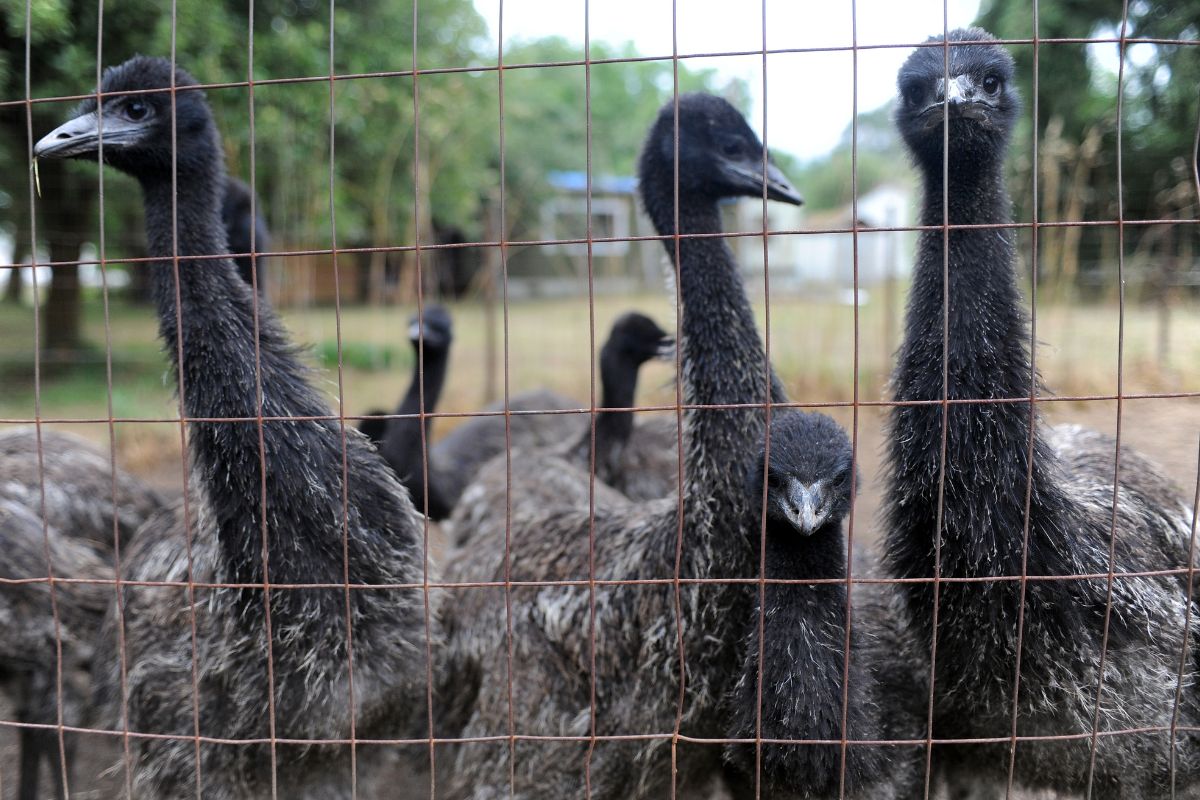
A decade ago, emu farming became one of the most talked-about alternative livestock businesses in India. Farmers across Tamil Nadu, Andhra Pradesh, Karnataka, and Maharashtra invested heavily in large flightless birds imported originally from Australia. Emus were promoted as a high-value business linked with meat, oil, skin, feathers, and breeding.
Then the sector collapsed.
Ponzi-style investment schemes disguised as emu businesses damaged the industry badly. Thousands of farmers suffered losses after companies disappeared, leaving behind abandoned farms and unpaid investments. For years afterward, emu farming became associated more with financial fraud than agriculture.
But quietly, the sector is returning again in some regions.
This time, agriculture experts say the focus is shifting away from investment hype toward small-scale commercial livestock diversification.
Many farmers today are searching for alternatives beyond traditional livestock systems. Rising fodder costs, climate pressure, and unstable dairy economics are forcing rural entrepreneurs to explore uncommon animal farming models.
Emus attract attention because they survive relatively well in hot climates and require lower water compared to some larger livestock systems. Agriculture experts say the birds adapt surprisingly well to semi-arid conditions in parts of South India.
Some farmers now rear small emu populations alongside poultry, goat farming, or agro-tourism ventures instead of depending entirely on large commercial operations.
Emu Oil Is Driving Interest
One of the biggest commercial drivers behind emu farming remains emu oil. The oil extracted from emu fat is used in cosmetic products, massage oils, soaps, and skincare items in several international markets.
Agriculture business experts say niche wellness markets are slowly reviving commercial interest in emu products. Some small companies now market emu oil through online platforms targeting alternative health and cosmetic consumers.
Emu meat also attracts limited premium markets because it contains lower fat compared to some red meats.
Still, researchers say India’s emu sector remains small and highly niche compared to mainstream livestock industries.
One unexpected reason for emu farming’s survival is rural tourism.
Several farms in Tamil Nadu and Karnataka now keep emus as part of agro-tourism attractions where visitors pay to explore farms, interact with unusual animals, and experience rural tourism activities.
Agriculture experts say exotic livestock often draws attention because urban visitors rarely see large flightless birds in village settings. Some farmers combine emu enclosures with organic farms, fish ponds, and local food businesses to diversify income.
Researchers believe agro-tourism may become increasingly important for small farms searching for non-traditional revenue streams.
Unlike some commercial livestock systems heavily dependent on controlled environments, emus tolerate heat relatively well. Agriculture experts say this becomes important as rising temperatures increasingly affect livestock farming across India.
Researchers studying climate adaptation in agriculture say alternative livestock systems may receive more attention during coming decades because water availability and fodder systems are changing rapidly.
Still, emu farming requires careful management, especially regarding breeding, veterinary care, and market access.
Farmers Remain Cautious After Earlier Collapse
The earlier emu investment collapse still shapes farmer attitudes strongly. Many rural families lost savings during the boom years when companies promised unrealistic profits through bird-buyback schemes.
Agriculture experts say the current return of emu farming remains much smaller and more cautious. Farmers entering the sector now focus more on direct product sales and tourism rather than speculative breeding networks.
Researchers believe stronger regulation and transparent business models remain necessary to prevent similar financial exploitation in future livestock sectors.
One major challenge is lack of specialized veterinary infrastructure. Emus remain uncommon livestock in India, and many rural veterinary systems still lack expertise regarding large exotic birds.
Farmers often struggle with:
- Breeding management
- Chick survival
- Disease treatment
- Feed formulation
- Market connections
Agriculture experts say niche livestock sectors need stronger technical support if they are expected to survive commercially.
Rural India Is Experimenting With New Livestock Systems
The slow return of emu farming reflects a larger trend inside Indian agriculture. Farmers are increasingly experimenting with non-traditional livestock, niche food systems, and tourism-linked agriculture because conventional farming income remains uncertain.
Some rural entrepreneurs now explore:
- Quail farming
- Turkey farming
- Duck farming
- Rabbit farming
- Silkworm rearing
- Ornamental fish culture
- Exotic poultry systems
Agriculture experts say future rural economies may become far more diversified than older farming models based only on crops and dairy.
In some villages, farming is no longer only about growing food.
It is becoming a business of experimentation itself.
Also Read: Punarnava Jal – The world’s first organic fertilizer! Know how it is beneficial for farmers?
Contact us – If farmers want to share any valuable information or experiences related to farming, they can connect with us via phone or whatsapp at 9599273766 or you can write to us at “kisanofindia.mail@gmail.com”. Through Kisan of India, we will convey your message to the people, because we believe that if the farmers are advanced then the country is happy.
You can connect with Kisan of India on Facebook, Twitter, and Whatsapp and Subscribe to our YouTube channel.