


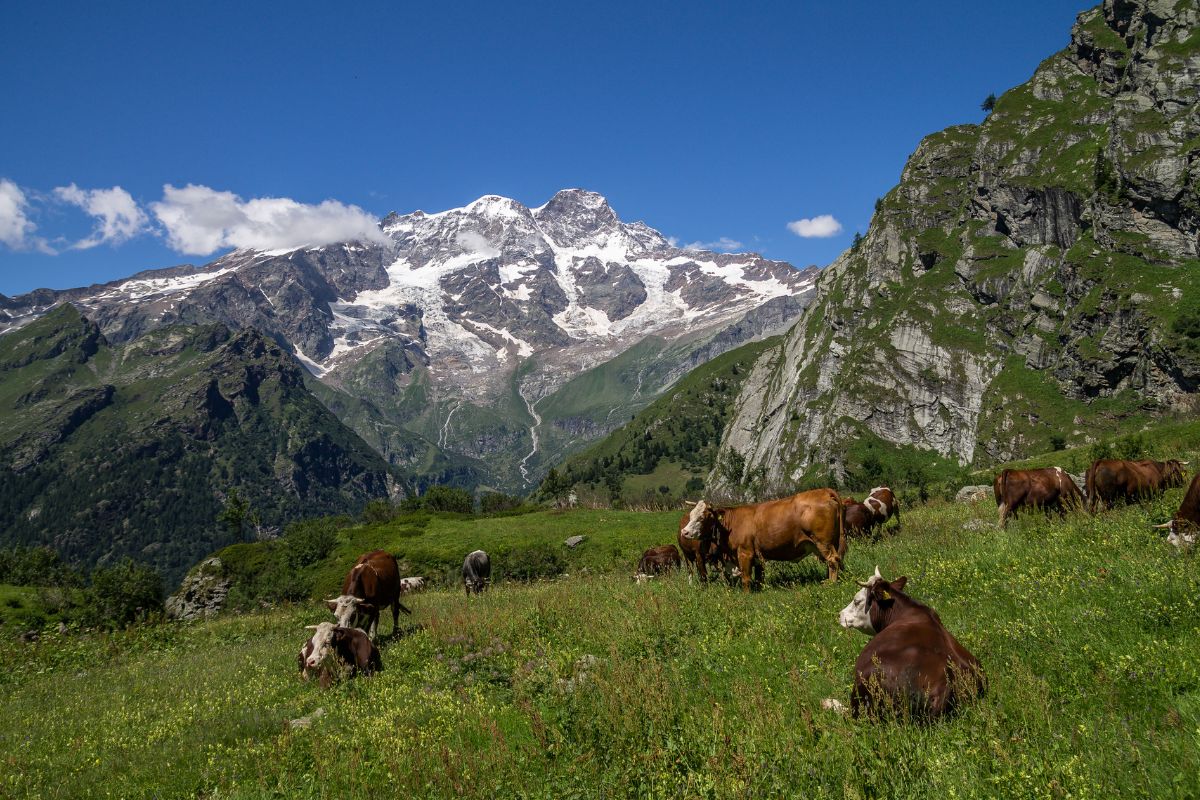
Across the mountains of Kyrgyzstan, Tajikistan, and Kazakhstan, alpine pastures have supported livestock-based livelihoods for centuries. During summer months, herders move animals to high-altitude grasslands where abundant forage sustains sheep, goats, cattle, and horses.
Today, these landscapes are undergoing significant change.
Rising temperatures, shifting rainfall patterns, glacier retreat, and changing vegetation are altering grazing conditions across large areas of Central Asia. Communities that depend on seasonal pasture systems are increasingly reporting reduced forage availability and growing uncertainty about the future of mountain livestock production.
Researchers monitoring the region describe the changes as one of the most important climate-related challenges facing pastoral agriculture.
The effects extend far beyond individual farms.
High-altitude regions are often more sensitive to climate change than surrounding lowlands. Scientists studying Central Asia have observed rising temperatures across many mountain systems. These changes influence snow cover, water availability, plant growth cycles, and ecosystem stability.
For pastoral communities, the consequences are immediate.
Livestock production depends heavily on healthy grasslands capable of supporting seasonal grazing. Even small environmental shifts can affect forage quantity and quality.
Mountain agriculture is closely linked to climate conditions.
Changes in one often affect the other.
Grassland Composition Is Changing
Herders in several regions report noticeable differences in pasture vegetation. Some traditional forage species are becoming less common, while other plants are expanding into areas where they were previously rare. Researchers attribute these shifts to changing temperatures and moisture patterns.
The composition of a pasture matters as much as its size.
Different plant species provide different nutritional value for livestock. Changes in vegetation can therefore affect animal productivity even when grazing land remains available.
Understanding these ecological transitions has become a major research priority.
The impacts are still unfolding.
Many Central Asian grazing systems depend indirectly on glaciers. Melting snow and ice feed rivers, streams, and wetlands that support both livestock and vegetation. As glaciers retreat, seasonal water availability becomes less predictable.
This affects pasture productivity.
Reduced water availability can limit plant growth and increase pressure on already stressed grazing areas. Communities dependent on mountain ecosystems are therefore paying close attention to changing hydrological conditions.
Water and pasture health remain closely connected.
The future of one often depends on the other.
Herders Adapt Through Mobility
Mobility has long been one of the strengths of pastoral systems.
When conditions change in one area, herders can often move livestock to alternative grazing locations. This flexibility has helped communities survive environmental variability for generations.
Climate change is increasing the importance of this strategy.
Many pastoralists are adjusting migration schedules, altering grazing patterns, and exploring new management approaches to maintain productivity.
Researchers note that traditional knowledge remains an important adaptation resource.
Communities continue drawing on centuries of experience.
Several Central Asian countries are developing programmes aimed at improving pasture management and strengthening climate resilience. Initiatives include grassland restoration, water conservation projects, improved livestock management, and monitoring systems that help communities respond to environmental change.
Policymakers recognise the importance of protecting pastoral economies.
Millions of people across the region depend directly or indirectly on livestock production. Maintaining healthy grazing systems is therefore both an environmental and economic priority.
Adaptation efforts continue to expand.
The need is becoming increasingly urgent.
A Warning From the Mountains
The challenges facing Central Asia’s alpine pastures highlight the growing connection between climate change and food production.
Mountain grasslands may seem remote, but they support livestock systems that provide food, income, and cultural identity for entire communities. Their condition influences regional economies and rural livelihoods.
As temperatures continue to rise, adaptation will become increasingly important.
The experience of Central Asian herders offers a reminder that climate change is not only affecting crops and coastlines. It is reshaping some of the world’s oldest pastoral landscapes as well.
In the high mountains, the future of livestock farming is becoming closely tied to the future of the grasslands themselves.
Contact us: If farmers want to share information or experiences related to farming with us, then they can do this by calling us on the phone number 9599273766 or by writing an email to kisanofindia.mail@gmail.com or by sending your recording. Through Kisan of India, we will convey your message to the people, because we believe that if the farmers are advanced then the country is happy.