



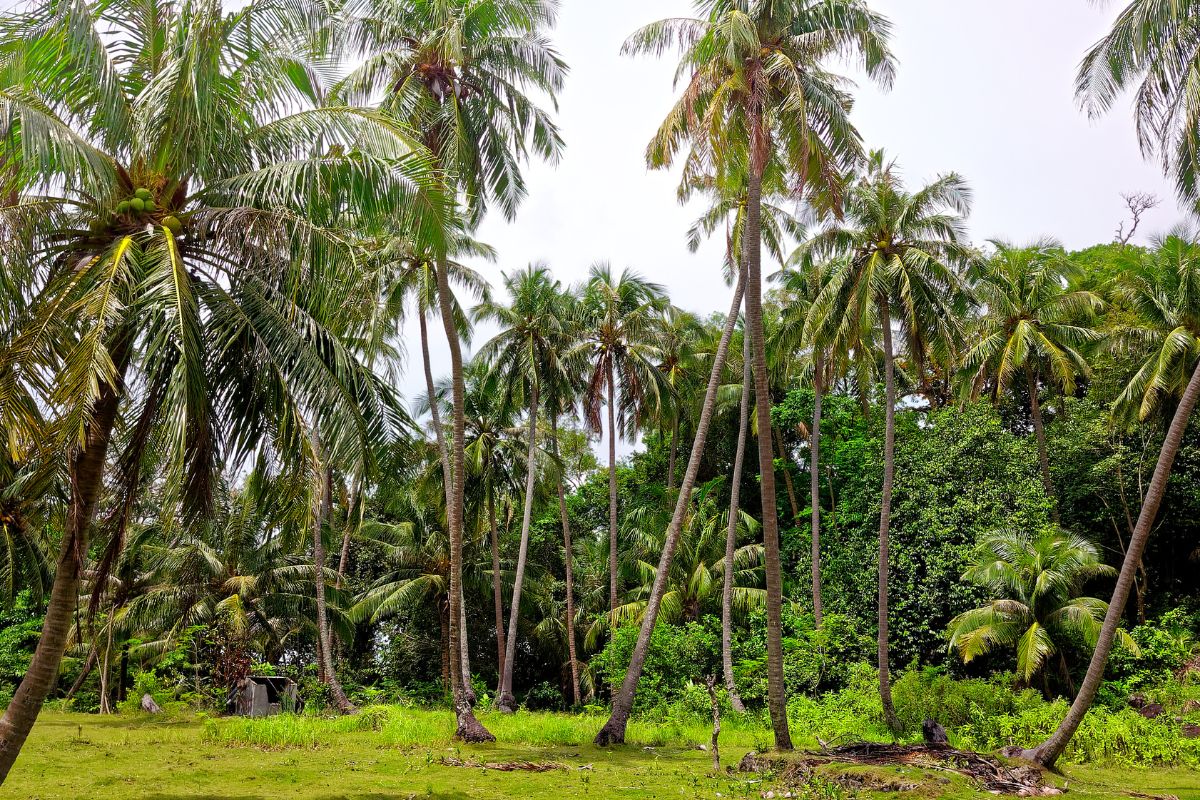
For generations, coconut farming in Karnataka followed a rhythm shaped by the monsoon. Farmers expected rainfall to arrive within a predictable seasonal window. Even when annual rainfall varied, the distribution was often sufficient to support coconut palms through critical stages of growth.
Today, many growers say that pattern is changing.
Across major coconut-producing districts such as Tumakuru, Hassan, Chikkamagaluru, Mandya, Shivamogga, and Davanagere, farmers are reporting a growing problem: rainfall may arrive in large quantities, but longer dry periods between rain events are placing increasing stress on plantations.
The challenge is not always a lack of rain.
It is how the rain falls.
Agricultural scientists and horticulture officials say rainfall variability is becoming one of the most significant climate-related threats facing coconut cultivation in southern India.
Many farmers traditionally assessed a season by looking at total rainfall figures. Experts say that approach is becoming less useful.
A district may receive near-normal annual rainfall while still experiencing severe moisture stress if most of the rain falls within a few intense events followed by extended dry periods.
For coconut trees, consistent soil moisture is important.
Unlike seasonal crops that complete their lifecycle within a few months, coconut palms remain productive year-round and require stable growing conditions.
When long dry spells occur between rainfall events, trees experience stress that can affect flowering, nut development, and overall productivity.
Farmers say these patterns have become increasingly common over the past decade.
Yield Losses Often Appear Months Later
One of the challenges facing coconut growers is that climate impacts are not always immediate.
A dry spell during a critical growth stage may not produce visible damage right away.
The effects often emerge months later.
Farmers may notice fewer nuts developing, smaller nut size, reduced copra content, or lower overall yields.
Because coconut production follows a long biological cycle, weather events occurring today can influence harvests many months into the future.
This delayed impact makes climate-related losses difficult to predict and manage.
Growers often realise the full extent of damage only when production begins to decline.
To cope with irregular rainfall, many farmers have increased their reliance on groundwater. Borewells have become an important source of irrigation across large parts of Karnataka’s coconut belt.
However, this strategy creates new concerns.
In several districts, groundwater levels have come under pressure due to increasing extraction and recurring dry conditions. Farmers report spending more on electricity, pumps, and irrigation infrastructure than previous generations.
Small growers often struggle to afford these investments.
As climate variability increases, access to water is becoming one of the biggest factors determining plantation productivity.
Intercropping Is Emerging as a Risk Management Strategy
Many coconut farmers are responding by diversifying their plantations.
Instead of depending solely on coconuts, growers are introducing crops such as cocoa, black pepper, banana, arecanut, vegetables, and fodder grasses.
The approach creates multiple income streams while making better use of available water and land resources.
Intercropping also helps reduce financial risk.
If coconut yields decline because of weather conditions, farmers can still earn income from other crops growing within the plantation.
Agricultural officers across Karnataka increasingly promote diversification as a climate adaptation strategy.
Research institutions working on coconut cultivation are examining ways to help farmers adapt. Efforts include developing drought-tolerant varieties, improving irrigation efficiency, and promoting soil-moisture conservation techniques.
Mulching has become particularly important. By covering soil with organic material, farmers can reduce evaporation and retain moisture during dry periods.
Drip irrigation systems are also gaining popularity because they deliver water more efficiently than conventional methods.
These measures cannot control rainfall patterns, but they can help reduce vulnerability.
The Coconut Economy Supports Millions
The importance of coconut extends far beyond individual farms.
The crop supports traders, processors, oil mills, coir industries, transport operators, and thousands of rural businesses.
Karnataka is one of India’s leading coconut-producing states, making climate-related impacts a significant economic concern.
When yields decline, the effects spread through the entire value chain.
This is why changing rainfall patterns are attracting attention not only from farmers but also from policymakers and agricultural institutions.
Floods and heatwaves often dominate climate discussions because their impacts are immediate and visible.
For coconut farmers, the challenge is more gradual.
Rain still falls. The monsoon still arrives. But the gaps between rainfall events are becoming longer and harder to predict. Those changes may not attract headlines in the same way as extreme weather disasters.
Yet for thousands of growers across Karnataka, they are quietly reshaping the economics of one of India’s most important plantation crops.
The future of coconut farming may depend not only on how much rain falls, but on when it falls and how long farmers must wait for the next shower.
Also Read: Punarnava Jal – The world’s first organic fertilizer! Know how it is beneficial for farmers?
Contact us – If farmers want to share any valuable information or experiences related to farming, they can connect with us via phone or whatsapp at 9599273766 or you can write to us at “kisanofindia.mail@gmail.com”. Through Kisan of India, we will convey your message to the people, because we believe that if the farmers are advanced then the country is happy.
You can connect with Kisan of India on Facebook, Twitter, and Whatsapp and Subscribe to our YouTube channel.