



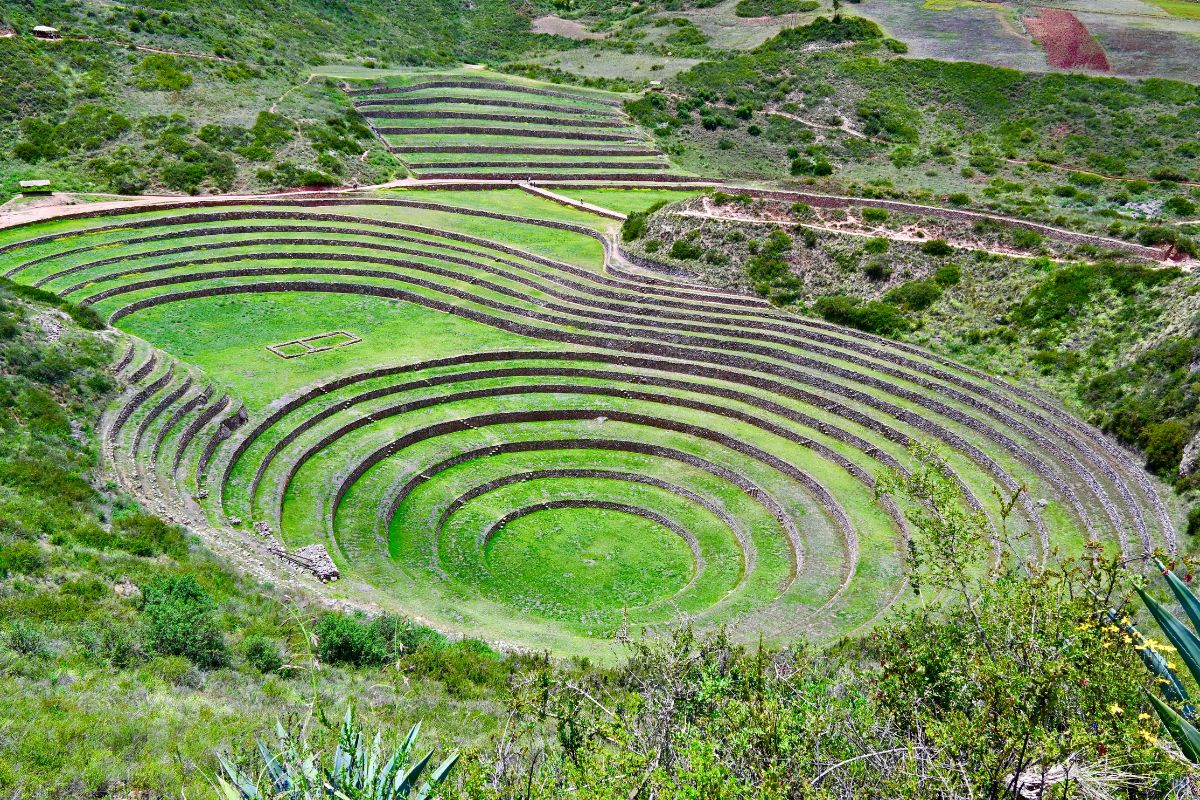
High in the Andes Mountains of Peru, farmers are reviving an agricultural system first developed more than a thousand years ago. Known as Waru Waru, the method uses raised planting beds surrounded by water-filled canals to create a farming landscape designed to withstand harsh environmental conditions.
For centuries, many of these systems were abandoned or neglected.
Today, climate change is bringing them back.
Increasing weather uncertainty, irregular rainfall, and temperature fluctuations are forcing farmers to search for ways to improve resilience. Researchers and local communities are finding that some answers may already exist in traditional agricultural knowledge.
The revival of Waru Waru farming is becoming one of the most closely watched examples of climate adaptation rooted in history.
The Andean region has always presented challenges for agriculture. Farmers face cold nights, intense sunlight, unpredictable rainfall, and periodic flooding. Ancient communities developed Waru Waru systems specifically to manage these conditions.
Raised beds protect crops from excess water during heavy rains, while surrounding canals store moisture for drier periods.
The canals also help regulate temperature. Water absorbs heat during the day and releases it at night, reducing the risk of frost damage.
This natural climate control system remains effective even today.
The design reflects centuries of environmental understanding.
Climate Change Is Increasing Risks
Many Andean farmers are reporting greater weather variability than in previous decades.
Rainfall patterns have become less predictable, while extreme weather events are affecting crop production more frequently. Traditional farming systems that depend on stable seasonal conditions are facing increasing pressure.
The return of Waru Waru farming is partly a response to these challenges.
Researchers studying climate adaptation note that farming systems capable of managing both floods and droughts are becoming increasingly valuable.
Flexibility is essential.
The ancient system offers exactly that.
One of the biggest strengths of the Waru Waru approach is water conservation. The canals capture and store water during rainy periods, allowing it to remain available when conditions become dry. This improves moisture availability for crops throughout the growing season.
In regions where water security is becoming a major concern, such systems offer important advantages.
Farmers can maintain production despite changing rainfall patterns and short-term droughts.
Water management lies at the heart of the system’s success.
Its importance continues to grow.
The revival effort depends heavily on local participation. Farmers, researchers, and community organisations are working together to restore ancient agricultural landscapes that had fallen into disuse. Many projects involve reconstructing canals and raised beds based on archaeological evidence and traditional knowledge.
The process creates both environmental and economic benefits.
Communities gain productive farmland while preserving cultural heritage linked to indigenous agricultural practices.
Knowledge that once seemed outdated is proving valuable again.
The restoration movement continues expanding.
Traditional Knowledge Gains New Recognition
Agricultural innovation is often associated with new technologies.
The Waru Waru system highlights a different reality. Traditional knowledge can also provide solutions to modern challenges. Many ancient farming practices evolved through long-term observation of local environments.
Researchers increasingly study these systems for lessons applicable to contemporary agriculture.
Historical methods are not always replacements for modern technology, but they often complement it effectively.
The Peruvian experience demonstrates this clearly.
Old ideas can remain highly relevant.
The return of Waru Waru farming reflects a broader shift occurring in agriculture worldwide. As climate risks increase, farmers are exploring every available source of knowledge, including practices developed centuries ago. Resilience is becoming just as important as productivity.
In Peru’s mountains, raised beds and water canals are helping communities adapt to changing conditions while protecting food production.
The system’s survival across centuries suggests that its designers understood something fundamental about farming in difficult environments.
Today, that understanding is proving valuable once again.
Sometimes the future of agriculture can be found by rediscovering the past.
Also Read: Punarnava Jal – The world’s first organic fertilizer! Know how it is beneficial for farmers?
Contact us – If farmers want to share any valuable information or experiences related to farming, they can connect with us via phone or whatsapp at 9599273766 or you can write to us at “kisanofindia.mail@gmail.com”. Through Kisan of India, we will convey your message to the people, because we believe that if the farmers are advanced then the country is happy.
You can connect with Kisan of India on Facebook, Twitter, and Whatsapp and Subscribe to our YouTube channel.