


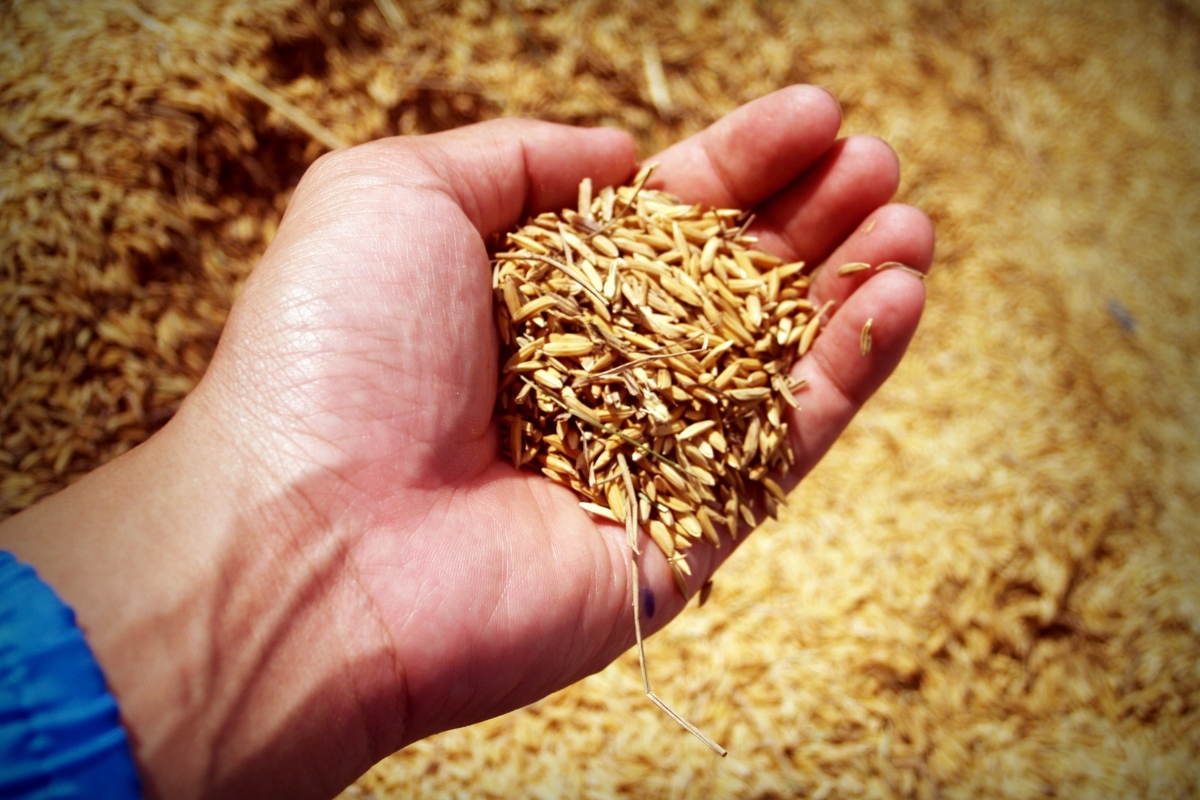
Rice farmers in water-stressed areas face a difficult trade-off. They need varieties that can maintain production when rainfall becomes unreliable, but those varieties must also perform well under normal conditions. New Indian research has identified rice breeding lines that showed higher yields under drought stress.
Researchers from Malla Reddy University, ICAR-Indian Institute of Rice Research, Central Agricultural University and ICAR-National Institute for Plant Biotechnology evaluated 40 breeding lines carrying combinations of drought-tolerance genes. Several lines performed substantially better than their parent variety when water became limited.
The strongest lines recorded yield improvements ranging from 36% to 82% over the parent variety under drought conditions, according to the study published in the Indian Journal of Genetics and Plant Breeding. These are breeding lines, not a claim that farmers can immediately purchase them as commercial seed.
How were the drought-tolerant lines developed?
The researchers used a breeding approach called QTL pyramiding. It combines several genetic regions associated with a desirable trait into one plant through conventional and marker-assisted breeding rather than introducing foreign genes through genetic engineering.
The research focused on four drought-tolerance genes. Combining several such genes can help breeders develop plants with more than one genetic mechanism for coping with water stress, though performance still needs to be tested across different environments and seasons.
The researchers evaluated 40 lines under water-limited conditions. Their results showed substantial differences between the lines, with some maintaining better yield than others when irrigation was restricted. This variation helps breeders identify material that can move into further testing.
The parent variety used in the study provides the baseline for comparison. Reporting a percentage increase against the parent therefore shows how the breeding lines performed relative to that specific genetic background, rather than promising the same yield advantage across all rice varieties.
This distinction matters for farmers. A breeding line showing an 82% advantage in a research trial does not mean every farmer growing it will obtain 82% more rice. Field conditions, soil, rainfall, management and seed quality can all affect final yields.
Why does drought tolerance matter for rice?
Rice requires substantial water during its growing cycle, particularly under conventional flooded cultivation. When rainfall becomes irregular or irrigation supplies fall, water stress can reduce plant growth, grain formation and final yield.
The government has warned that climate change could significantly affect rice production without adaptation. An ICAR assessment found that rainfed rice yields could decline by 20% by 2050 and 47% by 2080 without adaptation measures.
This makes drought-tolerant varieties one possible part of climate adaptation. They do not eliminate the need for irrigation or good water management, but they can help reduce crop losses when plants face periods of limited water.
ICAR has already developed and released several rice varieties with tolerance to drought, water stress, flooding, salinity and other conditions. The government reported that 199 of 668 rice varieties developed between 2014 and 2024 had traits for extreme climate resilience.
One example is DRR Dhan 42, which ICAR-Indian Institute of Rice Research lists as its first drought-tolerant marker-assisted-selection rice variety. The institute also lists DRR Dhan 44 as a high-yielding variety intended for water-limiting areas.
These varieties show that drought tolerance is not a completely new research area. The latest breeding work adds another approach by combining multiple drought-related genetic regions and testing their effects under water stress.
What does this mean for farmers?
Farmers should not immediately switch varieties because of a research headline. A new breeding line needs to pass further testing, release procedures, seed multiplication and recommendation for specific regions before widespread commercial cultivation.
Farmers should choose varieties recommended for their state, agro-climatic zone and cropping system. Seed from an unverified source can create problems with germination, varietal purity and crop performance even when the variety itself has good research results.
Local agricultural universities, KVKs and agriculture departments can provide information about officially released drought-tolerant varieties. Farmers should also check whether certified seed is available before changing their normal variety.
Variety choice should also consider crop duration, grain quality, disease resistance, market demand and water availability. A drought-tolerant variety may be useful only if its other characteristics match the farmer’s production and selling conditions.
Water management remains important even with drought-tolerant seed. Farmers can combine suitable varieties with practices such as alternate wetting and drying, direct seeding where appropriate, field levelling, mulching and efficient irrigation.
Can drought-tolerant rice help with climate change?
Drought-tolerant crops can form part of climate adaptation because they are designed to maintain production when water becomes limited. Their value becomes greater when farmers face changing rainfall patterns or more frequent dry spells.
The government says ICAR has demonstrated climate-resilient technologies through 448 Climate Resilient Villages in 151 vulnerable districts. These programmes include drought- and flood-tolerant crop varieties along with changes in crop management.
Climate resilience also requires reducing unnecessary water use. A drought-tolerant variety combined with poor irrigation management can still place pressure on groundwater. Farmers need to match crop choice with available water rather than treating improved seed as a substitute for water planning.
Research is also moving toward varieties that can tolerate several stresses. ICAR lists rice varieties with tolerance to salinity, alkalinity, drought, flooding, disease and other constraints, reflecting the range of conditions farmers may face as weather patterns change.
For farmers, the current research offers a clear direction rather than an immediate commercial recommendation. The drought-tolerant breeding lines still need further evaluation, but their performance shows how combining several drought-related genes could help breeders develop rice better suited to water-stressed environments.
The practical step today is to choose released varieties based on local recommendations and water conditions. Farmers should also follow weather advisories and water-saving practices. As breeding programmes advance, more drought-tolerant rice varieties could give farmers another tool for managing climate-related production risks.
Also Read: Punarnava Jal – The world’s first organic fertilizer! Know how it is beneficial for farmers?
Contact us – If farmers want to share any valuable information or experiences related to farming, they can connect with us via phone or whatsapp at 9599273766 or you can write to us at “kisanofindia.mail@gmail.com”. Through Kisan of India, we will convey your message to the people, because we believe that if the farmers are advanced then the country is happy.
You can connect with Kisan of India on Facebook, Twitter, and Whatsapp and Subscribe to our YouTube channel.