


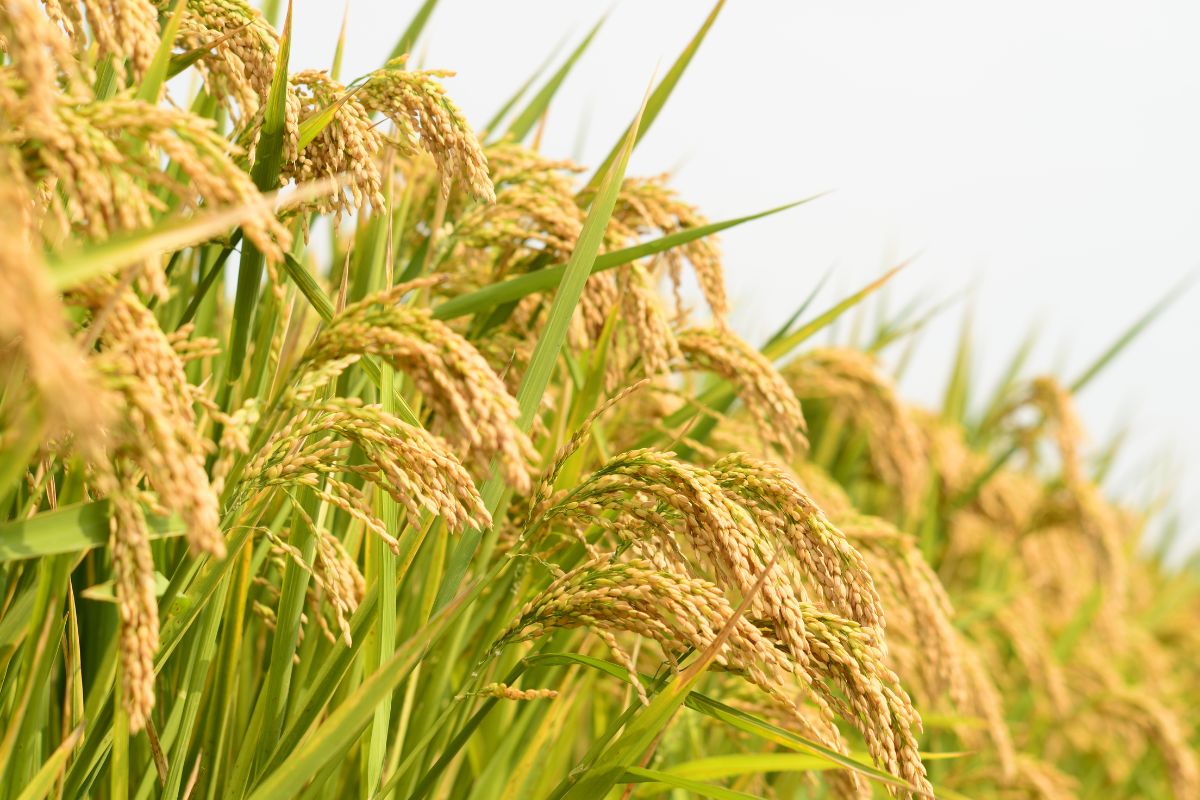
Growing rice does not always require farmers to flood and transplant fields in the traditional way. Direct-seeded rice, or DSR, allows farmers to sow rice seed directly in the field. The method can reduce water and labour requirements while also helping farmers respond to changing rainfall and water availability.
A September 2026 session at Chaudhary Sarwan Kumar Himachal Pradesh Krishi Vishvavidyalaya discussed DSR as a method for climate-change adaptation. The research project focused on reducing greenhouse-gas emissions and improving resource efficiency in rice cultivation.
How Direct-Seeded Rice Works
In conventional transplanted rice, farmers first raise seedlings in a nursery. They then puddle the field and transplant the seedlings into standing water. DSR removes the nursery and transplanting stages. Farmers sow seeds directly into the prepared field using suitable equipment and management practices.
This changes the crop’s water requirements and labour needs. Farmers do not need to maintain a separate nursery or spend time transplanting seedlings. The field also does not need to remain continuously flooded during the establishment stage in the same way as conventional transplanted rice.
ICAR has promoted DSR among several water-saving practices, along with alternate wetting and drying, system of rice intensification, laser land levelling, mulching, drip and sprinkler irrigation. The government says these methods are being promoted through KVKs, farmer training and field demonstrations.
A 2026 ICAR study from Haryana also found that short-duration rice cultivars performed better under direct-seeded aerobic conditions than longer-duration cultivars. The study identified HKR 49 as having the highest water-use efficiency among the varieties tested, at 7.74 kg per hectare per millimetre.
This means farmers cannot simply switch from transplanted rice to DSR and expect the same results. Variety selection matters. Soil type, sowing time, weed management, irrigation and field preparation all affect the performance of direct-seeded rice.
Why Water Matters
Rice cultivation can place considerable pressure on irrigation resources, particularly in areas where groundwater levels are declining. An ICAR assessment found a mismatch between crop water demand and groundwater availability in several states, including Punjab, Haryana, Andhra Pradesh, Telangana, Maharashtra, Karnataka and Tamil Nadu.
DSR can help reduce water demand because farmers avoid prolonged puddling and the large amount of water required for transplanting operations. ICAR’s earlier guidance estimated that direct seeding can save around 10–20% irrigation water under suitable conditions, though actual savings vary with soil, rainfall and farm management.
The water benefit can become more important when rainfall becomes less predictable. A farmer may receive heavy rainfall during one period and face a dry spell later. A crop that requires less irrigation during establishment can give farmers more flexibility when water availability becomes uncertain.
The method can also reduce labour requirements. Traditional transplanting needs workers to pull seedlings, transport them to fields and plant them. Direct seeding removes this operation. This can matter in areas where farm labour is becoming expensive or difficult to find during the short transplanting window.
Can DSR Reduce Methane?
Rice fields can produce methane when organic material breaks down under flooded conditions without oxygen. Reducing the period of flooding can lower methane formation. This is one reason researchers are studying direct seeding as part of climate-resilient rice production.
A September 2026 government release on the SAVA-134 rice variety reported that the variety used under direct-seeded conditions in Himachal Pradesh reduced methane emissions by nearly 90% in the project assessment. It also reported improved water productivity and potential for carbon-credit generation.
These results come from specific research and field conditions. Farmers should not assume that every DSR field will achieve the same reduction. Emissions depend on water management, soil, residue management, variety, fertiliser use and other factors.
Climate benefits can still be important when DSR is combined with other practices. Farmers can manage irrigation carefully, avoid unnecessary flooding, use suitable fertiliser doses and manage crop residues properly. Together, these measures can reduce resource use while maintaining crop production.
What Farmers Need To Watch
Weed management is one of the biggest challenges in DSR. Unlike transplanted rice, where standing water and transplanting can suppress some weeds, direct-seeded fields can allow weeds to emerge alongside rice plants. Farmers therefore need timely and suitable weed-management practices.
Field levelling also matters. Uneven fields can cause water to collect in some areas while other sections remain dry. Laser land levelling can help create a more uniform field surface and improve water distribution. Farmers should assess whether the cost of the equipment or hiring service makes sense for their farm.
Soil type is another factor. ICAR guidance has noted that DSR is better suited to medium- and heavy-textured soils and can perform poorly in light-textured soils under certain conditions. Farmers should seek local recommendations instead of adopting the method solely because it uses less water.
The right variety also makes a difference. Research from Haryana found that short-duration varieties were better suited to direct-seeded aerobic conditions than longer-duration cultivars. Farmers should select varieties recommended for DSR in their region and avoid using seed simply because it performs well under transplanted cultivation.
Should Farmers Switch To DSR?
There is no single answer for every rice-growing farm. DSR can be useful where water and labour are major constraints and where soil, climate and farm machinery support the method. Farmers should compare the expected savings with the cost of seed treatment, sowing equipment, weed management and irrigation.
Farmers can start with a small area rather than changing the entire farm in one season. A comparison between DSR and transplanted rice can help them assess water use, labour costs, weed pressure, yield and net returns under their own conditions.
The method also fits India’s wider push for water-efficient and climate-resilient agriculture. The government is promoting DSR alongside alternate wetting and drying, micro-irrigation, suitable crop varieties and other practices designed to reduce pressure on agricultural resources.
For farmers, the key question is not simply whether DSR uses less water. It is whether the method can deliver reliable yields at lower overall cost on their particular farm. Soil, variety, rainfall, irrigation, weeds and access to machinery all need to be considered before making the switch.
As water stress and weather variability increase, rice cultivation methods will need to use resources more carefully. Direct-seeded rice offers one option. When combined with suitable varieties and proper field management, it can reduce some of the water, labour and emissions associated with conventional rice cultivation.
Also Read: Punarnava Jal – The world’s first organic fertilizer! Know how it is beneficial for farmers?
Contact us – If farmers want to share any valuable information or experiences related to farming, they can connect with us via phone or whatsapp at 9599273766 or you can write to us at “kisanofindia.mail@gmail.com”. Through Kisan of India, we will convey your message to the people, because we believe that if the farmers are advanced then the country is happy.
You can connect with Kisan of India on Facebook, Twitter, and Whatsapp and Subscribe to our YouTube channel.