


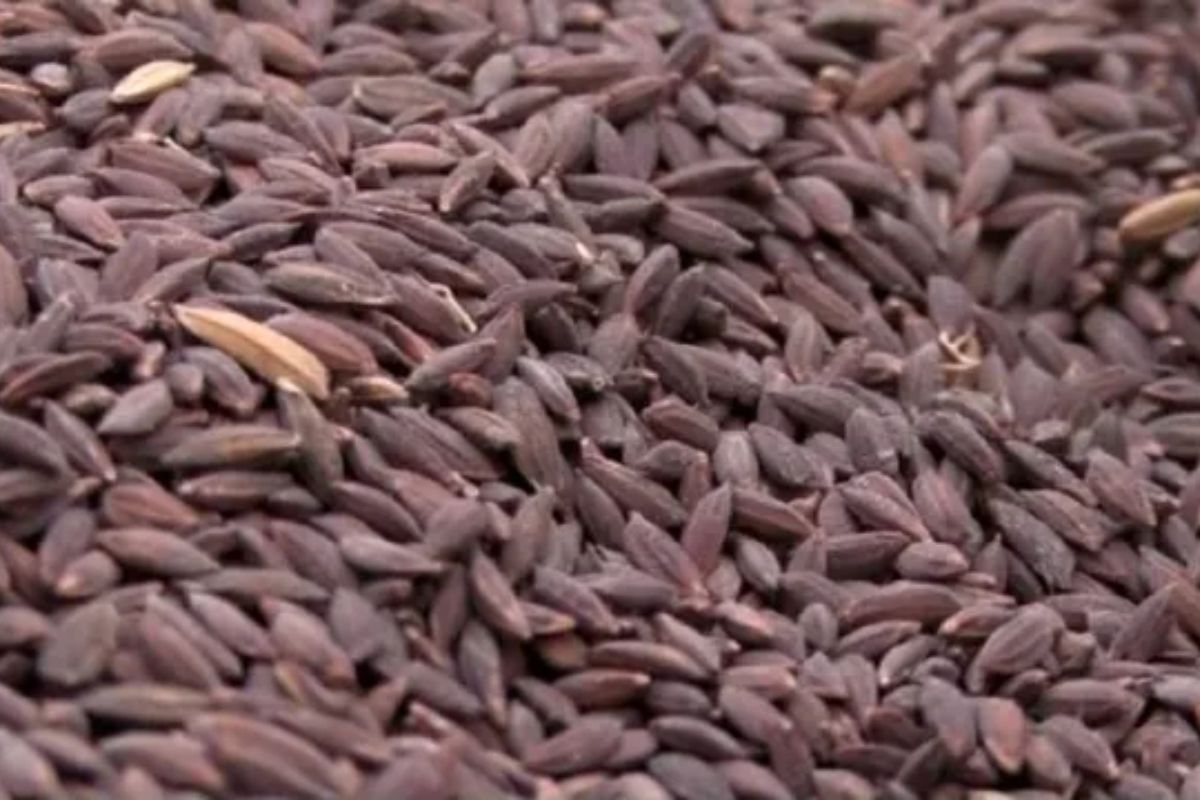
In the terraced mountain fields of Uttarakhand, farmers continue to cultivate a rice variety that rarely appears in supermarkets but remains one of the most prized grains in the Himalayan region.
Known as Kala Jeera, this traditional aromatic rice has been grown for generations in districts such as Pithoragarh, Chamoli, Bageshwar, Almora, and parts of Uttarkashi. The grain is small, dark in appearance before processing, and known for its distinctive fragrance that often draws comparisons with premium aromatic rice varieties.
Despite its reputation, Kala Jeera occupies only a small area today. Migration from mountain villages, shrinking farmland, labour shortages, and changing agricultural priorities have reduced cultivation significantly over the past few decades.
Yet farmers, seed conservators, and local agricultural groups are working to ensure that the crop does not disappear.
For centuries, Kala Jeera formed part of the traditional food system of Uttarakhand’s hill communities.
Unlike commercial rice cultivated in the plains, this variety evolved in mountain conditions where farms are small, rainfall patterns are variable, and mechanisation remains difficult.
The rice became popular because of its aroma, taste, and adaptability to local conditions. Families often reserved it for special occasions, community gatherings, and festivals.
Older farmers recall a time when nearly every village cultivated at least a small quantity of Kala Jeera. Seeds were exchanged among households and preserved from one generation to the next.
The grain’s cultural value was as important as its economic value.
Mountain Farming Keeps Production Limited
One reason Kala Jeera remains relatively unknown outside Uttarakhand is that production volumes are small.
The crop is grown on terraced fields carved into mountain slopes where large-scale cultivation is impossible. Most farming operations rely heavily on family labour because machinery cannot easily operate on steep terrain.
Farmers plant, weed, and harvest largely by hand.
This makes cultivation labour-intensive compared with modern paddy farming in the plains.
The result is a premium product produced in limited quantities.
While yields may not match high-yielding commercial varieties, farmers often receive better prices because of the grain’s unique qualities.
Like many Himalayan regions, Uttarakhand faces significant rural migration.
Young people frequently move to towns and cities in search of education, employment, and better economic opportunities. As villages lose population, agricultural land is often abandoned.
Traditional crops are particularly vulnerable because they require local knowledge and labour that may disappear when farming families leave.
Kala Jeera has experienced this challenge directly.
Many farmers who once cultivated the rice have reduced production or stopped entirely due to labour shortages.
In some villages, only a handful of households continue growing the crop.
Agricultural organisations have warned that several traditional Himalayan crops face similar risks if cultivation declines further.
Premium Markets Are Creating New Interest
A growing market for traditional foods is helping change the situation.
Consumers across India are increasingly looking for heritage grains, region-specific foods, and products linked to traditional farming systems. Kala Jeera fits all three categories.
Organic stores, specialty retailers, and online food platforms have started introducing the rice to customers outside Uttarakhand.
Its rarity has become part of its appeal.
Farmers who previously sold grain only within local markets are now finding buyers willing to pay premium prices for authentic mountain-grown produce.
Some producer groups have also begun exploring branding and direct marketing initiatives.
Farmers in Uttarakhand are already experiencing changes in rainfall patterns, temperature fluctuations, and extreme weather events.
Traditional crop varieties are attracting attention because they evolved under local environmental conditions over long periods.
Kala Jeera is often cultivated with fewer external inputs than commercial rice varieties. Its adaptation to mountain conditions makes it valuable not only as a food crop but also as a genetic resource.
Agricultural scientists increasingly emphasise the importance of preserving indigenous crop diversity as climate challenges grow.
Future breeding programmes may depend on traits found in traditional varieties that survived in difficult environments.
The effort to save Kala Jeera is about more than protecting a rice variety. It is also about preserving agricultural knowledge, cultural traditions, and farming systems unique to the Himalayas.
Every traditional crop that disappears takes with it generations of experience developed under local conditions.
Farmers growing Kala Jeera today are not simply producing rice.
They are maintaining a living connection to Uttarakhand’s agricultural heritage.
A Future Beyond the Mountains
The future of Kala Jeera will depend on whether farmers can continue earning viable incomes from cultivation.
Premium markets, consumer awareness, and support for mountain agriculture will all play important roles.
For now, the aromatic grain continues to grow on terraced slopes overlooking Himalayan valleys, much as it has for centuries.
Its cultivation area may be small, but its significance extends far beyond the fields where it is grown.
In an era when agriculture often favours uniformity and scale, Kala Jeera remains a reminder that some of India’s most valuable crops survive because they are unique.
Also Read: Punarnava Jal – The world’s first organic fertilizer! Know how it is beneficial for farmers?
Contact us – If farmers want to share any valuable information or experiences related to farming, they can connect with us via phone or whatsapp at 9599273766 or you can write to us at “kisanofindia.mail@gmail.com”. Through Kisan of India, we will convey your message to the people, because we believe that if the farmers are advanced then the country is happy.
You can connect with Kisan of India on Facebook, Twitter, and Whatsapp and Subscribe to our YouTube channel.