

Mappillai Samba Rice Is Returning to Tamil Nadu’s Farms and Urban Kitchens

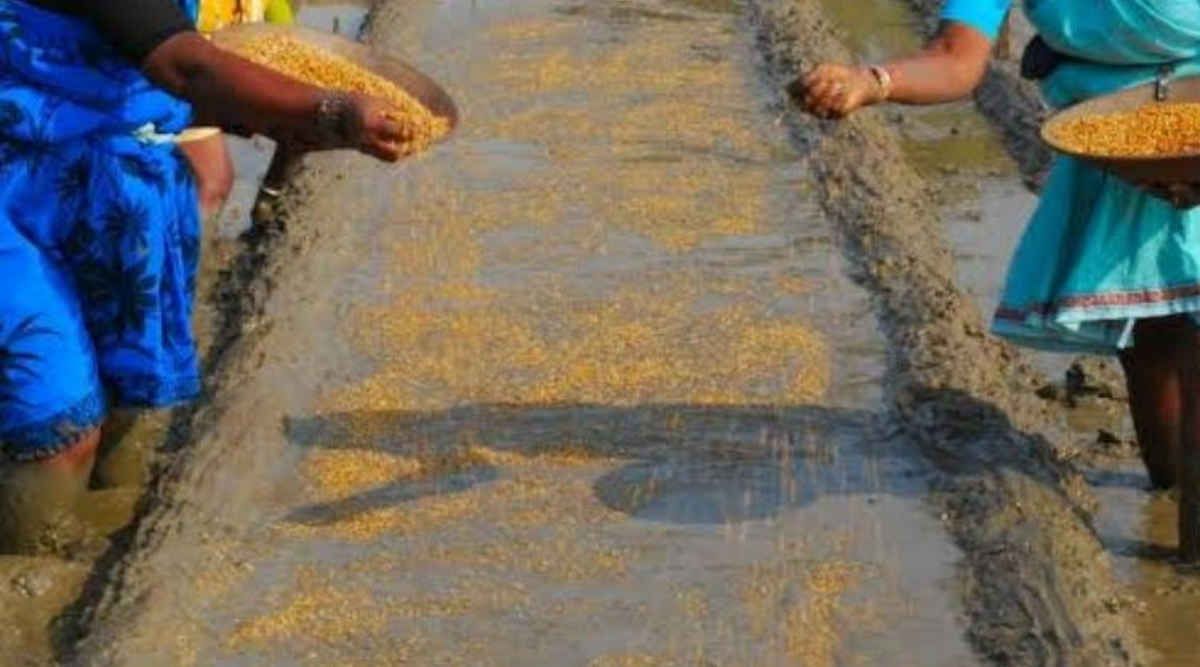
In the paddy-growing regions of Tamil Nadu, a centuries-old rice variety that nearly disappeared from cultivation is finding new life. Known as Mappillai Samba, this traditional red rice was once a familiar sight across villages before the spread of high-yielding modern varieties transformed Indian agriculture.
Today, farmers, seed conservators, and health-conscious consumers are helping bring it back.
The revival is taking place across districts including Thanjavur, Tiruchirappalli, Erode, Madurai, and Nagapattinam, where small groups of farmers have resumed cultivation after years of decline. What makes the story remarkable is that the rice is returning not because of government mandates or large corporate investments, but because both producers and consumers see value in preserving a grain that survived generations of changing agricultural trends.
For many farmers, Mappillai Samba represents more than a crop. It represents a different approach to agriculture.
The name Mappillai Samba translates roughly to “Bridegroom Rice.”
According to local folklore, newly married men were once expected to demonstrate their strength during wedding ceremonies. Traditional communities believed that consuming Mappillai Samba contributed to physical endurance and stamina, leading to its association with bridegrooms.
Whether folklore or fact, the story helped cement the rice variety’s place in Tamil Nadu’s agricultural heritage.
Unlike polished white rice commonly found in markets today, Mappillai Samba produces reddish grains rich in bran layers. Farmers traditionally cultivated it under rainfed and low-input conditions, making it well suited to local environments.
For decades, the variety remained part of household food systems across rural Tamil Nadu.
That changed after the Green Revolution.
Modern Agriculture Pushed Traditional Varieties Aside
Beginning in the 1960s and 1970s, high-yielding rice varieties spread rapidly across India.
These new crops offered greater production potential and benefited from irrigation, fertilizer use, and government procurement systems. Farmers seeking higher yields gradually shifted away from many traditional rice varieties.
Mappillai Samba was among the crops affected.
Its cultivation area shrank significantly as growers adopted varieties that matured faster and produced more grain per acre.
By the early 2000s, the rice survived mainly through seed-saving farmers and a handful of traditional farming communities.
Many younger consumers had never heard of it.
Agricultural activists feared the variety might disappear completely from cultivation.
The revival began when farmer networks and traditional seed conservation groups started distributing indigenous rice seeds across Tamil Nadu.
Growers who experimented with Mappillai Samba discovered several characteristics that remained valuable even in modern farming systems.
The crop develops strong root systems and grows taller than many modern varieties. Farmers say it performs reasonably well under rainfed conditions and can tolerate periods of moisture stress better than some commercial alternatives.
The tall plants also produce substantial quantities of straw, which remains useful for livestock feeding and farmyard applications.
For small farmers managing climate uncertainty, these traits have become increasingly attractive.
Many growers now view traditional varieties as a form of agricultural insurance against unpredictable weather.
Demand Is Growing Beyond Farming Communities
The return of Mappillai Samba is not driven by farmers alone.
Urban consumers have become an important part of the story.
Over the past decade, demand for traditional grains, heritage foods, and minimally processed agricultural products has increased across India. Consumers searching for alternatives to refined foods have shown growing interest in indigenous rice varieties.
Specialty food stores, organic retailers, farmers’ markets, and online platforms now sell Mappillai Samba to customers in Chennai, Bengaluru, Hyderabad, Mumbai, and Delhi.
The rice often commands prices significantly higher than conventional paddy varieties.
This premium market has helped make cultivation economically viable for farmers despite lower yields compared with some modern varieties.
Agriculture across India is facing increasing pressure from erratic rainfall, rising temperatures, and extreme weather events.
As these challenges grow, interest in traditional crop diversity is also increasing.
Many indigenous rice varieties evolved over centuries under local environmental conditions. They often possess characteristics that helped farming communities cope with droughts, floods, pests, and soil variations long before modern breeding programmes existed.
Mappillai Samba is part of this larger conversation.
Farmers are not abandoning modern agriculture, but many are seeking greater diversity within their farming systems.
Growing traditional crops alongside commercial varieties reduces risk and helps preserve valuable genetic resources for the future.
A Grain That Refused to Disappear
The story of Mappillai Samba demonstrates how agricultural traditions can survive despite enormous change.
For decades, the rice appeared destined for extinction as modern farming transformed rural landscapes. Yet seeds continued to survive in small farms, community seed banks, and the memory of farmers who refused to let the variety vanish.
Today, those efforts are paying off.
Fields that once grew only modern rice varieties are again producing Mappillai Samba. Consumers who had never tasted the grain are discovering it for the first time.
The revival remains modest compared to mainstream rice cultivation, but it highlights an important lesson. Sometimes the future of agriculture is not found in entirely new crops. Sometimes it lies in rediscovering the value of what nearly disappeared.
Also Read: Punarnava Jal – The world’s first organic fertilizer! Know how it is beneficial for farmers?
Contact us – If farmers want to share any valuable information or experiences related to farming, they can connect with us via phone or whatsapp at 9599273766 or you can write to us at “kisanofindia.mail@gmail.com”. Through Kisan of India, we will convey your message to the people, because we believe that if the farmers are advanced then the country is happy.
You can connect with Kisan of India on Facebook, Twitter, and Whatsapp and Subscribe to our YouTube channel.