


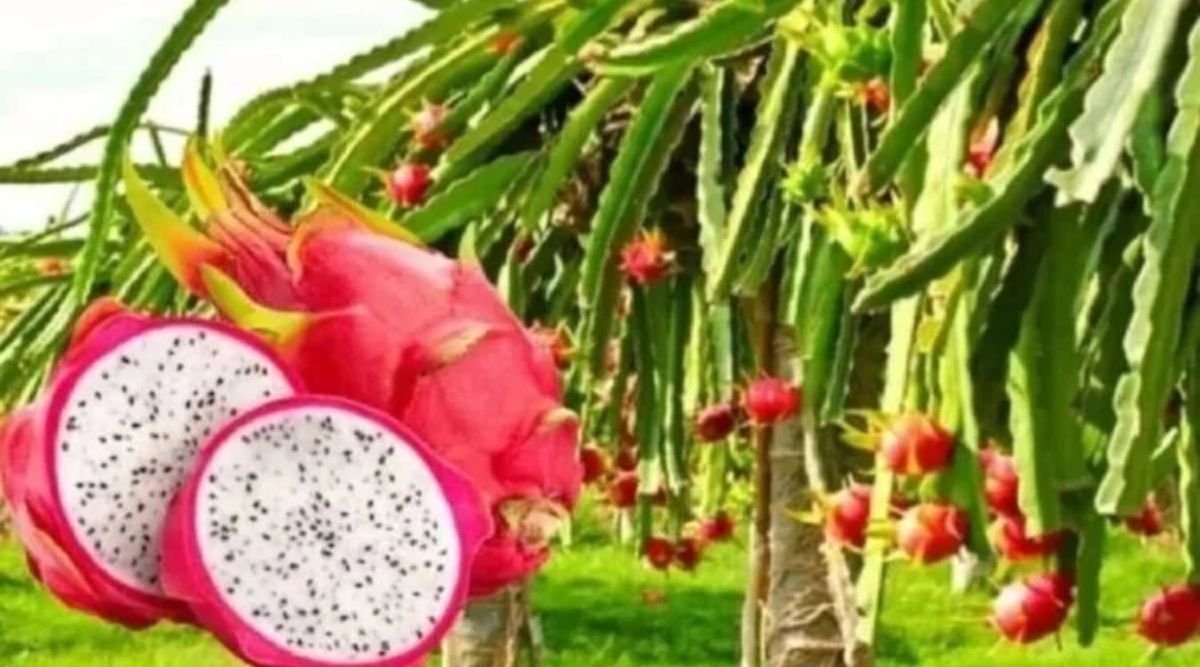
Farmers are constantly searching for crops that offer high returns with minimal water requirements. Dragon fruit, also known as “Kamalam,” has emerged as the perfect candidate for this requirement. Once considered an exotic luxury, it is now being cultivated extensively in arid and semi-arid regions. Its ability to thrive in poor soil and high temperatures makes it a reliable choice for the changing climate. This fruit is not just a trend; it is a long-term investment for sustainable wealth.
The Benefits of Low Maintenance and High Resilience
The most attractive feature of dragon fruit is its extreme resilience to harsh environmental conditions. It belongs to the cactus family, which means it can survive on a fraction of the water required by traditional fruit trees like citrus or mango. Once the pillars and trellis systems are installed, the plant requires very little daily attention compared to seasonal vegetables.
It is not easily affected by common soil pests, and its tough skin protects it from many flying insects. This reduces the need for expensive chemical interventions and constant monitoring. Furthermore, dragon fruit plants have a long productive life, often yielding fruit for over twenty years.
This longevity ensures that the initial investment in infrastructure pays off many times over. Because the plant grows vertically on poles, it also leaves space on the ground for inter-cropping with short-duration pulses or herbs. This allows farmers to maximize their land usage while the dragon fruit matures. It is a “plant and forget” crop in many ways, making it ideal for farmers who want to diversify without increasing their daily labor load.
High Market Demand and Nutritional Value
The market for dragon fruit is expanding rapidly as health-conscious consumers in urban areas seek out “superfoods.” This fruit is packed with antioxidants, fiber, and essential vitamins, making it a favorite in high-end grocery stores and juice bars. Because of its vibrant appearance and health benefits, it fetches a much higher price per kilogram than most domestic fruits.
Farmers are finding that they can sell their harvest directly to retailers or through online platforms, bypassing traditional wholesalers. In April, as the flowering season begins, the demand for fresh fruit peaks, ensuring a high profit margin for early harvests. The fruit also has a relatively good shelf life, which reduces the risk of loss during transport to distant city markets.
Many agri-startups are now specifically looking for dragon fruit suppliers to create value-added products like dried fruit snacks and organic jams. This growing ecosystem ensures that farmers have multiple avenues to sell their produce at competitive rates. Investing in this “pink gold” allows a small-scale farmer to tap into the high-end consumer market with a product that is both beautiful and profitable.
Scaling Up for Long-Term Export Potential
As domestic production increases, India is now looking at dragon fruit as a major export commodity to neighboring countries. The government is providing subsidies for the installation of the concrete pillars and drip irrigation systems needed for large-scale cultivation. This support makes it easier for marginal farmers to transition from low-value grains to high-value horticulture.
By forming cooperatives, small farmers can aggregate their produce to meet the volume requirements of international buyers. Proper grading and packaging are the next steps in making Indian dragon fruit a global brand. Since the fruit is still relatively new to the Indian soil, there is a huge first-mover advantage for those who start now. The cost of saplings has also decreased as local nurseries begin to produce high-quality grafted varieties.
This makes it affordable to expand the plantation area year after year using the farm’s own cuttings. With the right training in organic fertilization and pruning, an acre of dragon fruit can provide an income that far exceeds traditional field crops. It represents the future of high-value, water-efficient farming in a world that increasingly values sustainability.
Also Read: Punarnava Jal – The world’s first organic fertilizer! Know how it is beneficial for farmers?
Contact us – If farmers want to share any valuable information or experiences related to farming, they can connect with us via phone or whatsapp at 9599273766 or you can write to us at “kisanofindia.mail@gmail.com”. Through Kisan of India, we will convey your message to the people, because we believe that if the farmers are advanced then the country is happy.
You can connect with Kisan of India on Facebook, Twitter, and Whatsapp and Subscribe to our YouTube channel.