



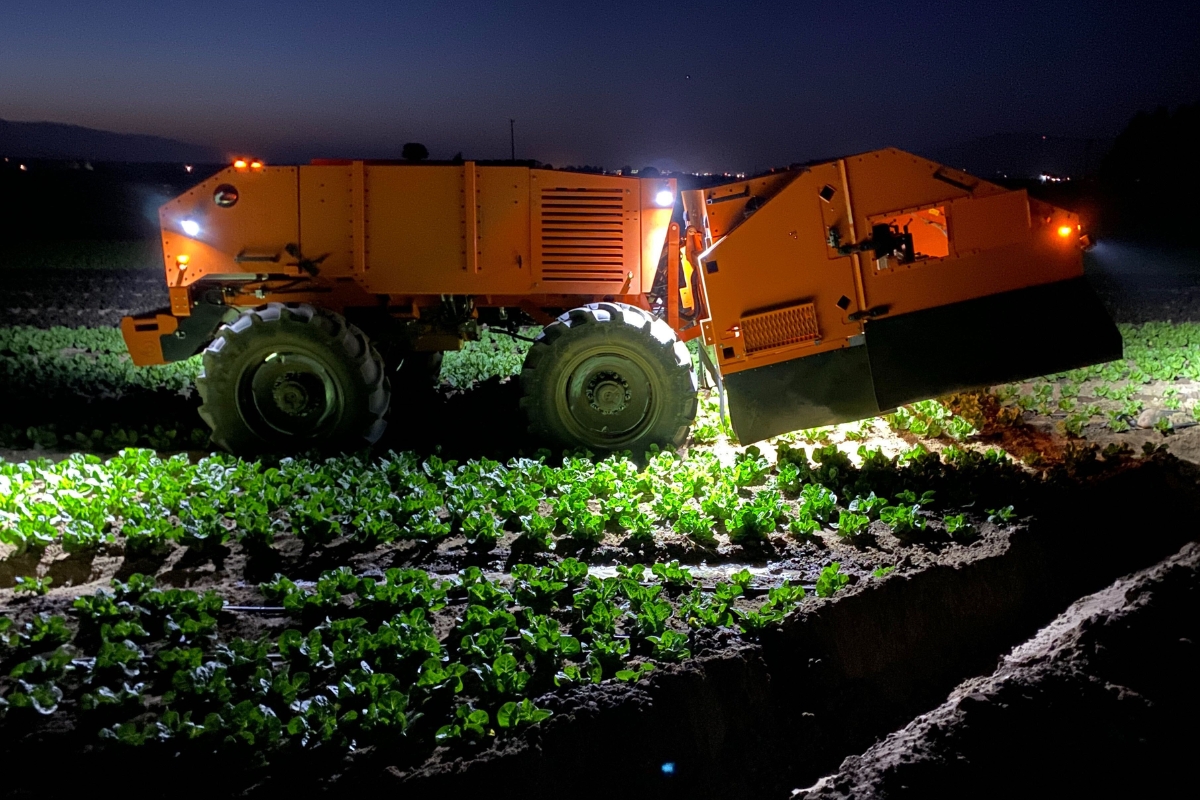
Weed management remains one of the most labour-intensive operations in agriculture. Weeds compete with crops for water, nutrients, sunlight, and space, often reducing yields significantly if not controlled at the right time. Traditionally, farmers have relied on manual labour, mechanical cultivation, or herbicides to manage weed growth.
Rising labour costs and labour shortages are now encouraging researchers and agricultural technology companies to develop autonomous weeding robots. These machines use cameras, artificial intelligence, sensors, and precision navigation systems to identify and remove weeds with minimal human intervention.
Scientists believe robotic weed management could become an important component of future farming systems, particularly as agriculture moves toward greater automation and precision.
Artificial Intelligence Identifies Weeds
One of the biggest challenges in robotic weed control is distinguishing weeds from crops. Modern weeding robots use cameras and machine-learning algorithms trained on thousands of plant images.
The system analyses plant shape, colour, leaf structure, and growth patterns to identify unwanted plants. Once a weed is detected, the robot takes appropriate action without disturbing the crop.
Researchers report that advances in computer vision have greatly improved the accuracy of weed identification under field conditions.
Finding agricultural labour during critical crop stages has become increasingly difficult in many farming regions. Weeding often requires large numbers of workers within a short period.
Autonomous robots can operate for long hours while performing repetitive tasks consistently. Farmers therefore become less dependent on seasonal labour availability.
Agricultural economists note that labour-saving technologies are becoming increasingly important as rural workforce patterns change.
Many robotic systems are designed to remove weeds mechanically rather than relying entirely on chemical herbicides. Some robots uproot weeds physically, while others use targeted treatment methods that affect only unwanted plants.
This precision approach reduces chemical use and lowers production costs associated with repeated herbicide applications. It also helps minimise environmental impacts linked to excessive chemical use.
Researchers studying sustainable agriculture view targeted weed management as an important step toward resource-efficient farming.
Precision Improves Field Management
Unlike traditional weeding methods that treat large areas uniformly, robotic systems operate at the level of individual plants. This allows farmers to manage fields with greater precision.
The machines can also collect valuable information about weed populations, crop growth, and field conditions while performing their work. Such data can support future management decisions and improve overall farm planning.
Scientists believe data collection will become an increasingly important feature of agricultural robotics.
Autonomous weeding technology is attracting particular interest in horticulture and vegetable production, where labour costs are often high and crop spacing allows easier robot movement.
Vegetable growers, orchard managers, and organic farmers are among the early adopters evaluating robotic weed management systems. Researchers expect adoption to expand as technology becomes more affordable and capable of operating in different cropping systems.
High-value crops often provide the strongest economic justification for advanced mechanisation.
The Future of Farm Automation
Agriculture is gradually moving toward greater automation as advances in artificial intelligence, sensors, and robotics create new possibilities for farm management. Weeding robots represent one of the first practical examples of machines performing complex field operations independently.
For farmers, the technology offers opportunities to reduce labour costs and improve efficiency. For researchers, it demonstrates how artificial intelligence can solve everyday agricultural challenges.
As robotic systems continue improving, future farms may rely on fleets of intelligent machines capable of monitoring crops, controlling weeds, and supporting production with minimal human intervention.
Across agricultural fields, autonomous weeding robots are showing that one of farming’s oldest challenges may soon be managed by some of its newest technology.
Also Read: Punarnava Jal – The world’s first organic fertilizer! Know how it is beneficial for farmers?
Contact us – If farmers want to share any valuable information or experiences related to farming, they can connect with us via phone or whatsapp at 9599273766 or you can write to us at “kisanofindia.mail@gmail.com”. Through Kisan of India, we will convey your message to the people, because we believe that if the farmers are advanced then the country is happy.
You can connect with Kisan of India on Facebook, Twitter, and Whatsapp and Subscribe to our YouTube channel.