


Mini Rice Transplanters Are Helping Small Farmers Cut Labour Costs in Chhattisgarh

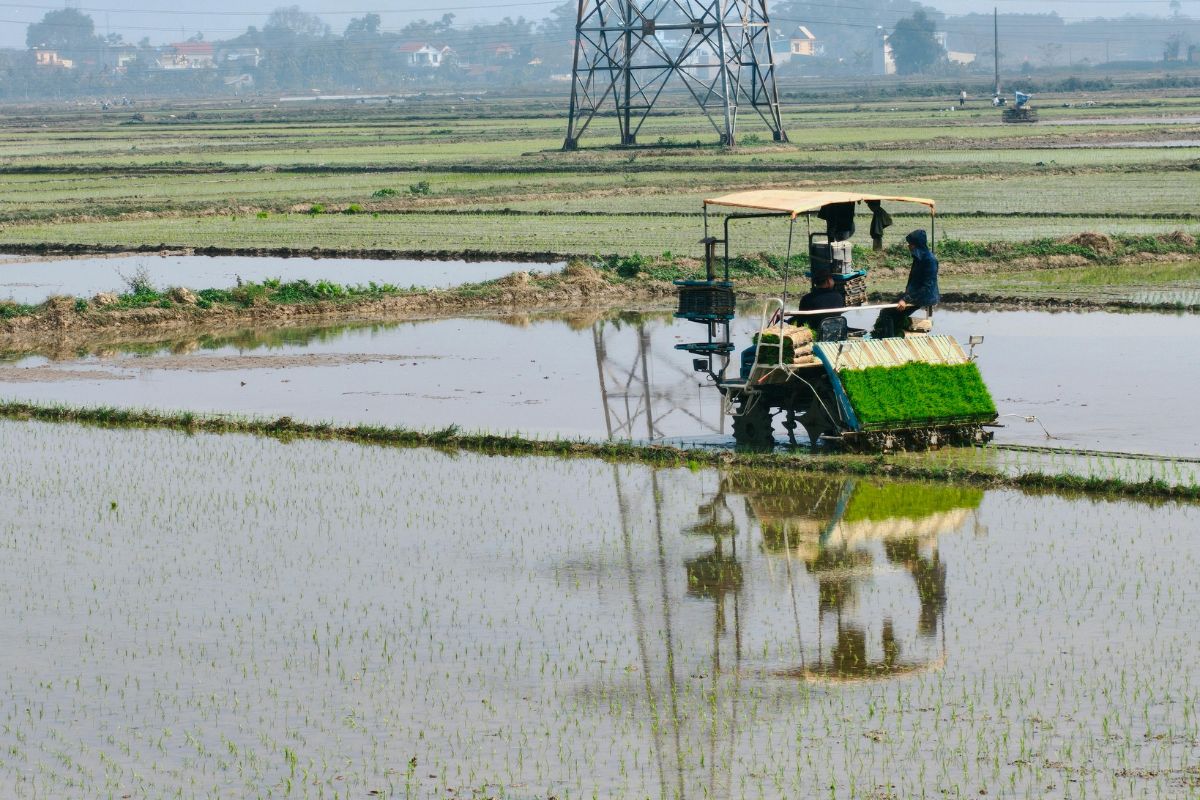
Across Chhattisgarh’s paddy-growing districts, farmers are facing increasing difficulty finding agricultural labour during the peak transplantation season. Rural migration and rising wage costs have made manual paddy transplantation both expensive and time-consuming. Farmers often struggle to complete planting within the narrow window needed for healthy crop establishment.
Researchers say delayed transplantation can directly affect yields because rice growth stages depend heavily on timing. Agriculture experts believe labour shortages are becoming one of the biggest operational challenges facing paddy cultivation across several Indian states.
To address the problem, many farmers are adopting mini rice transplanters designed specifically for small and fragmented landholdings. Unlike large commercial machines that require extensive fields, these compact transplanters work effectively in smaller plots common across eastern and central India.
The machines place seedlings in uniform rows while reducing the amount of manual labour needed. Researchers say proper spacing improves plant growth and allows better nutrient use throughout the season. Agriculture experts note that small-scale mechanisation often delivers greater benefits to farmers than large machines unsuitable for local conditions.
Chhattisgarh remains one of India’s major rice-producing states and is often referred to as the “Rice Bowl of India.” Millions of farmers depend on paddy cultivation as their primary source of income. Researchers say even small improvements in transplantation efficiency can affect productivity across large agricultural areas.
Agriculture experts believe mechanisation becomes especially important in regions where labour demand peaks suddenly during monsoon-driven farming operations. Faster transplantation allows farmers to take advantage of available rainfall without waiting for labour availability.
Women Farmers Are Benefiting From Mechanisation
Manual paddy transplantation is physically demanding work traditionally performed by large groups of women working for long hours in waterlogged fields. Mini transplanters reduce much of that strain while increasing planting speed. Researchers studying rural labour systems say mechanisation can improve working conditions while reducing drudgery in repetitive agricultural tasks. Agriculture experts note that labour-saving tools become increasingly valuable as rural households face workforce shortages and changing employment patterns.
Researchers say erratic monsoon patterns are increasing the importance of completing field operations quickly. Delays that once had limited impact can now become costly when rainfall arrives late or remains uneven. Agriculture experts explain that mechanised transplantation allows farmers to respond faster to weather conditions and make better use of available moisture.
Some districts are now promoting mechanisation alongside climate-resilient farming programmes because operational speed is becoming a critical adaptation strategy under changing weather patterns.
Many small farmers cannot afford to purchase machinery individually. To solve this problem, custom hiring centres are providing transplanters on a rental basis during the paddy season. Researchers say shared access models allow farmers to benefit from mechanisation without large capital investment.
Agriculture experts believe such systems may become increasingly important because smallholder farming dominates much of India’s agricultural landscape. Renting machinery often proves more practical than ownership for seasonal operations.
Farm Mechanisation Is Becoming More Localised
The next phase of agricultural mechanisation in India is likely to focus less on large tractors and more on specialised machines tailored to local farming systems. Researchers say compact equipment designed for specific crops and small landholdings can deliver significant productivity gains.
In Chhattisgarh, mini rice transplanters are becoming part of that shift. Agriculture experts believe future mechanisation will succeed not by replacing farmers, but by helping them manage labour shortages, climate uncertainty, and rising cultivation costs more effectively.
Also Read: Punarnava Jal – The world’s first organic fertilizer! Know how it is beneficial for farmers?
Contact us – If farmers want to share any valuable information or experiences related to farming, they can connect with us via phone or whatsapp at 9599273766 or you can write to us at “kisanofindia.mail@gmail.com”. Through Kisan of India, we will convey your message to the people, because we believe that if the farmers are advanced then the country is happy.
You can connect with Kisan of India on Facebook, Twitter, and Whatsapp and Subscribe to our YouTube channel.