



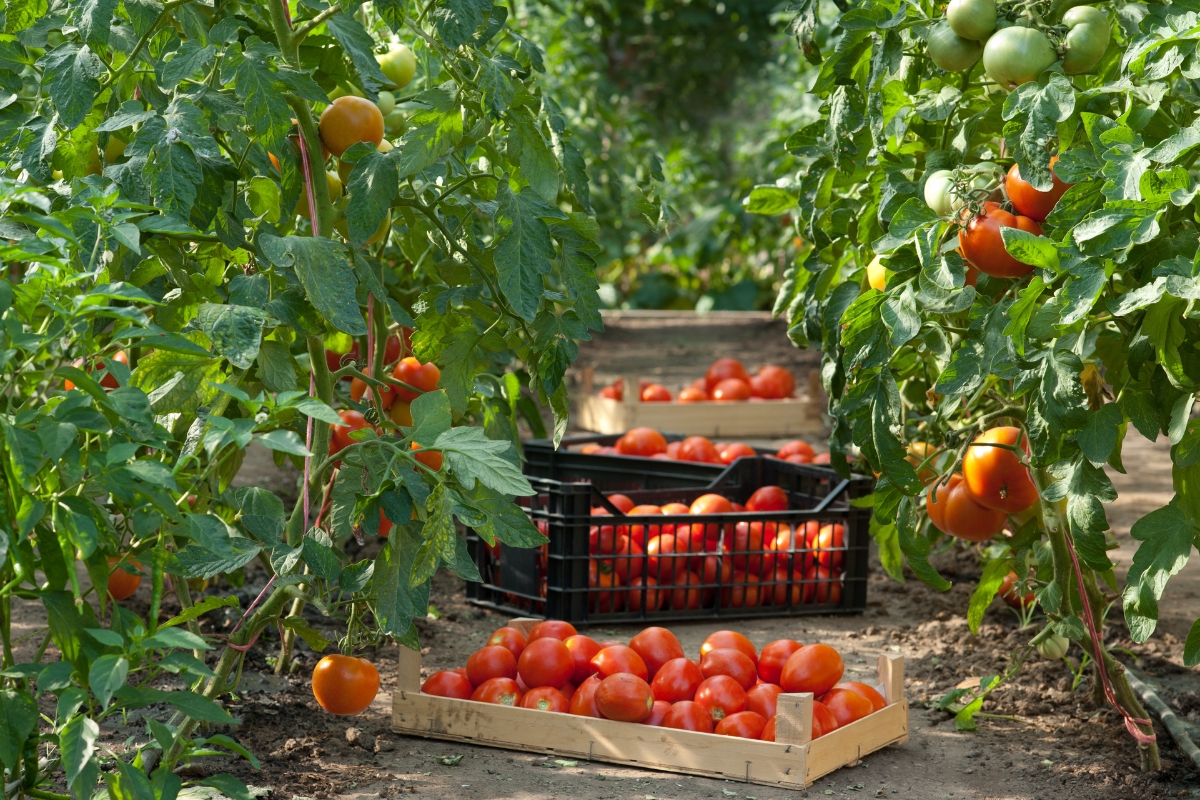
Harvesting tomatoes is one of the most labour-intensive operations in horticulture. Finding enough workers during the harvest season has become increasingly difficult, while manual picking often leads to bruising and post-harvest losses.
Researchers are now developing solar-powered AI harvesting robots that can identify ripe tomatoes, navigate through crop rows and harvest fruit without damaging it. Using computer vision, robotic arms and soft grippers, these machines are designed to work for long hours while reducing labour costs and improving harvest quality. Several field trials in 2025 and 2026 have shown promising results, bringing commercial deployment closer.
AI Knows Which Tomato Is Ready
The robot uses high-resolution cameras and artificial intelligence to inspect every plant.
Instead of harvesting all fruit, the system analyses colour, size and ripeness before deciding whether a tomato is ready to pick. If the fruit is immature, it is left on the plant for the next harvesting cycle.
Researchers say this selective harvesting improves quality while reducing wastage.
Soft Robotic Grippers Prevent Damage
Traditional robotic arms often struggle with delicate fruits.
The latest harvesting robots use flexible soft grippers that gently hold and detach tomatoes without bruising them. Pressure sensors continuously adjust the gripping force according to the fruit’s size and firmness.
Scientists believe soft robotics is one of the biggest breakthroughs in automated fruit harvesting.
Powered by the Sun
Many prototype harvesting robots are equipped with solar panels that recharge batteries during field operations.
This reduces dependence on external charging and allows longer working hours in remote farms. Combined with electric motors, solar power also lowers operating costs and greenhouse gas emissions.
Researchers are exploring similar systems for strawberries, peppers and cucumbers.
What India Can Learn
India is the world’s second-largest producer of tomatoes, but growers continue to face labour shortages and high harvesting costs.
AI-powered harvesting robots could initially be introduced in polyhouses, greenhouse farms and high-value horticulture clusters before expanding to open-field cultivation.
States such as Karnataka, Andhra Pradesh, Maharashtra, Madhya Pradesh and Gujarat, where tomato cultivation is widespread, could benefit from pilot projects supported by ICAR, agricultural universities and agri-tech startups.
Instead of individual ownership, the technology could be offered through custom hiring centres and Farmer Producer Organisations (FPOs), making advanced harvesting equipment affordable for small farmers.
Smart Harvesting Is the Next Frontier
For decades, mechanisation has focused on land preparation, sowing and spraying. Harvesting delicate fruits has remained one of the most difficult tasks to automate.
Advances in artificial intelligence, computer vision and soft robotics are beginning to change that. As these technologies become more affordable, intelligent harvesting robots could help farmers reduce labour costs, minimise crop losses and deliver better-quality produce to the market.