



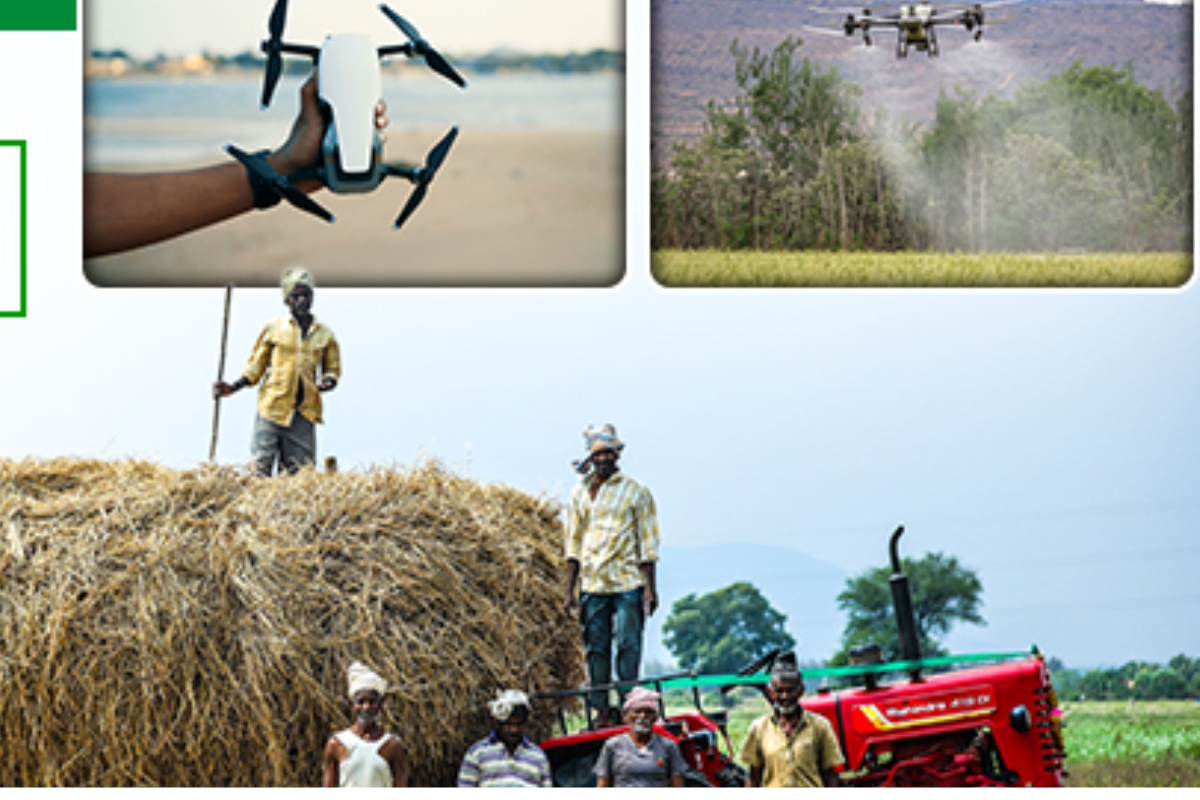
Farm machines can reduce labour and save time during critical farming operations. But buying a machine does not always make financial sense. For many small and medium farmers, the machine may remain unused for most of the year while loan repayments, maintenance and storage costs continue.
The better question is not always which machine to buy. Farmers should first ask how many days they will actually use it. A machine used for only a few days each season may cost less when rented through a Custom Hiring Centre or another service provider.
Farmers often compare machines based on the purchase price. The real cost continues after the machine arrives on the farm. Fuel, repairs, maintenance, insurance, storage and interest on loans can all add to the final expense.
A machine can therefore become expensive even when it works properly. Farmers should calculate the annual cost of ownership before deciding whether buying will save money compared with renting the same machine whenever they need it.
How often will you use the machine?
This is the first question farmers should answer before buying any expensive equipment. A tractor used throughout the year may justify ownership for some farms. A specialised machine used for only one operation during a short period may not.
Farmers should estimate annual use before making the purchase. They can calculate the expected number of operating days and compare ownership costs with local rental rates. The difference can help reveal which option makes more financial sense.
A farmer who rents machinery does not need to pay the full purchase price. This can reduce the need for a large loan or a major withdrawal of savings at the beginning of the season.
Rental also allows farmers to access machines they could not afford individually. This is particularly useful for specialised equipment that requires high investment but operates only during specific periods such as sowing, harvesting or residue management.
Renting works only when machinery is available at the right time. Agriculture has narrow windows for several operations. A delayed sowing or harvest can affect the crop even if the farmer saves money on equipment.
Farmers should therefore check availability before depending on rented machinery. Booking equipment in advance may reduce delays during peak demand. A lower rental cost has little value if the machine arrives after the best operating window has passed.
Custom Hiring Centres allow farmers to access machinery without owning every piece of equipment. The model can help several farmers use the same machines during different periods.
This approach can spread the cost of expensive equipment across many users. It can also make specialised machinery more accessible where individual ownership would remain financially difficult for smaller farms.
The success of a centre depends heavily on maintenance and availability. A broken machine during the peak season can affect many farmers at the same time.
Farmers should compare the full cost
Before buying a machine, farmers can prepare a simple comparison.
They should calculate:
- Purchase price
- Loan interest
- Fuel costs
- Annual repairs
- Maintenance
- Storage
- Expected operating days
- Local rental charges
The comparison should cover more than one year. A machine may appear expensive in the first year but become cheaper per hour if it receives regular use. Low annual use can produce the opposite result.
Several farmers can jointly purchase machinery where there is trust and a clear agreement about ownership and use. This can reduce the cost faced by each individual farmer.
But shared ownership requires rules.
Farmers need to decide who will operate the machine, who will pay for repairs and how it will be booked during peak periods. Without clear arrangements, disputes can quickly affect the group. A written agreement can prevent confusion later.
Some machines perform highly specific operations. A farmer may need them for only a few days each year. Buying such equipment can lock money into an asset that remains unused for most of the season.
Renting may provide greater flexibility.
Farmers can access a different machine when their crop pattern changes. Ownership can become a disadvantage if a farmer later shifts crops or finds that the machine no longer matches the farm’s requirements.
The same machine can make financial sense for one farmer and not for another. Farm size and cropping intensity can significantly change the calculation. A large farm may use a machine frequently enough to recover ownership costs. A smaller farmer growing one or two crops may require the same machine for only a short period.
Farmers should avoid copying equipment decisions made by neighbouring farms without comparing their own level of use.
Technology can make machinery access easier
Digital systems are increasingly being used to connect farmers with agricultural machinery and service providers. Government crop monitoring systems already use technologies such as satellites, drones, AI and remote sensing, showing the wider expansion of technology in agriculture.
The same digital approach can also help machinery services by allowing farmers to identify available equipment and book services. The usefulness depends on whether these services remain accessible and reliable at the village level.
Ownership can become more attractive when a farmer uses a machine regularly throughout the year. Frequent use can reduce the cost per operating hour and provide greater control over timing.
A machine may also generate income if the owner provides rental services to neighbouring farmers. This can improve utilisation, although it also creates additional responsibilities for scheduling, maintenance and customer management.
Farmers should not assume rental income will appear automatically. They should first assess local demand.
A machine that frequently breaks down can become more expensive than expected. Farmers considering ownership should check the availability of spare parts and local repair services.
A lower-priced machine may not always be cheaper if repairs take longer or replacement parts remain difficult to obtain. Downtime during sowing or harvesting can also create crop losses.
Farmers should therefore consider service support before selecting equipment. The nearest workshop can sometimes matter as much as the machine’s purchase price.
Uncertain weather can make timely farm operations more important. A delayed rainfall event, sudden dry spell or approaching storm may shorten the period available for sowing or harvesting.
Farmers need machinery access when conditions are suitable.
This makes equipment availability as important as ownership. A farmer who owns a machine has more control over timing, but rental systems can also work if providers manage bookings and peak demand properly.
The cheapest option is not always the best option
Buying may appear expensive. Renting may appear cheaper. The final decision depends on whether the farmer can complete operations at the right time and at a reasonable cost. A farmer should compare the financial savings against the risk of delayed access. For some operations, paying more for reliable access may protect a much larger investment already made in the crop.
A machine should earn its place on the farm. If it remains unused for most of the year, renting or sharing may leave the farmer with more money available for seed, irrigation, labour and other essential needs.
Agriculture does not require every farmer to own every machine. Service providers, Custom Hiring Centres and farmer groups can give farmers access to equipment without forcing each household to make large investments.
The best choice depends on the crop, farm size and local availability.
Before signing a loan agreement, farmers should calculate how often the machine will work. Sometimes the most useful machine is the one a farmer can access exactly when needed, without paying to own it throughout the year.
Also Read: Punarnava Jal – The world’s first organic fertilizer! Know how it is beneficial for farmers?
Contact us – If farmers want to share any valuable information or experiences related to farming, they can connect with us via phone or whatsapp at 9599273766 or you can write to us at “kisanofindia.mail@gmail.com”. Through Kisan of India, we will convey your message to the people, because we believe that if the farmers are advanced then the country is happy.
You can connect with Kisan of India on Facebook, Twitter, and Whatsapp and Subscribe to our YouTube channel.