



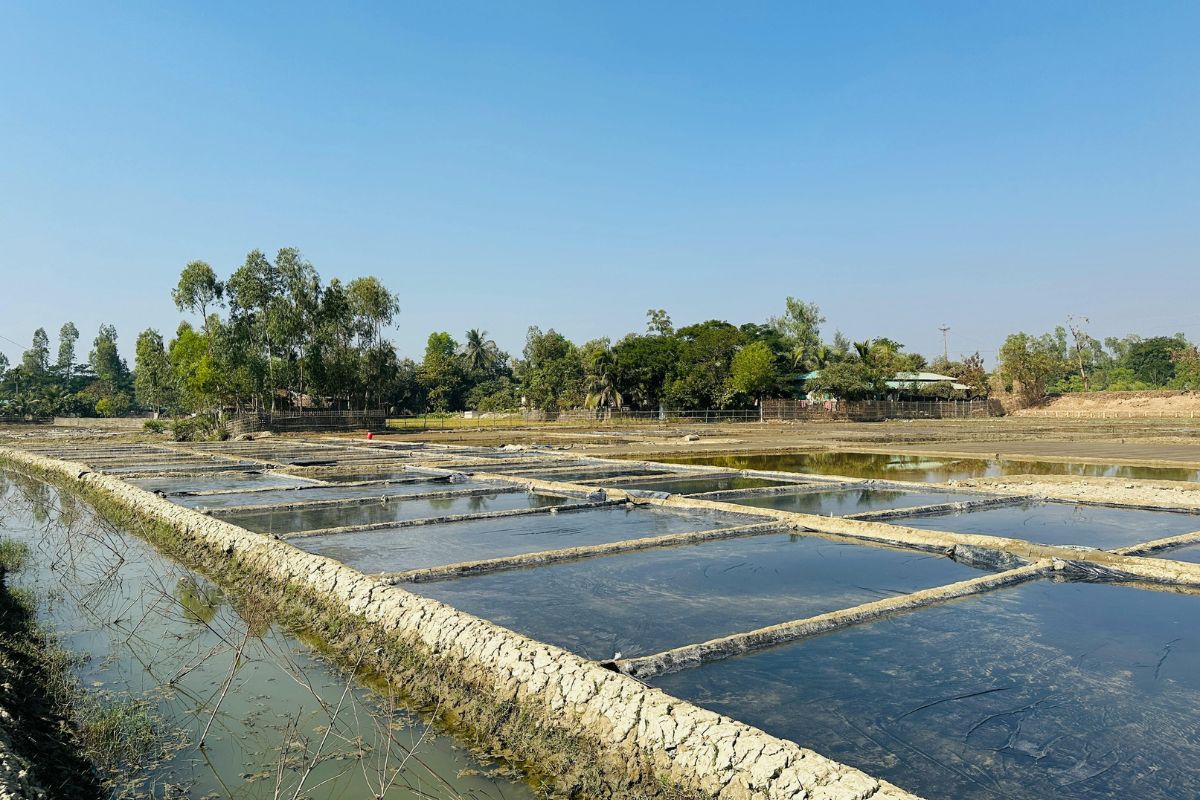
Across several districts of Assam, farmers are returning to a traditional farming method that combines rice cultivation and fish production within the same field. Instead of treating paddy fields only as crop land, farmers are managing them as integrated food systems capable of producing both grain and protein. Researchers say the practice has existed for generations in flood-prone parts of the Northeast but declined as agriculture became more specialized. Agriculture experts believe the model is gaining attention again because it helps farmers diversify income while making better use of available land and water resources.
Large parts of Assam experience seasonal flooding and prolonged waterlogging during the monsoon. While floods often create challenges for conventional agriculture, some farmers have learned to use standing water productively through rice-fish cultivation.
Small trenches and deeper sections are created inside paddy fields where fish can survive even when water levels fluctuate. Researchers say the system works particularly well in regions where water remains available for long periods. Agriculture experts note that integrated farming often succeeds by adapting to local ecological conditions rather than fighting against them.
The benefits extend beyond additional income. Fish help control insect larvae and some weed growth inside fields while their movement improves water circulation. Researchers studying integrated agriculture say fish waste contributes nutrients that support crop growth naturally.
Agriculture experts explain that rice-fish systems often reduce dependence on certain chemical inputs because biological interactions perform some of the functions normally managed through external products. This creates a more balanced farming environment while lowering production costs in some situations.
Farmers Gain Two Sources of Income
One major reason for renewed interest is economic security. Farmers harvest rice as their primary crop while also earning income from fish sales. Researchers say diversified farming systems often perform better during periods of market volatility because income does not depend entirely on a single commodity. Agriculture experts believe this becomes increasingly important for small farmers facing uncertain weather and fluctuating crop prices. In some villages, fish production provides cash income at times when crop earnings remain limited.
Researchers say climate change is increasing pressure on farming systems across eastern India. Erratic rainfall, floods, and changing weather patterns are creating new risks for crop production. Agriculture experts argue that integrated farming models may improve resilience because they spread risk across multiple outputs.
If one component performs poorly, another may still generate income. Rice-fish cultivation also encourages farmers to manage water more carefully, which can be valuable in regions experiencing increasing climate variability.
Agriculture and fisheries departments in Assam have begun supporting integrated farming through training programmes, demonstration projects, and technical assistance. Researchers say interest is growing among younger farmers who see opportunities in combining traditional knowledge with improved management practices.
Agriculture experts believe such support can help revive systems that declined not because they failed, but because policy attention shifted toward more specialized agricultural models during previous decades.
Assam’s Fields Show a Different Future for Farming
Modern agriculture often separates crops, livestock, and fisheries into different sectors. Rice-fish farming follows a different approach where multiple forms of production exist within the same landscape. Researchers say future agricultural systems may increasingly return to such integrated models as farmers seek greater resilience and sustainability. In Assam, the revival of rice-fish farming suggests that some of the most useful solutions for tomorrow’s challenges may already exist in traditional farming practices that survived for generations.
Also Read: Punarnava Jal – The world’s first organic fertilizer! Know how it is beneficial for farmers?
Contact us – If farmers want to share any valuable information or experiences related to farming, they can connect with us via phone or whatsapp at 9599273766 or you can write to us at “kisanofindia.mail@gmail.com”. Through Kisan of India, we will convey your message to the people, because we believe that if the farmers are advanced then the country is happy.
You can connect with Kisan of India on Facebook, Twitter, and Whatsapp and Subscribe to our YouTube channel.