



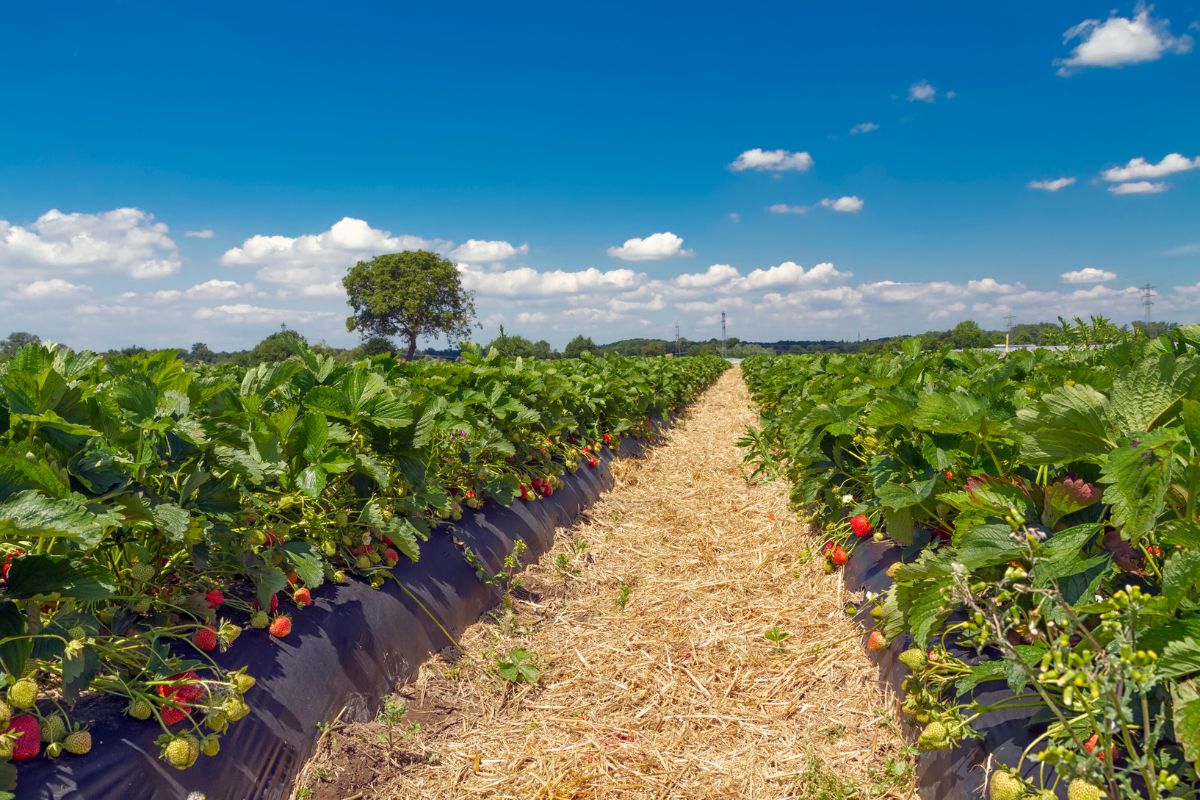
South Korea is becoming a global leader in vertical farming, and strawberries are emerging as one of the most successful crops within these systems. Instead of growing strawberries in traditional open fields, farmers are producing them inside multi-layer facilities where temperature, humidity, light, and nutrient delivery are carefully controlled throughout the year.
The approach is attracting attention because strawberries are a high-value crop with strong consumer demand. By moving production indoors, growers can harvest fruit regardless of weather conditions while maintaining consistent quality. This allows farms to supply markets even during periods when outdoor production is limited.
Researchers view vertical strawberry farming as an important example of how agriculture can adapt to urbanisation, land constraints, and climate uncertainty.
Multi-Layer Production Increases Output
Traditional farming uses a single layer of land for crop production. Vertical farms take a different approach by stacking growing systems on multiple levels within the same structure. This allows farmers to produce significantly more crops within a smaller footprint.
For strawberries, this design creates an important advantage because the crop generates high value per unit area. By increasing production density, growers can improve profitability while operating close to urban markets where land is expensive.
Agricultural engineers frequently highlight space efficiency as one of the key benefits of vertical farming systems.
Weather is one of the biggest sources of uncertainty in fruit production. Heavy rainfall, heat waves, frost, and storms can all affect strawberry yields and fruit quality. Indoor cultivation reduces these risks by creating stable growing conditions throughout the year.
Farmers can adjust temperature, lighting, and nutrient supply according to the needs of the crop. This level of control often results in more uniform fruit size, colour, and taste. Consistency is particularly important for retailers and consumers who expect reliable quality.
Researchers note that controlled-environment farming allows producers to focus on crop performance rather than weather management.
Water Use Becomes More Efficient
Water scarcity is becoming a concern in many agricultural regions. Vertical farms often rely on recirculating irrigation systems that capture and reuse water instead of allowing it to escape through runoff or deep percolation.
This approach can significantly reduce overall water consumption compared with conventional farming methods. Every drop is used more efficiently because nutrient delivery and irrigation are closely monitored.
Scientists studying sustainable agriculture increasingly view water efficiency as one of the most important advantages of indoor farming technologies.
Many strawberries travel long distances before reaching consumers. Transport, storage, and handling can affect freshness and increase costs. Vertical farms located near cities reduce these challenges by shortening supply chains.
Fresh fruit can reach markets quickly after harvest, improving quality and reducing waste. Urban consumers gain access to locally produced food while farmers benefit from proximity to major customer bases.
Agricultural economists often point out that shorter supply chains can improve efficiency throughout the food system.
Modern vertical strawberry farms rely on sensors, automation, and data analysis to manage production. Systems continuously monitor environmental conditions and help farmers make informed decisions about crop management.
Artificial intelligence and automation are increasingly being integrated into these facilities to optimise lighting schedules, nutrient delivery, and harvest planning. Researchers believe data-driven management will become even more important as indoor agriculture expands.
The combination of farming and technology is creating new models for food production in densely populated regions.
A New Direction for Fruit Production
The growth of vertical strawberry farming demonstrates how agriculture continues evolving in response to changing economic and environmental conditions. Limited land availability, climate risks, and growing urban populations are encouraging producers to explore new production methods.
While vertical farms will not replace traditional agriculture, they offer valuable opportunities for high-value crops such as strawberries. Farmers gain greater control over production, consumers receive fresh local produce, and resources can be used more efficiently.
Across South Korea, strawberries are showing how technology and agriculture can work together to produce food in places where conventional farming would be difficult.
The future of farming may not always spread outward across fields. In some cases, it may grow upward instead.
Also Read: Punarnava Jal – The world’s first organic fertilizer! Know how it is beneficial for farmers?
Contact us – If farmers want to share any valuable information or experiences related to farming, they can connect with us via phone or whatsapp at 9599273766 or you can write to us at “kisanofindia.mail@gmail.com”. Through Kisan of India, we will convey your message to the people, because we believe that if the farmers are advanced then the country is happy.
You can connect with Kisan of India on Facebook, Twitter, and Whatsapp and Subscribe to our YouTube channel.