



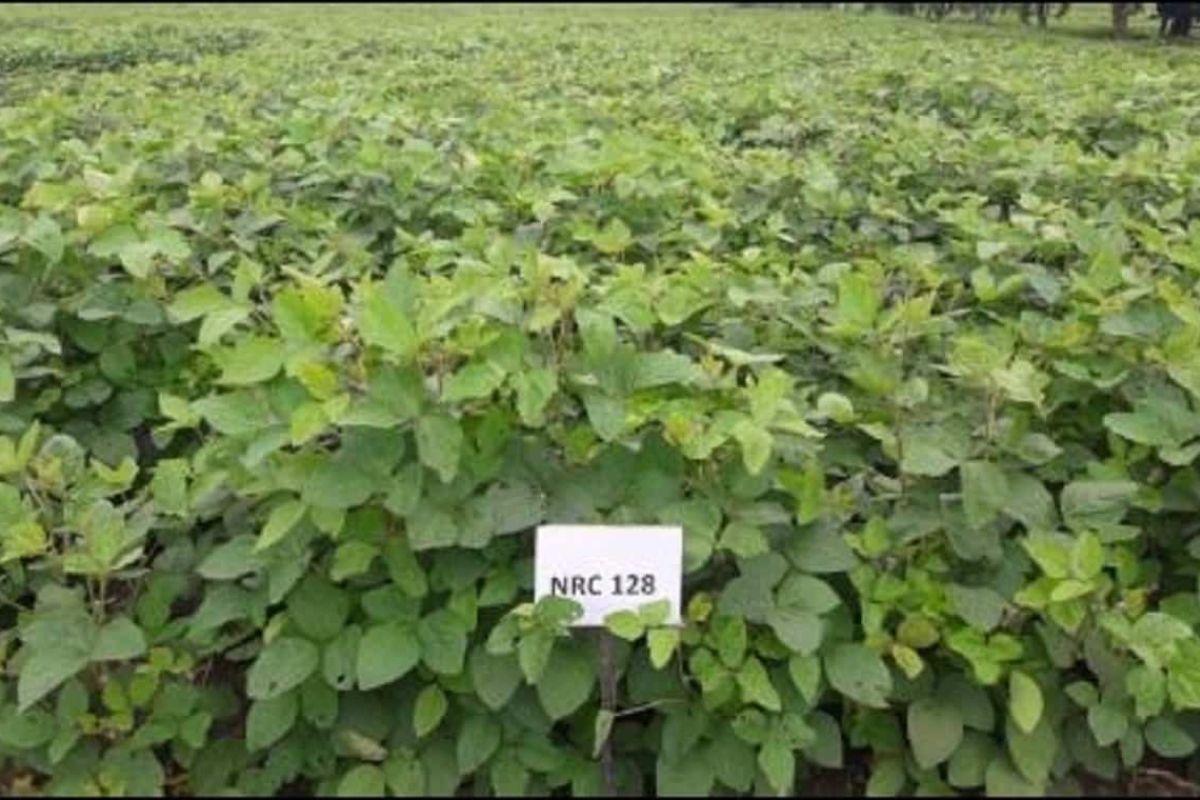
Two improved soybean varieties developed by the ICAR-National Soybean Research Institute, Indore, have shown preliminary yields of about 20 quintals per hectare under field conditions. The results were recorded during a soybean harvest assessment held on October 9, with scientists examining the performance of NRC 268 and NRC 270.
The institute assessed one acre each under the two varieties during its Soybean Harvest Day. The initial figures are encouraging, but ICAR has described them as preliminary data that will be compiled and studied further before broader conclusions are drawn about productivity gains across different farming conditions.
Why the Yield Figures Matter
India’s soybean farmers face several production challenges, including variable rainfall, high temperatures and crop losses during unfavourable weather. The reported performance of NRC 268 and NRC 270 is therefore being examined for its potential to improve productivity when weather conditions are difficult.
According to the Agriculture Ministry, the two varieties produced approximately 20 quintals per hectare in the preliminary assessment despite adverse weather conditions. ICAR said the harvest data will help researchers assess their future productivity potential and guide further research on soybean production.
Soybean is important to India’s edible-oil economy because the crop supplies both oil and protein-rich meal. Improving production from existing farmland could help raise output without requiring farmers to expand cultivation into additional areas, although actual gains will depend on seed quality, rainfall, soil and farm management.
The new results do not mean every farmer will automatically harvest 20 quintals per hectare. The assessment involved limited field observations, and ICAR has said the yield data still need scientific compilation. Farmers should therefore wait for official recommendations before replacing existing varieties on a large scale.
Variety performance can change significantly between locations. Soil type, sowing date, rainfall, pest pressure and nutrient management all affect soybean yields. A variety performing well at an ICAR research farm or demonstration plot may produce different results when grown under another district’s soil and weather conditions.
Farmers interested in NRC 268 and NRC 270 should obtain seed only through authorised channels when the varieties become available for commercial cultivation. They should also check whether the varieties have been officially recommended for their state and production zone before purchasing seed.
Research Will Continue
ICAR-National Soybean Research Institute organised the harvest assessment as part of its continuing work on improved soybean production. The institute has been working on varieties and production technologies aimed at raising productivity and helping farmers manage difficult growing conditions.
The Agriculture Ministry has also stressed the need for scientific supervision, demonstration plots and improved technologies to reduce cultivation costs and raise farm returns. During a farmer training programme in Indore earlier this month, Agriculture Minister Shivraj Singh Chouhan called for stronger links between research, demonstrations and farmers.
The preliminary soybean results come at a time when agricultural researchers are paying greater attention to varieties that can perform under changing weather conditions. ICAR reported in July that it had developed 386 improved varieties across 44 crops during the previous year, with 94% described as climate-resilient.
For soybean growers, the key point is that NRC 268 and NRC 270 have shown promising early results, not guaranteed yields. Farmers should follow official seed recommendations, use certified planting material and maintain records of yield, input costs and weather conditions when testing any newly recommended variety.
If further trials confirm their performance across locations and seasons, the varieties could give soybean growers another option for improving production. The next step will be wider evaluation, seed multiplication and appropriate extension support so farmers can understand where the varieties perform best.
The new soybean results show why field trials matter before a crop variety is promoted widely. Farmers need evidence from different soils and weather conditions, not just a single harvest. Wider testing of NRC 268 and NRC 270 will help determine whether their early promise translates into dependable farm-level yields.
Also Read: Punarnava Jal – The world’s first organic fertilizer! Know how it is beneficial for farmers?
Contact us – If farmers want to share any valuable information or experiences related to farming, they can connect with us via phone or whatsapp at 9599273766 or you can write to us at “kisanofindia.mail@gmail.com”. Through Kisan of India, we will convey your message to the people, because we believe that if the farmers are advanced then the country is happy.
You can connect with Kisan of India on Facebook, Twitter, and Whatsapp and Subscribe to our YouTube channel.