


Paddy Stubble Management 2026: Government Pushes Farmers Towards Manure, Bio-CNG and Power

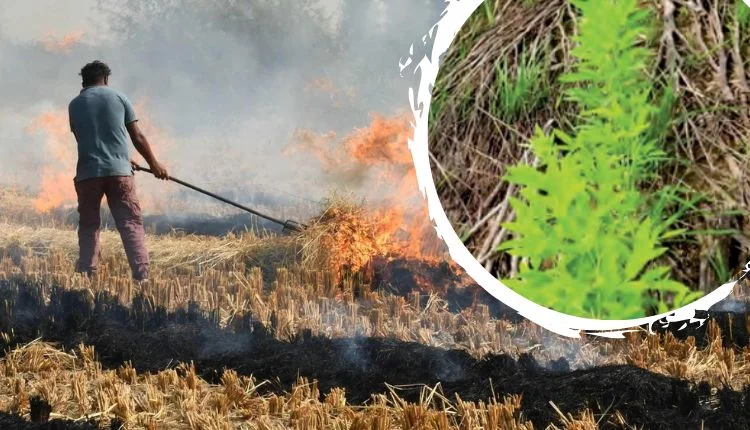
India has intensified efforts to prevent paddy stubble burning during the 2026 harvesting season. The Union agriculture and environment ministries have asked states to strengthen district-level action and promote alternatives that turn crop residue into manure, bio-CNG and electricity instead of burning it in fields.
Government pushes district-level action
A high-level review meeting on October 13 brought together the agriculture and environment ministries along with officials from states including Punjab, Haryana, Uttar Pradesh, Madhya Pradesh and Delhi-NCR. The government said the short gap between paddy harvesting and rabi sowing requires quick action at the field level.
1. Farmers need timely access to machinery
Residue management depends heavily on farmers receiving machinery when it is needed. The government has directed districts to strengthen monitoring and ensure practical solutions during the narrow period between paddy harvest and wheat sowing.
The Commission for Air Quality Management also reviewed paddy residue management in Punjab’s Firozpur and Faridkot districts on October 17. It stressed timely availability of crop-residue-management machinery and farmer facilitation during the harvesting period.
2. Stubble can become manure
Paddy residue does not have to be treated only as waste. It can be incorporated into soil or processed into organic material, depending on local conditions and available machinery.
The government has asked district administrations to develop practical plans for converting stubble into manure. Farmers should select a method according to soil conditions, the time available before the next crop and the machinery accessible in their area.
3. Residue can support bio-CNG
The Centre is also promoting the use of agricultural residue as a feedstock for bioenergy. Paddy straw can become a raw material for plants producing compressed biogas, provided collection, transportation and processing systems are available.
For farmers, this can create another possible use for straw that otherwise has limited immediate value. The success of such models depends on nearby processing facilities, collection networks and arrangements that make transporting bulky residue economically viable.
4. Power generation is another option
The government has also asked districts to explore converting crop residue into electricity. This creates a potential market for straw while reducing the need to burn it directly in agricultural fields.
Such projects require organised collection and transport because paddy straw is bulky and costly to move over long distances. Farmers are more likely to benefit when processing plants operate within a practical collection radius.
5. The sowing window remains important
Farmers often face pressure to clear paddy fields quickly before sowing wheat. This short interval can influence residue-management decisions, particularly when harvesting is delayed.
The Centre has told district administrations that little time remains between harvesting and rabi sowing. Machinery and field-level support therefore need to reach farmers when residue is actually present, rather than after the sowing window has passed.
What farmers should check before choosing a method
Farmers should first identify the residue-management machinery available through their local agriculture department, cooperative, Farmer Producer Organisation or Custom Hiring Centre. They should ask about booking procedures, rental charges, availability dates and the type of equipment suited to their crop-residue condition.
Farmers should also avoid selecting machinery only because it is available. The correct equipment depends on whether straw will be incorporated, collected, baled or retained on the soil surface. Local agricultural officers can help match the machine with the intended management practice.
Paddy straw contains organic matter and plant nutrients that can contribute to soil management when handled appropriately. Burning removes this potential use while releasing smoke and pollutants.
The current government approach is increasingly focused on treating residue as a resource rather than simply an unwanted by-product. Its October review specifically called for converting stubble into electricity, bio-CNG and manure through district-level planning.
States have to make the system work
The success of residue management depends not only on farmers. District administrations, state departments, machinery providers, biomass processors and local markets all have roles in creating alternatives to burning.
The Centre has asked collectors and district officials to move beyond paperwork and prepare field-level plans. This means farmers need information about machinery and disposal options before harvesting begins, not after residue burning has already started.
Farmers should contact their local agriculture department or Custom Hiring Centre before harvesting to reserve suitable residue-management machinery. They should also check whether nearby biomass, composting or bioenergy units accept paddy straw.
Where residue is retained or incorporated, farmers should follow locally recommended practices and allow sufficient time before sowing the next crop. The right method will vary with soil, machinery, weather and the following crop.
The government’s 2026 stubble-management campaign is shifting attention from simply stopping field burning towards creating practical uses for paddy residue. Manure, bio-CNG and electricity are among the alternatives being promoted. For farmers, timely machinery access, local processing options and clear district-level support will determine whether these alternatives work.
Also Read: Punarnava Jal – The world’s first organic fertilizer! Know how it is beneficial for farmers?
Contact us – If farmers want to share any valuable information or experiences related to farming, they can connect with us via phone or whatsapp at 9599273766 or you can write to us at “kisanofindia.mail@gmail.com”. Through Kisan of India, we will convey your message to the people, because we believe that if the farmers are advanced then the country is happy.
You can connect with Kisan of India on Facebook, Twitter, and Whatsapp and Subscribe to our YouTube channel.