



Every morning, millions of farmers across the Global South step into their fields to perform the most fundamental physical labour known to human civilization: growing food. From the vast, mechanized soybean estates of the Brazilian Cerrado to the intricately irrigated wheat belts of Punjab, and the sprawling cornfields of the Russian steppes, these farmers are the biological engine of the planet. They manage the soil, battle the weather, and shoulder the immense physical risks of agriculture. Yet, when the harvest is finally brought to the local mandi (market), a profound economic paradox reveals itself. The true financial value of their grueling, months-long labor is not determined by the quality of their crop or the local demand for food. Instead, it is dictated by algorithms, hedge funds, and institutional speculators sitting in air-conditioned skyscrapers thousands of miles away in the Western hemisphere.
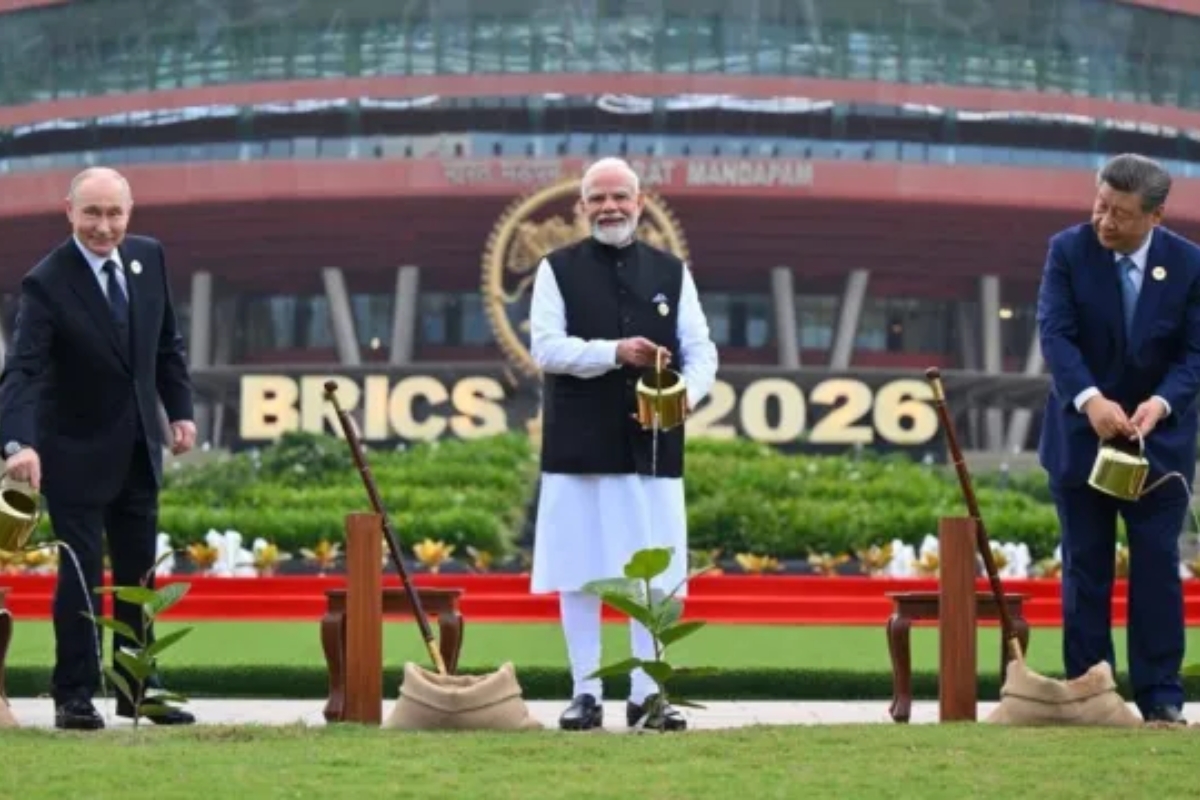
For over a century, the pricing of the world’s most critical agricultural commodities—wheat, rice, corn, and soy—has been monopolized by Western financial institutions, most notably the Chicago Board of Trade (CBOT) and the Intercontinental Exchange (ICE). This architecture of global trade has effectively stripped the Global South of its pricing sovereignty. Today, however, a massive structural rebellion is underway. The proposal to establish a ‘BRICS Grain Exchange’ represents a watershed moment in the geopolitics of agriculture. Initiated by Russia and supported by the expanding BRICS+ bloc, this proposed exchange is not merely a new trading platform; it is a mechanism to dismantle the speculative monopoly of Western finance and return the power of price discovery to the nations that actually produce and consume the world’s food.
To understand how this macroeconomic shift will eventually alter the financial destiny of an individual farmer in India or Brazil, one must first dissect the deeply flawed nature of the current global pricing system.
The Illusion of the Market: Physical Grain vs. Paper Grain
The traditional argument for global commodity exchanges like CBOT is that they provide a centralized platform for “price discovery” and allow farmers and buyers to hedge against future price risks. In theory, if a drought hits a major wheat-producing region, the supply drops, the exchange registers this data, and the price of wheat rises accordingly.
In reality, the modern Western commodity exchange has mutated far beyond its original purpose. It is no longer primarily a market for physical agricultural goods; it is a massive financial casino trading in “paper crops.” On platforms like CBOT, the daily trading volume of agricultural futures contracts vastly exceeds the actual physical volume of crops grown on planet Earth. The vast majority of participants in these markets are not farmers, millers, or bakers. They are institutional investors, high-frequency algorithmic traders, and speculative hedge funds who have no intention of ever taking physical delivery of a single grain of wheat.
This speculative dominance creates a deeply distorted market. The price of Indian wheat or Brazilian soy on the international market is frequently hijacked by speculative capital flows. For instance, if there is a sudden panic in the global equities market or a geopolitical crisis in an unrelated sector, institutional investors often rush their capital into agricultural commodities as a “safe haven.” This massive influx of speculative money artificially drives up the global price of grain, creating a bubble. Conversely, when these investors find more lucrative returns elsewhere and pull their capital out, the price of agricultural commodities crashes, entirely disconnected from the actual supply and demand of physical food.
For the farmer in the Global South, this system is economically lethal. A farmer in Madhya Pradesh might cultivate an exceptional soybean crop during a year of perfect monsoon rains, expecting a handsome return. However, if speculators in Chicago suddenly short the soybean market based on shifting US interest rates, the global benchmark price collapses. When India exports its surplus, it is forced to sell at this artificially depressed global rate. This suppressed international price immediately trickles down to the local mandi, wiping out the Indian farmer’s profit margin. The farmer pays the price for a financial bet made by a trader who has never touched a plow.
The BRICS Grain Exchange: The Architecture of Sovereign Pricing
The logic behind the BRICS Grain Exchange is rooted in undeniable mathematical supremacy. Following its recent expansion, the BRICS+ bloc accounts for over 40% of the world’s grain production and a similarly massive share of global agricultural consumption. This coalition includes the world’s largest wheat exporter (Russia), the world’s largest agricultural consumers and producers (India and China), and the undisputed powerhouse of soybean and corn exports (Brazil), alongside massive agrarian economies like Egypt and Ethiopia.
Economically, it is entirely irrational for a coalition that produces and consumes nearly half the world’s food to rely on a third-party Western exchange—operating in a third-party currency (the US Dollar)—to facilitate trade among themselves. The BRICS Grain Exchange aims to rectify this by creating a closed-loop, sovereign trading ecosystem for the Global South.
This proposed exchange is built on three radical departures from the Western model:
1. The Primacy of Physical Delivery:
Unlike CBOT, which thrives on the rapid trading of derivative paper contracts, the BRICS Grain Exchange is fundamentally designed to facilitate the actual, physical movement of agricultural commodities. While it will offer hedging instruments, its core architecture prioritizes verifiable supply and demand over high-frequency speculation. By restricting the outsized influence of purely speculative financial capital, the exchange aims to strip away the “speculative premium” (or discount) that currently distorts global food prices. Prices on this exchange will reflect the true biological and logistical realities of the harvest.
2. De-Dollarization and Local Currency Settlement:
Currently, when an Indian agricultural aggregator exports non-basmati rice or wheat to a buyer in Egypt or the UAE, the global benchmark price is pegged to the US Dollar, and the transaction is settled in US Dollars. This exposes both the exporting and importing nations to severe exchange-rate volatility. If the US Federal Reserve raises interest rates and the dollar strengthens, the importing nation’s purchasing power collapses, suppressing demand and forcing the exporter to lower their prices to make the sale.
The BRICS Grain Exchange will operate using local currencies or a newly developed BRICS digital settlement mechanism. When Indian grain is exported within this bloc, the transaction bypasses the dollar entirely. This eliminates the massive currency conversion fees previously paid to Western banks and insulates the trade from American monetary policy.
3. Establishing a Global South Benchmark:
Perhaps the most powerful aspect of the BRICS Grain Exchange is the creation of a new, sovereign price index. Currently, the world looks to Chicago to know what a ton of wheat is worth. In the future, the world will look to the BRICS index. This new benchmark will be organically derived from the production costs, labor dynamics, and regional climate realities of developing nations, rather than the financial whims of Western capital. It shifts the center of economic gravity from the financialized West to the agrarian East and South.
The Grassroots Impact: Shielding the Farmer’s Wallet
When macroeconomic policies shift at the international level, the effects eventually percolate down to the rural economy. For the individual farmer taking their harvest to the local market, the operationalization of the BRICS Grain Exchange translates into a fundamental change in how their labor is valued and protected.
The most immediate benefit to the farmer is the drastic reduction of extreme price volatility. Agriculture is inherently risky due to the unpredictable nature of weather and pests. When you compound biological risk with the financial risk of speculative global markets, farming becomes an economic gamble. By anchoring international grain trade to a platform that prioritizes physical supply and local currencies, the extreme peaks and catastrophic crashes engineered by Western hedge funds are neutralized.
For an Indian farmer, this means a more predictable market horizon. When sowing a cash crop or a major grain intended partially for export, the farmer can look at the BRICS forward contracts and have a realistic, stable estimation of what their crop will be worth six months down the line. This stability is the bedrock of agricultural growth; it allows farmers to confidently invest in better seeds, advanced irrigation, and farm mechanization without the paralyzing fear of a sudden, inexplicable global price crash.
Furthermore, the BRICS Grain Exchange structurally ensures better price realization for the primary producer. Under the current dollar-dominated system, a significant percentage of the value of an exported crop is siphoned off by intermediaries. Currency conversion fees, hedging costs paid to Western exchanges, and the risk premiums factored in by international trading houses all eat into the final price paid for the grain. By streamlining the trade through a direct, local-currency exchange, these financial frictions are eliminated.
When the friction is removed, the trade becomes inherently more profitable for the exporting nation. If an Indian agricultural export agency can sell wheat to Egypt via the BRICS exchange without losing 5% of the transaction value to dollar conversion and Western banking fees, that retained value remains within the domestic economy. This increased export realization provides the government and private aggregators with the financial bandwidth to offer better procurement prices at the local mandi. It strengthens the economic viability of the Minimum Support Price (MSP) framework and naturally elevates open-market prices, ensuring a larger share of the international selling price ends up directly in the farmer’s bank account.
Ultimately, the transition toward a BRICS Grain Exchange represents the decolonization of agricultural economics. For generations, the farmers of the Global South have acted as the world’s most vital laborers, only to have the financial fruits of their labor harvested by distant financial capitals. By establishing a sovereign pricing mechanism, developing nations are drawing a protective perimeter around their rural economies. They are ensuring that when a farmer toils under the sun to produce a sack of grain, its value is determined by the honest metrics of human need and physical reality, rather than the speculative algorithms of a foreign exchange. It is a decisive step toward an era where the farmer is no longer a passive victim of global markets, but an empowered participant in a fairer, more stable global agrarian economy.
Also Read: Punarnava Jal – The world’s first organic fertilizer! Know how it is beneficial for farmers?
Contact us – If farmers want to share any valuable information or experiences related to farming, they can connect with us via phone or whatsapp at 9599273766 or you can write to us at “kisanofindia.mail@gmail.com”. Through Kisan of India, we will convey your message to the people, because we believe that if the farmers are advanced then the country is happy.
You can connect with Kisan of India on Facebook, Twitter, and Whatsapp and Subscribe to our YouTube channel.
