


Can Farmyard Manure Replace Part of Chemical Fertiliser?

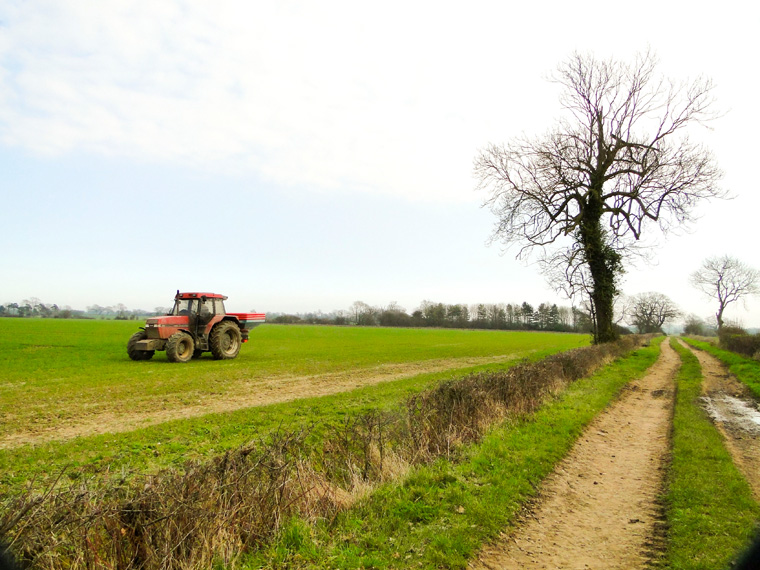
Farmers often face a difficult choice when fertiliser prices rise or soil fertility declines. Should they use more organic manure or continue with chemical fertilisers? Recent ICAR research suggests the answer may not be either-or. Combining organic materials with appropriate fertiliser doses can improve nutrient use and crop performance.
This approach is called integrated nutrient management. It combines chemical fertilisers with materials such as farmyard manure, compost, crop residues, green manure and biofertilisers. The aim is to supply crop nutrients while also improving soil properties over time.
What did the latest study find?
A two-year ICAR-Indian Agricultural Research Institute field experiment tested integrated nutrient management in rainfed maize during 2023 and 2024. Researchers compared different combinations of chemical nitrogen, farmyard manure, leaf compost and crop residues under a maize-mustard cropping system.
The treatment using 50% of the recommended nitrogen dose, plus two tonnes of farmyard manure and two tonnes of leaf compost per hectare, recorded the highest maize grain yield in the experiment. Average yield across the two seasons reached 5.53–5.62 tonnes per hectare.
Researchers also reported higher gross returns, net returns and benefit-cost ratio under this treatment compared with the full recommended nitrogen dose alone. The study found that the combined treatment improved several yield-related characteristics, including cob length, cob girth and thousand-grain weight.
These results do not mean farmers should immediately cut nitrogen fertiliser by half. The experiment was conducted under specific conditions, and the best nutrient combination can vary with soil fertility, crop, rainfall, manure quality and previous cropping history.
Why combine manure with fertiliser?
Farmyard manure supplies organic matter along with smaller quantities of several plant nutrients. As it decomposes, it can contribute nutrients and support soil biological activity. But manure nutrient concentrations are variable, so farmers cannot treat it as a precise replacement for measured fertiliser requirements.
Chemical fertilisers provide nutrients in more concentrated and predictable forms. Organic materials work differently and release nutrients over time. Combining the two can therefore provide a broader nutrient supply while reducing dependence on a single source, particularly where farmers have access to good-quality organic materials.
ICAR’s 2026 farmer programmes also emphasise soil-test-based nutrient management. Farmers are being encouraged to combine chemical fertilisers with FYM, vermicompost, green manure, crop residues and biofertilisers rather than applying nutrients without checking actual soil requirements.
The same principle applies to orchards. ICAR recently advised mango farmers in Bihar to combine recommended nitrogen, phosphorus and potassium doses with well-decomposed FYM. Scientists also warned against excessive nitrogen because it can adversely affect flowering and fruiting.
Soil testing should come before changing fertiliser doses. A soil test can identify nutrient availability and help farmers understand whether their fields are deficient, moderately supplied or already rich in particular nutrients.
Farmers should also check the quality of farmyard manure. Well-decomposed manure is generally easier to handle and less likely to create problems associated with using fresh material. Applying large amounts without understanding its nutrient content can also create unnecessary costs.
The timing of application matters. Organic manure needs time to decompose and release nutrients, while some chemical fertilisers may need to be applied closer to crop demand. Farmers should therefore follow crop-specific recommendations rather than applying every input at once.
For farmers with limited manure, there is no need to cover the entire field blindly. They can begin with a soil-test-based plan and compare a small area using integrated nutrient management against their usual practice.
Can this lower farm costs?
The potential saving comes from using fertiliser more carefully rather than simply eliminating it. In the IARI maize experiment, the treatment combining 50% recommended nitrogen with FYM and leaf compost produced higher economic returns than the full nitrogen treatment under the tested conditions.
But manure is not free. Farmers may need to collect, transport, compost and apply it. Labour costs can be significant, particularly where livestock numbers are low or fields are far from the manure source.
Farmers should therefore calculate the real cost of organic inputs. If manure is already available on the farm, using it may be more practical. If it must be purchased and transported over long distances, the economics can change.
The best approach is to treat manure, compost and fertilisers as parts of one nutrient plan. Soil testing, crop requirements and input costs should determine the combination rather than a fixed rule that chemical fertilisers must always be reduced.
For farmers, integrated nutrient management offers a middle path between relying heavily on chemical fertilisers and expecting organic manure alone to meet every crop requirement. The latest ICAR evidence suggests that carefully combining nutrient sources can support yields, returns and soil health under suitable conditions.
Farmers should test the approach on a manageable area before changing their entire farm. Keep records of manure quantity, fertiliser use, labour, yield and costs. Over one or more seasons, these records can show whether integrated nutrient management actually improves the economics of the farm.
Also Read: Punarnava Jal – The world’s first organic fertilizer! Know how it is beneficial for farmers?
Contact us – If farmers want to share any valuable information or experiences related to farming, they can connect with us via phone or whatsapp at 9599273766 or you can write to us at “kisanofindia.mail@gmail.com”. Through Kisan of India, we will convey your message to the people, because we believe that if the farmers are advanced then the country is happy.
You can connect with Kisan of India on Facebook, Twitter, and Whatsapp and Subscribe to our YouTube channel.