



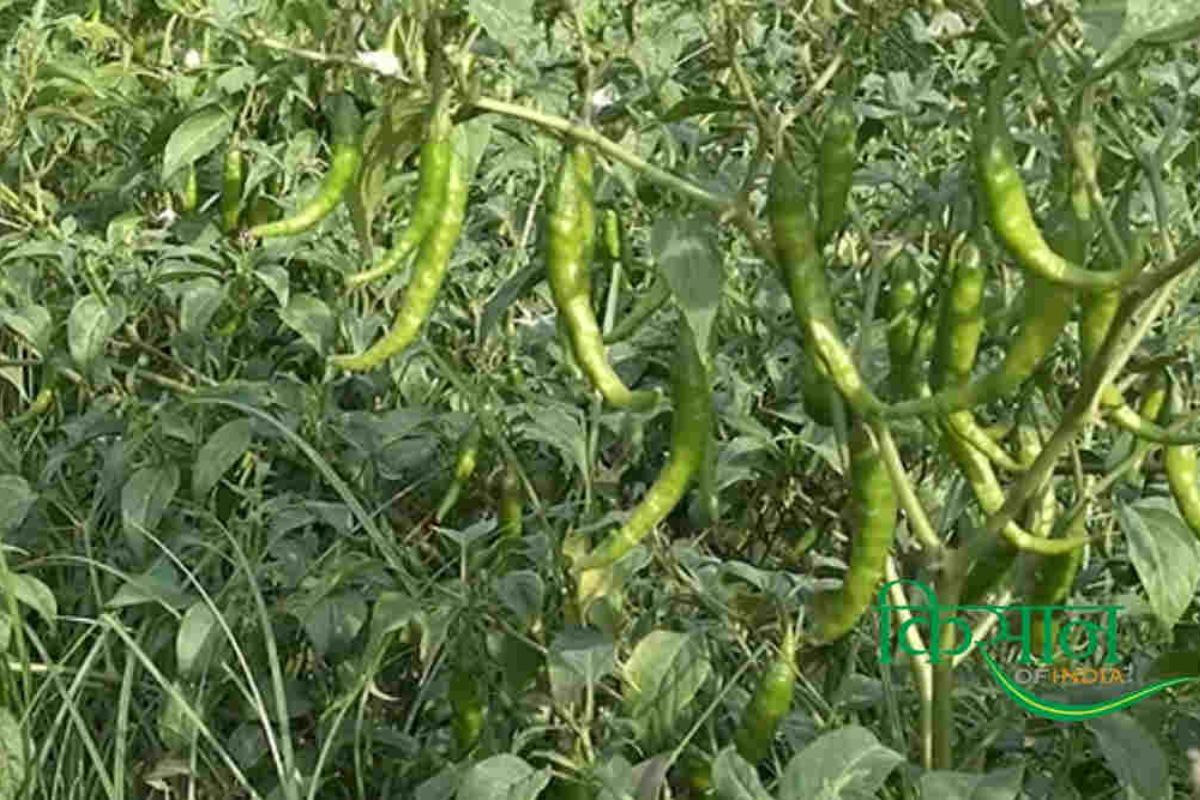
Organic farmers in North Sikkim are improving chilli production by combining traditional farming with improved varieties, mulching, vermicompost and seaweed-based sprays.
ICAR’s North Eastern Hill Region Sikkim Centre supported the programme in Dzongu, where heavy rainfall, weed growth and high labour costs had reduced farm returns for many tribal households. The initiative began in 2021 and involved 237 farmers from four villages.
Farmers in the Dzongu region had long followed traditional organic farming practices. But difficult terrain created practical problems. Heavy rainfall encouraged rapid weed growth. Farmers also had to carry bulky organic manure across steep land. These challenges increased labour costs and reduced profitability, according to ICAR.
The programme therefore focused on improving organic production rather than asking farmers to abandon their existing farming system.
Scientists introduced better crop management practices suited to local conditions.
Improved chilli varieties reached 237 farmers
The farmers received two improved chilli varieties: Arka Meghana and Arka Sweta. Arka Meghana is tolerant to powdery mildew and mosaic virus, while Arka Sweta has tolerance to virus-related problems, according to ICAR.
The programme also included mulching, vermicompost and foliar application of seaweed extract. These practices aimed to improve crop growth while maintaining organic production methods.
The approach shows that organic farming does not mean farmers must depend only on traditional seed or production methods.
Scientific crop improvement can also work within organic systems.
Weed management was one of the biggest challenges for farmers in the region. Heavy rainfall created favourable conditions for rapid weed growth. Removing weeds manually required significant labour.
The programme introduced mulching to suppress weeds and conserve soil moisture.
ICAR reported that mulching reduced labour requirements by limiting weed infestation. This allowed farmers to spend less time and money on repeated manual weeding.
For organic farmers, weed management can be one of the most demanding parts of crop production because chemical herbicides are not part of certified organic production systems.
Mulching can offer a practical alternative where suitable material is available.
Seaweed spray increased chilli yields
The programme also introduced foliar application of seaweed extract.
According to ICAR, farmers using the improved production package recorded yields that were nearly double those obtained under their earlier traditional practices. The result came from a combination of practices rather than one input alone.
Improved varieties, mulching, vermicompost and crop management worked together to improve production.
This is an important lesson for farmers looking to shift towards organic production.
A single organic input may not solve every problem. Results depend on the complete farming system, including seed quality, soil management, weed control and local weather.
Farmers sold chillies at ₹100–₹120 per kg
Harvesting started in June and continued until October.
Farmers harvested chillies three to six times during the season and sold the produce in local markets for ₹100 to ₹120 per kg, according to ICAR.
Two farmers recorded strong economic results.
Pempa Tshering Lepcha of Sangdong achieved a benefit-cost ratio of 2.85. Tshering Ongden Lepcha of Lingdong recorded a benefit-cost ratio of 2.69.
These figures show that the programme improved returns for participating farmers.
But farm income can still vary depending on production costs, local prices, weather and market access.
The North Sikkim programme offers a useful example for other organic farming regions. Farmers did not move away from organic cultivation. Instead, scientific institutions worked with them to improve how they managed an existing organic farming system.
ICAR introduced improved varieties and production practices while the farmers continued to use organic inputs and local farming knowledge.
The programme also addressed a major concern among many organic farmers: lower productivity.
The results suggest that yields can improve when organic farming receives research support suited to local crops and conditions.
Organic farming needs local solutions
What worked in North Sikkim may not work in the same way in every part of India.
Farmers need crop varieties and production methods suited to their rainfall, soil, altitude and local markets.
The Dzongu experience shows that farmers can improve organic crop production by identifying the specific problems reducing their returns.
For these farmers, weed growth and labour costs were major challenges.
Mulching helped address one problem. Improved varieties and crop management helped address another.
For organic farming to provide reliable income, farmers need this kind of practical support rather than broad advice alone.
The North Sikkim chilli programme shows how research and local farming practices can work together to improve yields and farm returns while maintaining organic production.
Also Read: Punarnava Jal – The world’s first organic fertilizer! Know how it is beneficial for farmers?
Contact us – If farmers want to share any valuable information or experiences related to farming, they can connect with us via phone or whatsapp at 9599273766 or you can write to us at “kisanofindia.mail@gmail.com”. Through Kisan of India, we will convey your message to the people, because we believe that if the farmers are advanced then the country is happy.
You can connect with Kisan of India on Facebook, Twitter, and Whatsapp and Subscribe to our YouTube channel.