



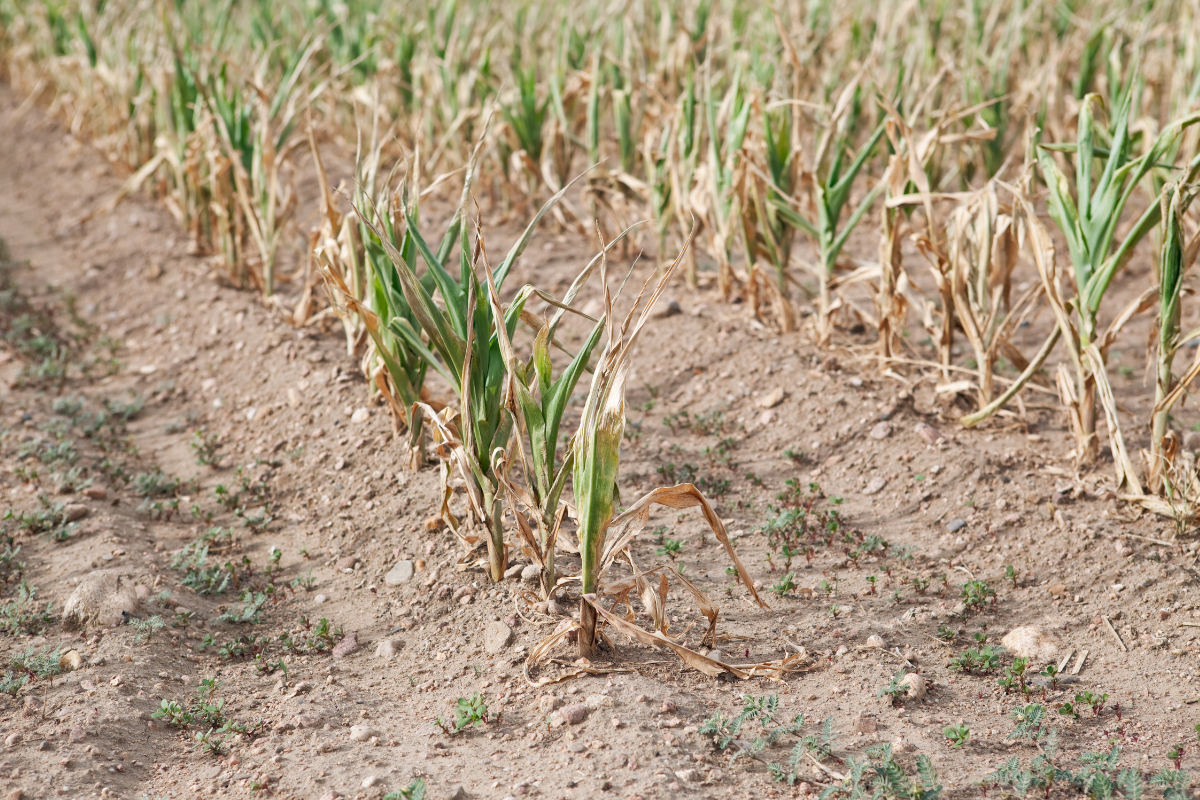
In parts of Maharashtra’s drought-prone farming belt, agriculture officers and startups are increasingly using AI-powered soil mapping systems to guide farming decisions.
Instead of relying only on visual field observation, farmers now receive digital reports showing:
- Soil moisture
- Nutrient levels
- Organic carbon
- Water retention capacity
- Crop suitability
Agriculture experts say precision soil analysis is becoming important because climate instability and rising input costs are making farming riskier every season.
Researchers believe soil intelligence may become one of the most important agricultural tools in India’s dryland regions.
Many farmers still apply fertilizers uniformly across fields without knowing exact soil conditions.
Agriculture experts say this often creates:
- Excess fertilizer use
- Soil imbalance
- Higher cultivation costs
- Lower nutrient efficiency
AI soil mapping systems combine satellite imagery, GPS surveys, and laboratory testing to generate detailed field-level recommendations.
Some platforms now tell farmers:
- Which crop suits the soil best
- How much fertilizer is actually needed
- Where moisture stress exists
- Which sections of land perform poorly
Researchers say this reduces unnecessary input use while improving long-term soil management.
Maharashtra’s Dry Regions Need Better Water Planning
Districts across Marathwada and Vidarbha face repeated drought pressure and groundwater stress. Agriculture experts say poor soil management worsens water scarcity because degraded soils fail to retain moisture properly during weak monsoons.
AI-based soil analysis helps identify:
- Moisture-retaining zones
- Erosion-prone areas
- Water runoff patterns
- Degraded land sections
Researchers believe future drought adaptation will depend heavily on understanding soil behaviour more scientifically rather than expanding irrigation alone.
Heatwaves and erratic rainfall are affecting soil health across several Indian farming regions.
Researchers studying climate-linked agriculture say rising temperatures reduce soil moisture faster while intense rainfall events increase erosion and nutrient loss.
Agriculture experts warn that soil degradation is becoming one of the least visible but most dangerous agricultural crises because productivity declines gradually over time.
Some digital agriculture systems now combine:
- AI weather forecasting
- Soil mapping
- Crop monitoring
- Irrigation planning
inside one platform.
Several agri-tech startups now provide mobile soil intelligence services through subscription models and village partnerships.
Some companies use portable testing kits and drone surveys to create detailed soil health maps for farmers. Agriculture experts say digital agriculture businesses increasingly focus on dryland regions because climate risks are highest there.
Researchers believe soil data may eventually become as important to farming as weather forecasts.
Despite growing interest, many small farmers still struggle with:
- Cost of testing
- Smartphone access
- Technical understanding
- Internet connectivity
Agriculture experts say technology must remain affordable and locally understandable if precision farming is expected to expand beyond large commercial farms.
Krishi Vigyan Kendras and agricultural universities are now trying to improve awareness through local training programmes.
Farming Is Becoming More Data-Driven
For generations, farmers judged soil mainly through touch, colour, texture, and experience.
Now digital systems are adding another layer of understanding through satellite data, AI analysis, and mapping technologies.
Researchers say the future of Indian farming may depend not only on water and seeds, but also on how accurately farmers understand the soil beneath their feet.
In Maharashtra’s drought belt, agriculture is slowly becoming a science of data as much as a science of seasons.
Also Read: Punarnava Jal – The world’s first organic fertilizer! Know how it is beneficial for farmers?
Contact us – If farmers want to share any valuable information or experiences related to farming, they can connect with us via phone or whatsapp at 9599273766 or you can write to us at “kisanofindia.mail@gmail.com”. Through Kisan of India, we will convey your message to the people, because we believe that if the farmers are advanced then the country is happy.
You can connect with Kisan of India on Facebook, Twitter, and Whatsapp and Subscribe to our YouTube channel.