



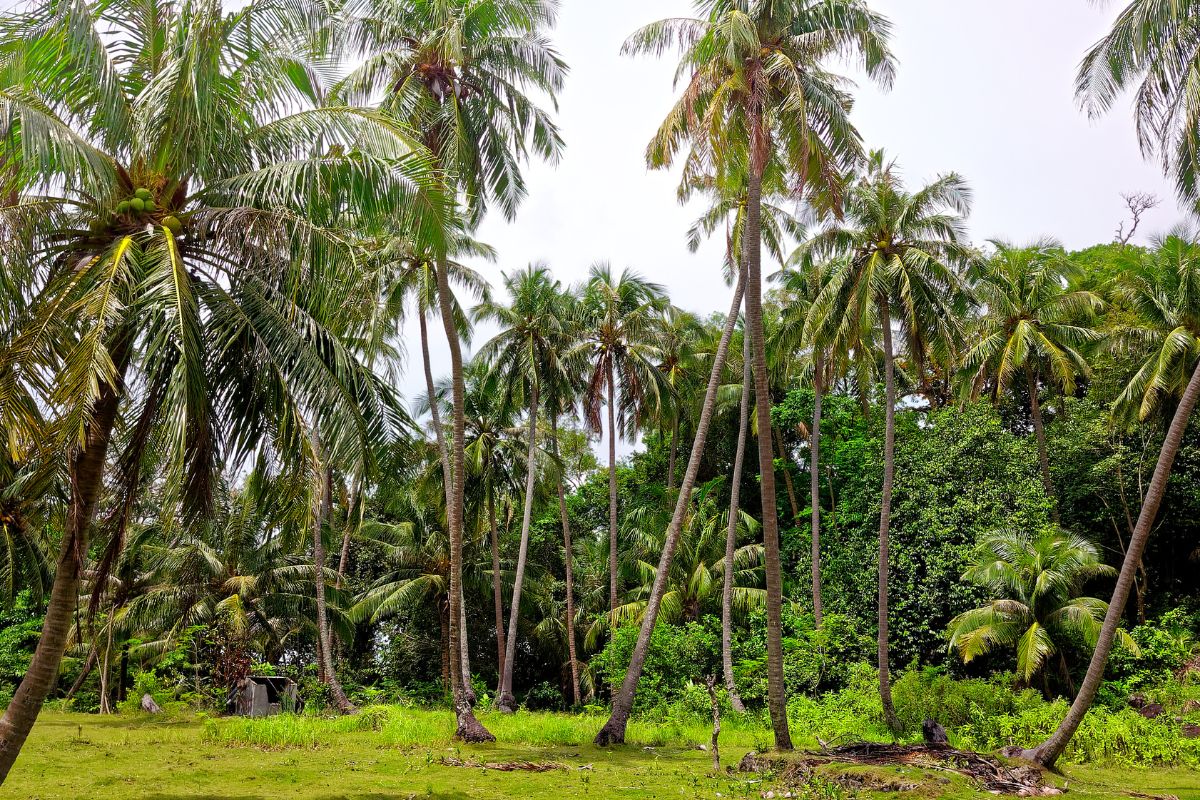
Across the coconut-growing belts of Kerala, Tamil Nadu, Karnataka, and Andhra Pradesh, farmers face a challenge that grows taller every year. Mature coconut palms often reach heights of 40 to 70 feet, making spraying operations difficult, time-consuming, and expensive.
Traditionally, plantation owners relied on trained climbers to apply nutrients and crop protection solutions. Finding skilled workers has become increasingly difficult as labour shortages affect agricultural sectors across the country. The cost of hiring climbers has also risen steadily, increasing production expenses for farmers.
In response, drone-based spraying is emerging as a new solution for coconut plantations. Agricultural drones are helping farmers cover large areas quickly while reducing dependence on specialised labour.
The technology is attracting growing attention as plantation agriculture becomes increasingly mechanised.
Unlike field crops, coconut plantations present unique management challenges. Essential activities such as spraying, nutrient application, pest monitoring, and disease management often take place several metres above the ground.
This creates operational difficulties, particularly in large plantations.
Farmers frequently struggle to find workers capable of climbing tall palms safely and efficiently. Delays in spraying can allow pests and diseases to spread, affecting productivity and crop quality.
The problem is becoming more serious as experienced climbers retire and fewer young workers enter the profession.
Many plantation owners now view labour availability as one of their biggest management concerns.
Drones Cover Large Areas Quickly
Agricultural drones allow farmers to spray crops without physically climbing trees. Equipped with tanks, nozzles, and navigation systems, the machines can fly above plantations and apply liquids directly to target areas.
A task that previously required several workers and many hours can often be completed much faster using drone technology.
The efficiency is particularly valuable during periods when rapid action is needed to manage pest outbreaks or disease problems.
Farmers report that drones improve coverage while reducing the time required for plantation management operations.
Speed is becoming one of the technology’s biggest advantages.
One benefit frequently highlighted by agricultural experts is improved precision.
Traditional spraying methods sometimes result in uneven application, particularly when dealing with very tall trees. Drones use programmed flight paths that help ensure more consistent coverage across plantations.
Accurate application reduces product wastage and improves the effectiveness of treatments. This can lower operating costs while improving crop protection outcomes.
Researchers working on precision agriculture view drones as part of a broader shift toward data-driven farm management.
The objective is to use inputs more effectively rather than simply applying larger quantities.
Efficiency and precision increasingly go hand in hand.
Many farmers do not purchase drones themselves. Instead, specialised service providers offer spraying services on a pay-per-acre basis. This model allows small and medium-sized farmers to access advanced technology without making large capital investments.
Entrepreneurs operating drone services are becoming an important part of the agricultural ecosystem. They work with farmer groups, cooperatives, and plantation owners during peak seasons.
The service-based approach is accelerating adoption because it lowers financial barriers.
Farmers can benefit from the technology without owning the equipment directly.
This flexibility is helping expand usage across different farm sizes.
Coconut Sector Faces New Challenges
The increasing interest in drones reflects broader changes within the coconut industry. Labour shortages, rising costs, and climate-related pressures are encouraging growers to adopt new technologies.
Plantation agriculture has historically mechanised more slowly than field crops because of physical constraints associated with tall trees. Drones are changing that equation by providing aerial access to areas that were previously difficult to reach.
Researchers believe the technology could eventually support activities beyond spraying, including crop monitoring, disease detection, and yield assessment.
Its role is likely to expand as systems become more sophisticated.
The plantation sector is entering a new phase of technological development.
Coconut cultivation remains one of India’s most important plantation industries. Millions of farmers depend on the crop for income, while countless businesses rely on coconut-based products.
Maintaining productivity under changing conditions requires new approaches.
Drone spraying offers one such solution. It addresses labour shortages, improves operational efficiency, and helps farmers manage plantations more effectively.
The technology will not replace every traditional practice, but it is becoming an increasingly valuable addition to the farmer’s toolkit.
Across coastal India, the future of coconut farming may still depend on tall palms.
The difference is that growers are no longer relying solely on climbers to reach them.
Also Read: Punarnava Jal – The world’s first organic fertilizer! Know how it is beneficial for farmers?
Contact us – If farmers want to share any valuable information or experiences related to farming, they can connect with us via phone or whatsapp at 9599273766 or you can write to us at “kisanofindia.mail@gmail.com”. Through Kisan of India, we will convey your message to the people, because we believe that if the farmers are advanced then the country is happy.
You can connect with Kisan of India on Facebook, Twitter, and Whatsapp and Subscribe to our YouTube channel.