



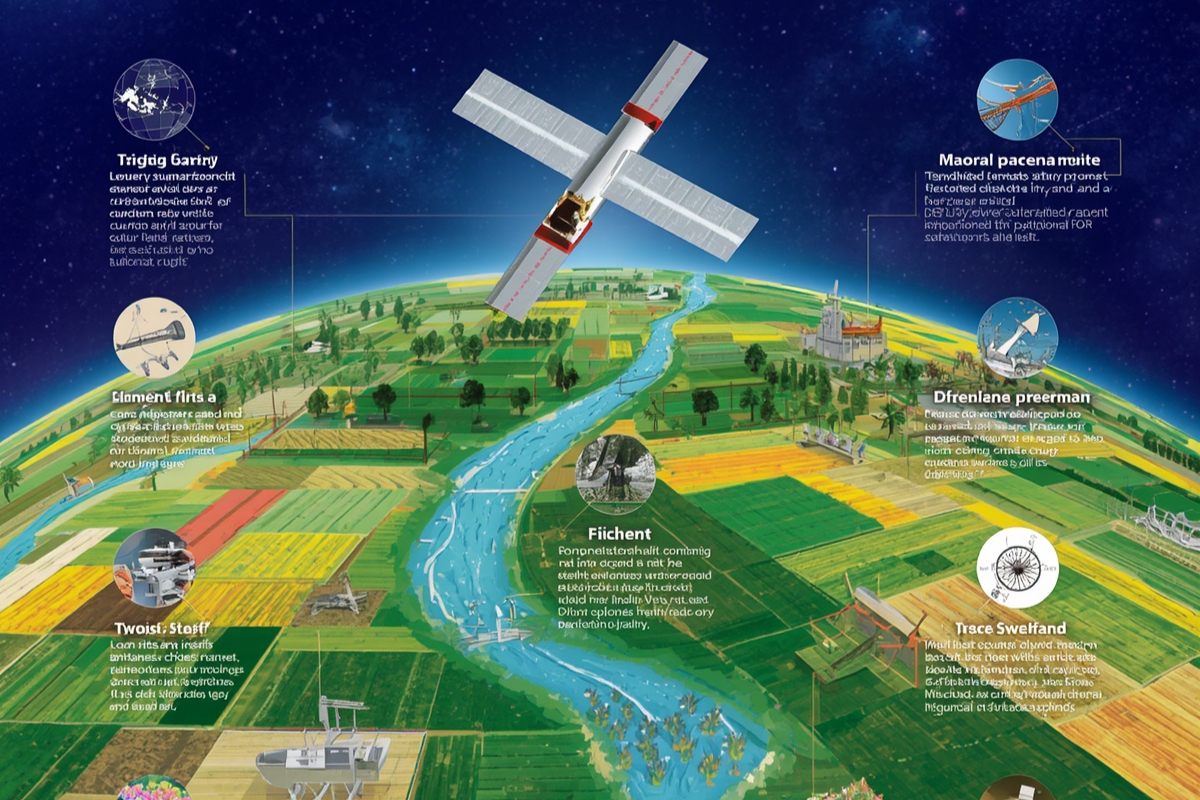
Google has launched two India-first artificial intelligence models designed for agriculture, using satellite imagery and machine learning to generate detailed information about farms and crops. The models could help governments, researchers and agri-tech companies understand crop conditions, water availability and changes across large farming areas.
The technology comes as India is expanding digital tools for agriculture. Government systems already use satellites, drones, artificial intelligence and remote sensing for crop monitoring. The challenge now is turning large amounts of data into information that can support decisions at farm and district levels.
What does the new AI technology do?
The models analyse satellite images with machine learning to provide more detailed agricultural information. Instead of looking at individual satellite images manually, AI can process large datasets and identify patterns across farms and regions.
This can help users monitor crop conditions over large areas. It may also support estimates related to crop health, yield, water management and changes in farmland. The usefulness for farmers will depend on how this information is converted into simple, local advisories.
Satellite data can show changes that are difficult to identify from the ground. A crop experiencing moisture stress, for example, may show changes in vegetation before serious damage becomes obvious across an entire field.
The new models are entering an agricultural system that already uses several digital technologies. The government’s FASAL programme uses satellite data to forecast production for 11 major crops across 20 states.
The government also uses remote sensing to generate vegetation, soil moisture, drought, flood and hailstorm assessments. These systems support crop monitoring and agricultural planning at national, state and district levels.
Another government platform, Krishi Decision Support System, combines satellite, weather, soil, crop, reservoir and groundwater information. Such systems can help identify crop patterns, monitor drought and assess yields using technology-based models.
How could farmers benefit?
The biggest potential benefit is better information. Farmers often make decisions with limited knowledge about coming weather, soil moisture, pest pressure or expected crop performance.
If AI-based systems can convert satellite information into reliable local advisories, farmers could receive earlier warnings about crop stress. This could help them decide where irrigation, pest management or other interventions may be needed.
But farmers should not be expected to interpret satellite maps themselves. The technology becomes useful when information reaches them through mobile applications, extension workers, farmer groups or other simple channels.
India is also using artificial intelligence to identify crop pests. The National Pest Surveillance System allows farmers to capture images of pests and crop problems, with AI and machine learning helping identify potential infestations.
The system currently covers 73 crops and 436 pests. The government says more than 35,000 advisories have been issued through the platform. This shows how AI is already moving beyond research into practical crop advisory services.
For farmers, image-based pest identification could be useful when a problem is difficult to identify. But recommendations should still be checked against local crop conditions before farmers spend money on pesticides or other treatments.
Water is becoming an increasingly important part of farm decision-making as rainfall becomes less predictable. Satellite data can help identify vegetation and moisture patterns across large areas.
AI models could potentially combine this information with weather and soil data to identify fields facing greater water stress. Such information could help irrigation planners and farmers prioritise limited water resources.
The technology cannot create water. Its value lies in helping farmers and authorities understand where water is needed and where available resources may have the greatest benefit.
Small farmers may face a technology gap
One major challenge is access. A sophisticated AI model does not automatically help a farmer who has limited internet access, an unsuitable phone or no easy way to interpret digital information.
India’s BharatVistaar platform is one example of an effort to bring AI-based agricultural advice directly to farmers. The government says the platform has served more than 5.9 lakh farmers and addressed over 93 lakh queries.
This shows why the final delivery system matters as much as the technology itself. Farmers need information in understandable language and at the right time, rather than simply access to complicated agricultural datasets.
Satellite imagery has limitations. Clouds can affect optical satellite images, while some crop problems may require physical inspection to understand their cause.
A satellite may show that vegetation is changing, but it may not always explain whether the reason is drought, disease, nutrient deficiency, pest damage or another problem. Field-level verification therefore remains important.
Farmers should treat AI recommendations as another source of information rather than an automatic replacement for their own observations or advice from agricultural experts.
AI systems depend heavily on the quality of the information used to train and operate them. Poor satellite images, incomplete farm information or inaccurate field data can affect the final result.
This becomes especially important in India, where farms vary greatly in size, cropping patterns, soil types and irrigation access. A model developed using broad regional information needs careful testing before its recommendations are applied uniformly across different farming systems.
What farmers should watch for
Farmers do not need to invest in expensive technology simply because AI is becoming more common. They should look for services that provide a clear benefit, such as crop alerts, weather information, pest identification or irrigation advice.
Before paying for any private digital service, farmers should check whether the recommendations are supported by agricultural research and whether the service works for their crop and location.
AI will not replace the basic requirements of farming. Farmers will still need good seed, suitable soil moisture, timely sowing, crop protection and access to markets.
The technology can still make those decisions better informed. If satellite data, weather information and field observations can be combined accurately, farmers may receive earlier warnings and more specific advice.
Google’s new models add another layer to India’s growing digital agriculture system. Their real test will not be how advanced the AI is, but whether the information eventually reaches farmers in a form they can understand and use.
Also Read: Punarnava Jal – The world’s first organic fertilizer! Know how it is beneficial for farmers?
Contact us – If farmers want to share any valuable information or experiences related to farming, they can connect with us via phone or whatsapp at 9599273766 or you can write to us at “kisanofindia.mail@gmail.com”. Through Kisan of India, we will convey your message to the people, because we believe that if the farmers are advanced then the country is happy.
You can connect with Kisan of India on Facebook, Twitter, and Whatsapp and Subscribe to our YouTube channel.