


From ₹50,000 Farm Income to ₹2.23 Lakh: How a Woman Farmer Built a Poultry Enterprise

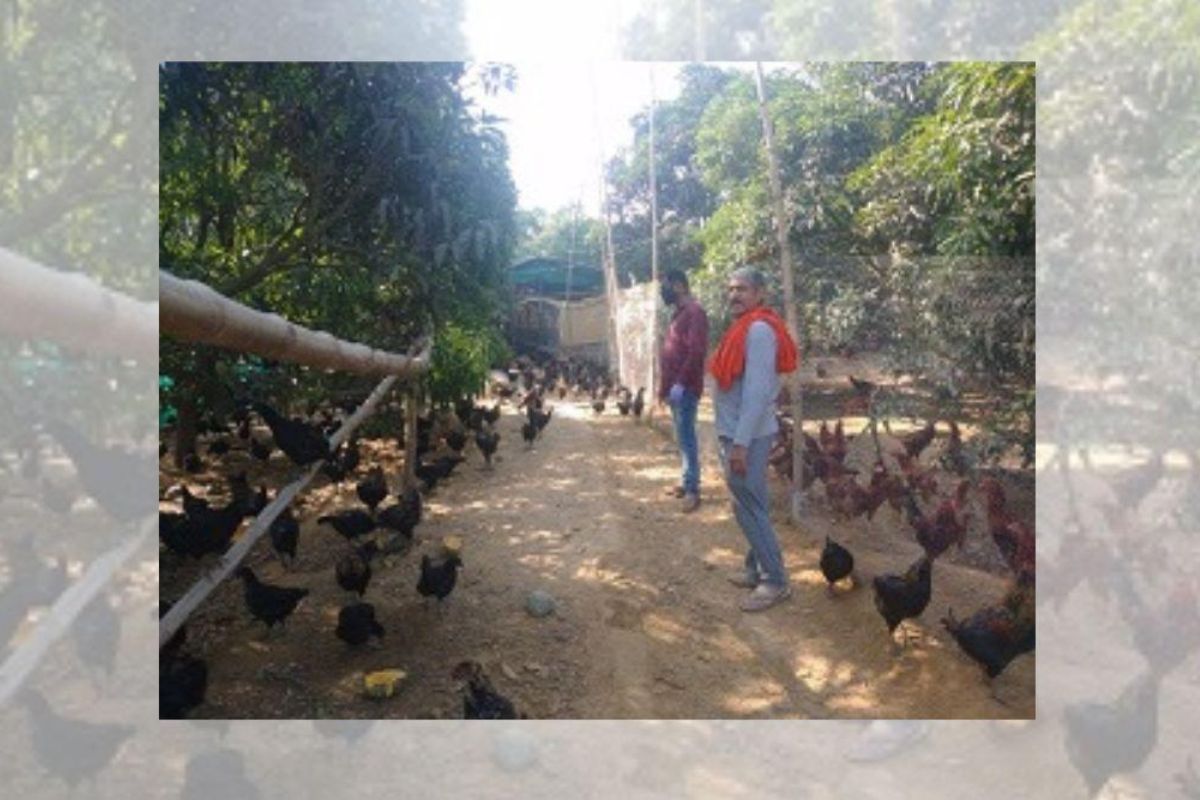
For years, Phool Kumari’s family depended on rainfed farming in Gumla district, Jharkhand. Their five acres produced an annual agricultural income of about ₹50,000–60,000. The family had limited scope to invest in another livelihood, until training from Krishi Vigyan Kendra, Gumla, opened a new option.
Phool Kumari began working with KVK Gumla in 2016. Two years later, the centre encouraged her to try improved poultry farming. She received training and 100 Divyayan Red chicks under the Tribal Sub-Plan, giving her a small starting point without requiring a large commercial poultry unit.
The poultry unit was designed around backyard conditions. Phool Kumari adopted improved housing, feeding, clean drinking water, disease prevention and regular bird management. The birds reached an average body weight of about 1.5 kg within three months, while egg production started at around 22 weeks.
The results encouraged her to expand. KVK Gumla later supported her Self-Help Group with a hatchery machine and 112 eggs under the same programme. The hatchery changed the business model because she could produce chicks instead of relying only on selling grown birds.
This gave her another product to sell locally. Chicks created an additional income stream, while the hatchery also helped meet demand among farmers who wanted improved poultry breeds. The enterprise gradually moved from household poultry keeping towards a small business involving birds, chicks and eggs.
By 2025–26, the enterprise had become a significant source of income. Phool Kumari sold about 1,000 adult birds at ₹400 each, generating ₹4 lakh in gross income. ICAR reports input costs of about ₹2.25 lakh, leaving ₹1.75 lakh as net income from the birds.
Where did the additional income come from?
The poultry enterprise generated income beyond bird sales. Phool Kumari sold around 960 chicks at ₹40 each, bringing ₹38,400. She also sold about 1,000 eggs at ₹10 each, adding another ₹10,000 during 2025–26.
ICAR puts her total net annual income from the poultry and hatchery enterprise at ₹2,23,400 in 2025–26. That compares with the family’s earlier agricultural income of roughly ₹50,000–60,000 a year before she diversified into poultry.
The additional money also changed how the family invested its earnings. Phool Kumari’s family bought an auto-rickshaw, which her husband now operates. The vehicle created another income source instead of using the poultry earnings only for household consumption.
The family also found it easier to meet children’s education expenses. For Phool Kumari, poultry became more than a supplementary farm activity. It gave her a business she could manage alongside agriculture while creating income from birds, chicks and eggs.
The enterprise’s impact extended beyond Phool Kumari’s household. ICAR reports that around 30 tribal women in Borang village adopted improved backyard poultry after seeing her experience. Some of these women also began buying eggs from her unit.
The women adopted improved breeds including Sonali and Divyayan Red. ICAR reports that participating women generated additional annual incomes of about ₹35,000–45,000 through poultry farming, showing how one local enterprise began supporting a wider village-level poultry activity.
The model also created a local source of improved chicks and eggs. This matters for small farmers because access to suitable birds can determine whether backyard poultry remains a few household birds or develops into a regular income activity.
What can other farmers learn from her experience?
The first lesson is to start at a manageable scale. Phool Kumari began with 100 chicks rather than a large commercial flock. Farmers considering poultry can first learn about housing, feeding, disease prevention and local demand before increasing their flock size.
The second lesson is that training matters. Poultry income depends on bird survival, feed management, disease control and marketing. Farmers should seek guidance from KVKs or animal husbandry departments before investing, particularly when moving from backyard rearing towards a commercial enterprise.
The third lesson is diversification within poultry itself. Selling mature birds provided one source of income, while chicks and eggs added others. A farmer with reliable local demand can assess whether producing more than one poultry product makes business sense.
The numbers from Phool Kumari’s enterprise are specific to her farm and market conditions. They should not be treated as guaranteed returns for other farmers. Feed prices, mortality, bird prices, hatchability, labour and local demand can change the economics of poultry farming.
For farmers considering a similar enterprise, the practical starting points are clear. Check local demand, identify a reliable source of chicks, calculate feed and housing costs, learn disease-prevention practices and understand where the birds or eggs will be sold.
Phool Kumari’s experience shows how a small poultry activity can grow when farmers combine improved birds, technical training, hatchery access and a local market. Her enterprise reached ₹2.23 lakh in net annual income by 2025–26 and also encouraged around 30 other tribal women to take up improved backyard poultry.
Also Read: Punarnava Jal – The world’s first organic fertilizer! Know how it is beneficial for farmers?
Contact us – If farmers want to share any valuable information or experiences related to farming, they can connect with us via phone or whatsapp at 9599273766 or you can write to us at “kisanofindia.mail@gmail.com”. Through Kisan of India, we will convey your message to the people, because we believe that if the farmers are advanced then the country is happy.
You can connect with Kisan of India on Facebook, Twitter, and Whatsapp and Subscribe to our YouTube channel.